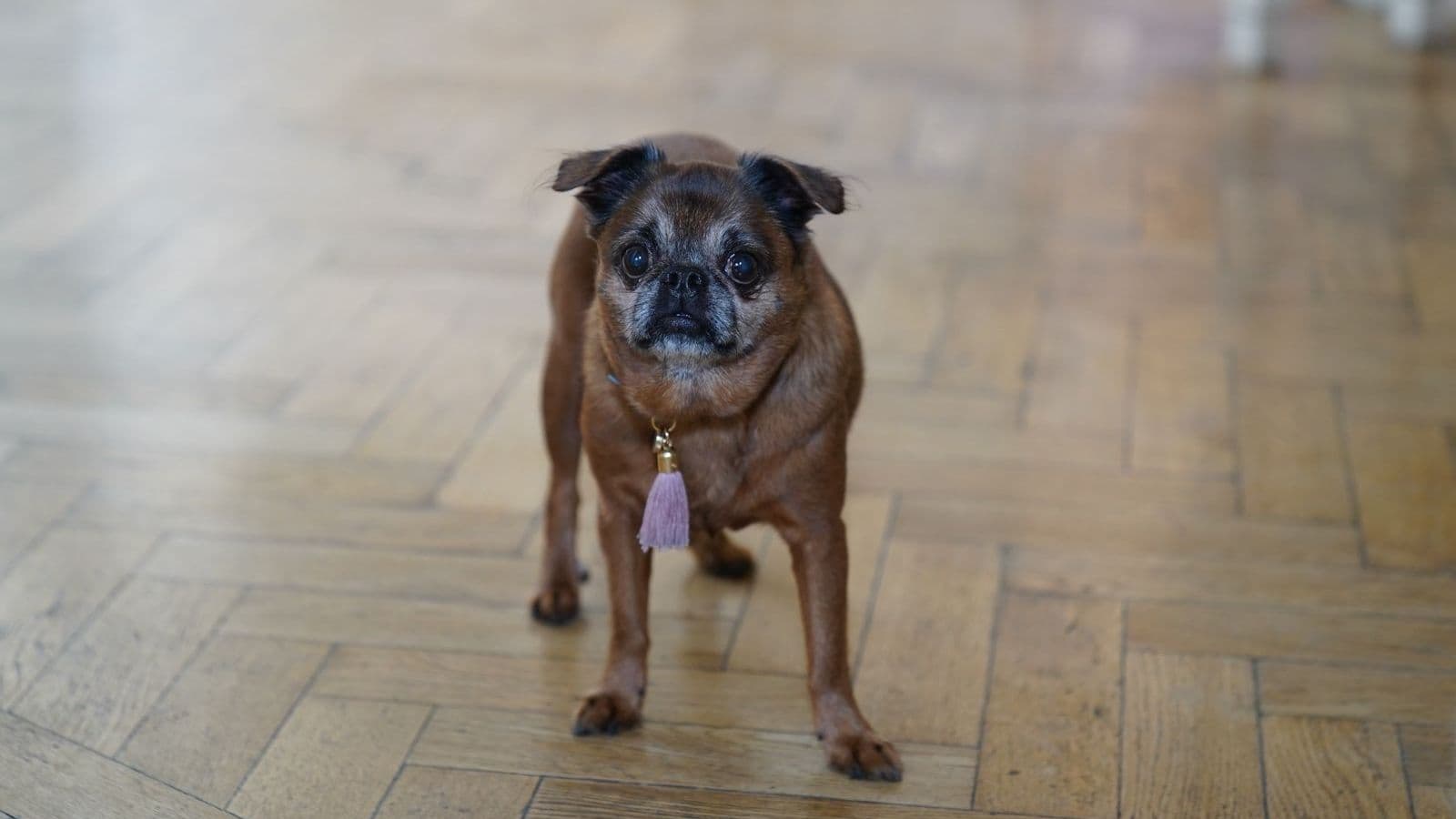
The Brussels Griffon is a small, bearded, almost human-faced toy breed from Belgium, where it began as a ratter in stables and coachhouses before charming its way into laps and becoming a devoted companion. With its expressive "monkey face" and big, soulful eyes, the Griffon is full of personality: sensitive, intelligent, comically self-important, and utterly bonded to its person. It is often described as a velcro dog, and that is no exaggeration. A Brussels Griffon wants to be with you, ideally on you, all the time.
That intense attachment and sensitivity are the keys to training one. The Griffon is bright and capable, but it is also emotionally delicate and prone to separation anxiety, and it can be stubborn, especially about house-training. Harsh handling does not motivate this breed; it crushes it. The recipe that works is gentle, reward-based training, patient house-training, and early independence work to keep the deep bond from becoming distress. Get that right and you have an enchanting, devoted companion. Coddle the dog and skip the independence training, and you get a clingy, anxious, hard-to-house-train one.
This guide covers what works with a Brussels Griffon, week by week, built around how a sensitive, attached toy breed actually learns.
At a glance:
- Trainability: 6/10, intelligent but a little stubborn, especially around house-training
- Biggest risk factor: separation anxiety, bonds so closely that being left alone can genuinely distress it
- Care note: flat-faced, so heat and exertion need careful management
- Example: a Griffon left alone with no independence training can start showing distress within minutes of the door closing
- Not for: owners who use corrections or won't commit to independence training
What Makes Training a Griffon Different
Four breed traits shape your approach.
1. Intensely attached and prone to separation anxiety. The Griffon bonds so closely that being left alone can genuinely distress it. This is the defining training challenge. Gentle independence training from the very start is the most important thing you can do, because preventing separation anxiety is far easier than treating it.
2. Highly sensitive. The Griffon reads your mood and wilts under harshness. Raised voices, corrections, or pressure produce a worried, shut-down dog. Calm, warm, reward-based training is the only approach that brings out its willing, charming side.
3. Intelligent but a little stubborn. The breed is clever and capable but has its own opinions, especially about house-training, which can be slow. Short, rewarding, game-like sessions and a patient, consistent schedule win its cooperation; drilling and scolding do not.
4. Small, brachycephalic, and a bit bold. The Griffon is a small, flat-faced dog, so manage heat and exertion carefully and use a harness rather than a collar. It also has a surprisingly bold streak and benefits from socialization to stay confident rather than reactive.
Week-by-Week Training Plan for Your Griffon
Below is the framework we use at TailorPup for a Griffon-specific 12-week plan. Run it at home; the order and emphasis are the point.
Weeks 1 and 2 : Foundation, Socialization, and Independence
Build engagement with high-value, gentle rewards and socialize broadly so the Griffon stays confident. Run three to four short sessions a day: name, mark eye contact, reward warmly. Most importantly, begin gentle independence training immediately, with short calm absences and a cozy settle spot, and start house-training on a strict schedule. Our puppy basics guide covers the foundations.
Weeks 3 and 4 : Core Commands
Lure sit and down, mark, reward, and add cues once reliable, keeping sessions short, varied, and game-like to suit a clever, slightly stubborn dog. End on a success, and never let frustration creep into your tone with this sensitive breed.
Weeks 5 and 6 : Leash Work and House-Training
Use a light Y-shaped harness, never a collar on a flat-faced dog, and stop-and-stand for any pulling. Keep house-training patient and consistent, since the Griffon can be slow here. Reward every success outdoors generously and avoid all scolding for accidents.
Weeks 7 and 8 : Separation Anxiety Prevention
Deepen the independence work, the breed-critical phase. Practice graduated departures, build alone time slowly, keep comings and goings low-key, and leave the dog something good to do. If distress is already showing, our separation anxiety guide lays out the protocol.
Weeks 9 and 10 : Recall, Confidence, and Quiet
Build recall indoors and in fenced areas, paying every success well. Keep socializing to build confidence, and shape quiet if the bold streak leads to alert-barking, rewarding calm and managing triggers. See our barking guide if needed.
Weeks 11 and 12 : Generalization
Prove the skills in the real world: calm leash walking past distractions, reliable house-training habits, settled and confident behavior, and continued alone-time practice. These last two weeks are about consistency and proofing the independence, house-training, and recall.
Common Griffon Training Mistakes
Three mistakes show up repeatedly with this breed.
Mistake 1 : Skipping independence training. Because the Griffon bonds so intensely, owners who keep it constantly attached create separation anxiety they then struggle to undo. Build gentle alone-time tolerance from the first week, before there is a problem.
Mistake 2 : Using harsh handling. The sensitive Griffon shuts down under corrections, scolding, or pressure, and it simply does not need them. Keep every session calm, warm, and reward-based; it is the only approach that works.
Mistake 3 : Losing patience with house-training. The breed can be slow to house-train, and scolding makes it worse. A strict schedule and patient, reward-based methods are what get you there. The full list is in our Brussels Griffon training mistakes guide.
Frequently Asked Questions
Are Brussels Griffons easy to train ? Reasonably, with a gentle approach. They are intelligent but sensitive and a little stubborn, so they cooperate for warm, rewarding, game-like training rather than drilling. House-training and preventing separation anxiety take the most patience.
Do Brussels Griffons get separation anxiety ? Yes, they are quite prone to it because they bond so intensely. Early, consistent independence training prevents most cases, and the breed does best in homes where it is not left alone for long stretches.
Why is house-training my Griffon so hard ? The breed has a small bladder and an independent streak, so progress can be slow. A strict schedule, frequent opportunities, and patient reward-based methods, without scolding, are what work. Many Griffons take longer than larger breeds.
How much exercise does a Brussels Griffon need ? Around 30 to 45 minutes of activity daily plus mental work and play. The breed is moderate-energy, but as a flat-faced dog it should not be over-exercised or worked hard in the heat.
Is positive reinforcement effective for Brussels Griffons ? It is essential. The sensitive breed thrives on calm, reward-based training and shuts down under harshness, which damages trust and stalls progress.
Are Brussels Griffons good family dogs ? Yes, for households that can give them companionship. They are devoted, charming, and entertaining, but they are small, sensitive, and attached, so they do best with respectful, gentle children and people who are around much of the day.
Do Brussels Griffons bark a lot ? They can, given their bold streak and watchfulness, but it is manageable. Shape and reward quiet early, manage triggers, and meet the dog's companionship needs, and most Griffons are moderate barkers.
Why TailorPup Was Built for Brussels Griffons
A generic plan ignores the two things that really matter with this breed: the separation-anxiety risk and the sensitivity. That is why standard advice can leave Griffon owners with a clingy, anxious, hard-to-train dog.
TailorPup builds a 12-week plan around your specific dog: its attached, sensitive nature, its age, and the behaviors you are seeing. For a Griffon that means gentle reward-based methods, front-loaded independence training, a patient house-training schedule, and early socialization to keep its bold side confident.
Daily 12-minute sessions plus weekly adjustments based on your dog's progress. Plans from $9.99/month, no trial; annual starts at $2 for 7 days. Cancel anytime.
Related: Brussels Griffon Training Mistakes · Recall Training · Puppy Training Basics · Barking Solutions