Leash training · Updated June 2026
How to leash train a dog,
no more pulling.
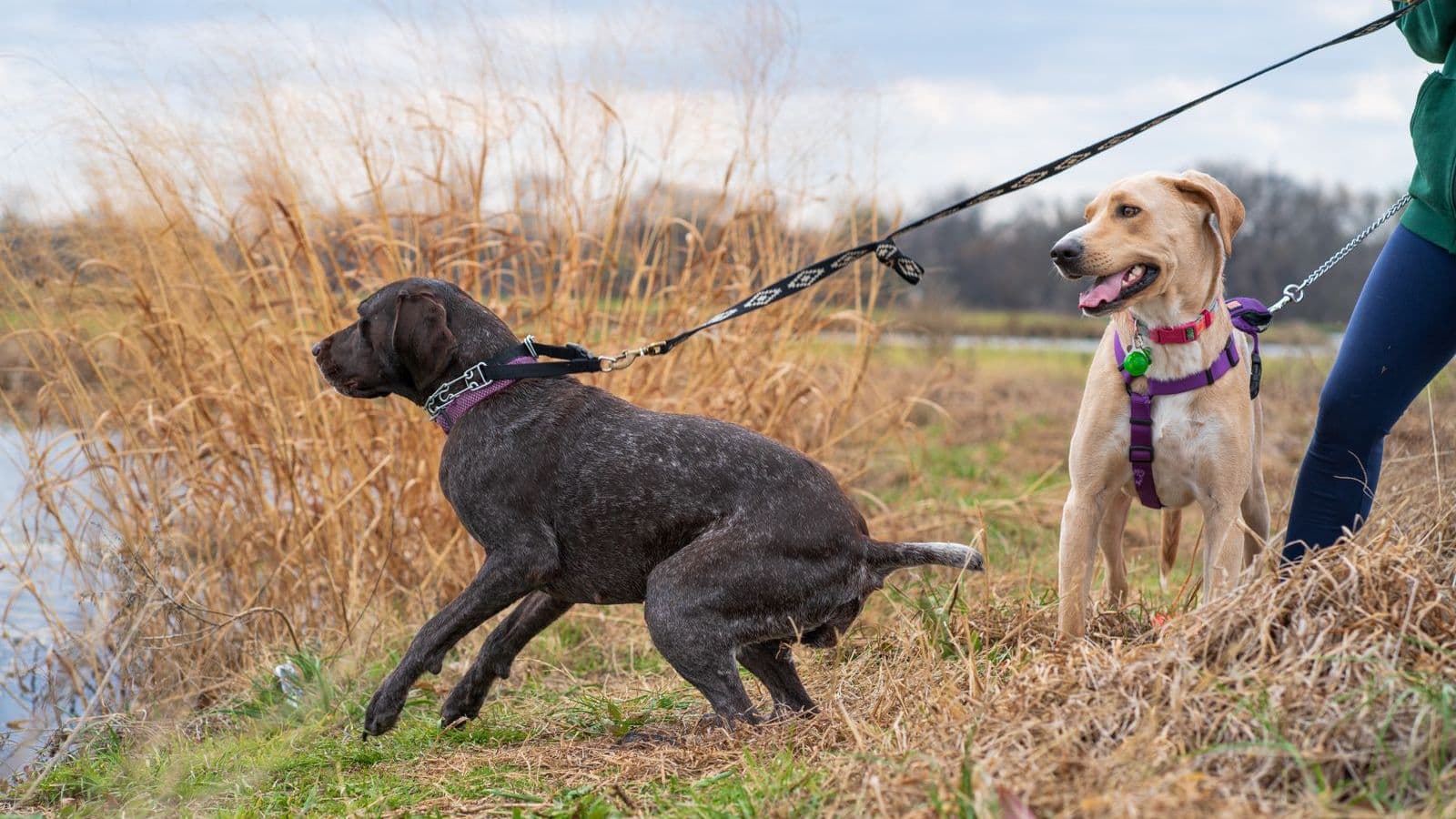
A dog pulls because pulling works, it drags them toward whatever they want. Leash training flips the deal: walking beside you pays, pulling does not. Here is how to teach loose-leash walking from scratch, and how to fix a dog that already hauls you down the street.
Quick answer
To leash train a dog, teach that a loose leash moves forward and a tight leash stops the walk. Start indoors with a flat collar or front-clip harness and reward the dog for standing and walking by your side. Outside, walk at a steady pace and feed small treats at your leg while the leash stays slack.
The moment the dog pulls, stop and stand still like a tree, say nothing, and only move again once the leash loosens, or simply turn and walk the other way. Keep early walks short and in quiet places, then add distractions slowly. A front-clip harness gives you control without choking the dog and pairs perfectly with rewards.
Avoid choke, prong and shock collars, which suppress pulling through discomfort and can increase fear. Most dogs improve within days and walk reliably after a few weeks of consistent practice.
01 · The method
Seven steps to loose-leash
walking, for good.
The golden rule under all of these: pulling must never get the dog where they want to go. Every time it does, you are paying for the exact thing you are trying to stop.
01
Get the right gear
Use a well-fitted front-clip harness or a flat collar, a fixed leash of four to six feet, and a pouch of high-value treats. Skip retractable leashes, which teach pulling, and skip choke, prong and shock collars, which work through pain and can make nervous dogs worse.
02
Teach the side position indoors
With no distractions, reward the dog every time they stand or step next to your leg. Mark the moment with a clicker or a clear 'yes' and feed right at the seam of your trousers. You are building a default: being by your side is the best-paid place to be.
03
Reward at your leg, often
On your first outdoor walks, feed a treat at your side every few steps while the leash is loose. Be generous early, you are competing with a world full of smells. As the habit forms you can reward less often.
04
Be a tree when they pull
The instant the leash goes tight, stop dead and stand still. Do not yank or talk. Wait. The dog will eventually ease the tension, mark that and walk on. The lesson lands fast: tight leash, the world freezes; loose leash, the walk continues.
05
Turn and change direction
For a committed puller, add the about-turn: when they forge ahead, calmly turn and walk the opposite way so they have to catch up to your side, then reward them for being there. Unpredictable direction keeps the dog checking in with you.
06
Add distractions gradually
Master a quiet street before a busy one, and a calm park before a dog-filled one. If the dog cannot cope at a distance, you are too close, add space and work there first. Difficulty is a dial you turn up slowly.
07
Keep paying the good walks
Once walks are calm, switch to rewarding now and then so the behavior stays strong, and keep enforcing the rule that pulling stops the walk. A few weeks of consistency from everyone who holds the leash makes loose-leash walking the dog's default.
Most-searched questions
The questions people
actually ask.
What is the fastest way to stop a dog pulling on the leash?
Make pulling pointless. Stop walking the instant the leash tightens and only move once it loosens, and heavily reward the dog for being at your side. Pair that with a front-clip harness for control. There is no instant fix, but most dogs improve within a few days of consistent practice.
Why does my dog pull on the leash?
Usually because it works: every time pulling gets the dog closer to a smell, a dog or the park, the habit is rewarded. Dogs also naturally walk faster than we do, and excitement adds to it. The fix is to make a loose leash the only thing that moves you forward.
Do no-pull harnesses work?
A front-clip harness genuinely helps by redirecting a pulling dog back toward you, which makes training easier and protects the dog's throat. It is a management aid, not a cure, the lasting change comes from rewarding loose-leash walking, with the harness making that easier to teach.
Are prong, choke or shock collars a good idea?
No. They reduce pulling by causing discomfort or pain, and they carry a real risk of increasing fear and aggression, especially if the dog associates the pain with whatever it was looking at. Reward-based loose-leash training reaches the same goal without those risks.
When can I start leash training a puppy?
Get the puppy used to wearing a harness and collar indoors straight away, and begin gentle loose-leash practice around three to four months in quiet, low-distraction settings. Keep it short and fun, the early goal is a relaxed puppy that likes being near you, not a perfect heel.
How long does leash training take?
Many dogs walk noticeably better within a week, and reach reliable loose-leash walking in a few weeks of short, consistent sessions. A dog with a long history of pulling takes longer because the old habit is deeply rehearsed, but the method is the same.
Our method & sources
Every TailorPup plan and guide uses reward-based training (positive reinforcement), the approach the American Veterinary Society of Animal Behavior (AVSAB) recommends for all dog training. Read the full science and source list on our training method page.
TailorPup is not affiliated with, endorsed by, or certified by the AVSAB. References are provided for informational purposes only and are not a substitute for advice from your veterinarian or a qualified trainer.
Get the plan built
for your dog.
Answer a few quick questions and get a personalized 12-week plan, tuned to your dog's breed, age and the behaviors you're seeing. Preview before you pay, no card.
Build my dog's planFrom $9.99/month · cancel anytime · 90-day refund