Barking · Updated June 2026
How to stop a dog
from barking.
Barking is communication, not naughtiness, and you cannot fix it until you know what it is saying. Alarm barking, attention barking, boredom and separation barking each need a different response. Here is how to find the cause and quiet it, without punishment that makes fear worse.
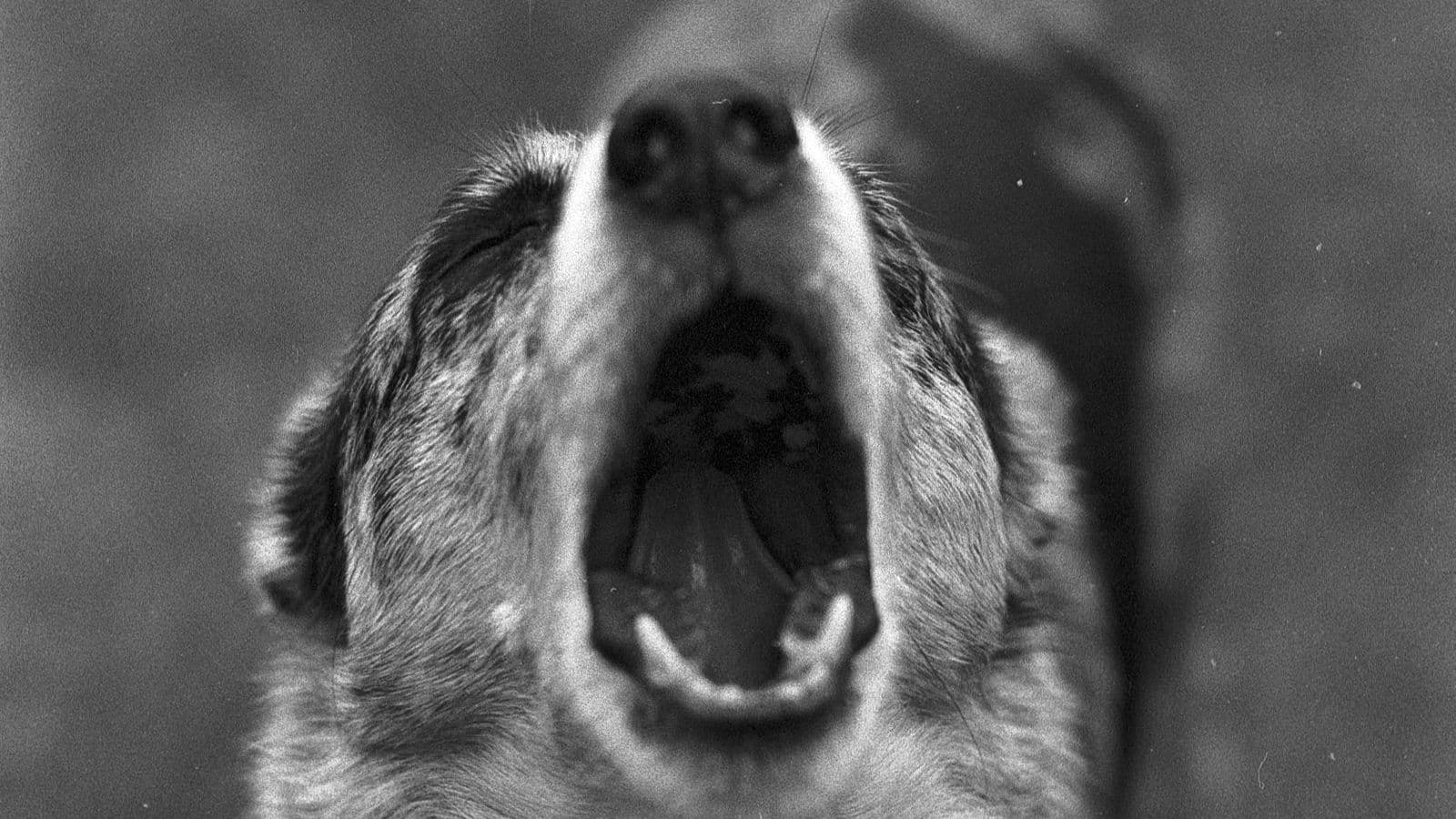
Quick answer
To stop a dog barking, first work out why. Alarm barking is triggered by sights and sounds, attention or demand barking is aimed at you for food or play, boredom barking comes from too little exercise and stimulation, and distress barking happens when a dog is left alone. Then match the fix.
For alarm barking, manage the triggers by blocking the view or masking sounds, then teach a 'quiet' cue by rewarding the silence after a bark. For attention barking, never reward the bark, wait for quiet and reward that instead. For boredom, add real exercise, sniffing walks and food puzzles.
For separation barking, treat the underlying anxiety with gradual alone-time training. Across all causes, reward calm, avoid yelling (the dog can hear it as joining in), and skip shock or citronella collars, which suppress the symptom and can raise anxiety. Most barking improves within two to four weeks once the real cause is addressed.
01 · The method
Seven steps to a quieter
dog, whatever the cause.
There is no single off switch for barking, because barking is not one behavior. Diagnose first, then apply the matching step, the dog is always telling you something.
01
Work out what the barking is for
Watch when and where it happens. At the window or door is alarm barking. At you, with a pause to check if it worked, is attention or demand barking. Alone, or with restlessness and chewing, points to boredom or separation distress. The cause decides the fix.
02
Stop accidentally rewarding it
Anything the dog wants, your attention, eye contact, even a shouted 'no', can reward a bark. For attention barking, the most powerful move is to give nothing the instant the dog barks: no look, no word, no touch, and then reward the moment of quiet.
03
Manage the triggers
For alarm barking, reduce the triggers the dog reacts to: use film on the lower window, close curtains, play background sound to mask street noise, and move the dog's resting spot away from the front of the house. Fewer triggers means fewer barks to retrain.
04
Teach a 'quiet' cue
Let the dog bark a couple of times, then say 'quiet' once and hold a treat at their nose. Most dogs stop barking to sniff it, mark that silence and reward. Repeat until 'quiet' reliably ends the barking, then reward longer and longer pauses before you treat.
05
Catch and reward calm
Do not wait for barking to react to. Throughout the day, quietly reward the dog for being settled and silent, especially near things that usually set them off. You are paying for the behavior you actually want, which is the part most people forget.
06
Meet exercise and enrichment needs
A lot of barking is simply unspent energy and boredom. Add a proper walk with time to sniff, a few minutes of training, and food puzzles or a stuffed toy. A physically and mentally satisfied dog has far less reason to sound off.
07
Be consistent across the household
Barking sticks around when one person rewards it while another ignores it. Agree the plan with everyone, no one rewards demand barks, everyone rewards quiet, and give it two to four weeks. For separation or fear barking that is not improving, get help from a qualified trainer or behaviorist.
Most-searched questions
The questions people
actually ask.
Why does my dog bark at everything?
That is usually alarm barking: the dog reacts to every sight and sound that passes the house. Reduce what they can see and hear (curtains, window film, background sound), reward calm near the triggers, and teach a 'quiet' cue. Often the dog is also under-exercised, which lowers the threshold for setting off.
Do anti-bark collars work?
Shock, spray and ultrasonic collars can suppress barking in the short term, but they punish the symptom without addressing the cause, and they can increase fear and anxiety, sometimes producing worse behavior. Reward-based training that targets the reason for the barking is both safer and more lasting.
How do I stop attention or demand barking?
Stop paying for it. The instant the dog barks for attention, food or play, give nothing at all, no look, no words, no touch, and the moment they go quiet, reward that. Be ready for the barking to briefly get louder before it fades, that is normal, stay consistent and it drops away.
How do I stop my dog barking when left alone?
Alone-time barking is usually distress, not defiance, so punishment makes it worse. Build up absences gradually from seconds to minutes, leave a stuffed food toy, and keep departures and returns low-key. If the dog panics whenever left, that is separation anxiety and is worth tackling with a structured plan or a professional.
How do I stop barking at the doorbell?
Manage and retrain together. Mask or change the doorbell sound, and rehearse calm: ring the bell yourself, then reward the dog for going to a mat instead of charging the door. With repetition the bell starts to predict 'go to your spot for a treat' rather than 'bark at the intruder'.
How long does it take to stop a dog barking?
Most barking improves within two to four weeks once you address the real cause and stay consistent. Deeply rehearsed barking, or barking rooted in anxiety, takes longer and sometimes needs professional support, but the direction of travel shows quickly when the plan fits the cause.
Our method & sources
Every TailorPup plan and guide uses reward-based training (positive reinforcement), the approach the American Veterinary Society of Animal Behavior (AVSAB) recommends for all dog training. Read the full science and source list on our training method page.
TailorPup is not affiliated with, endorsed by, or certified by the AVSAB. References are provided for informational purposes only and are not a substitute for advice from your veterinarian or a qualified trainer.
Get the plan built
for your dog.
Answer a few quick questions and get a personalized 12-week plan, tuned to your dog's breed, age and the behaviors you're seeing. Preview before you pay, no card.
Build my dog's planFrom $9.99/month · cancel anytime · 90-day refund