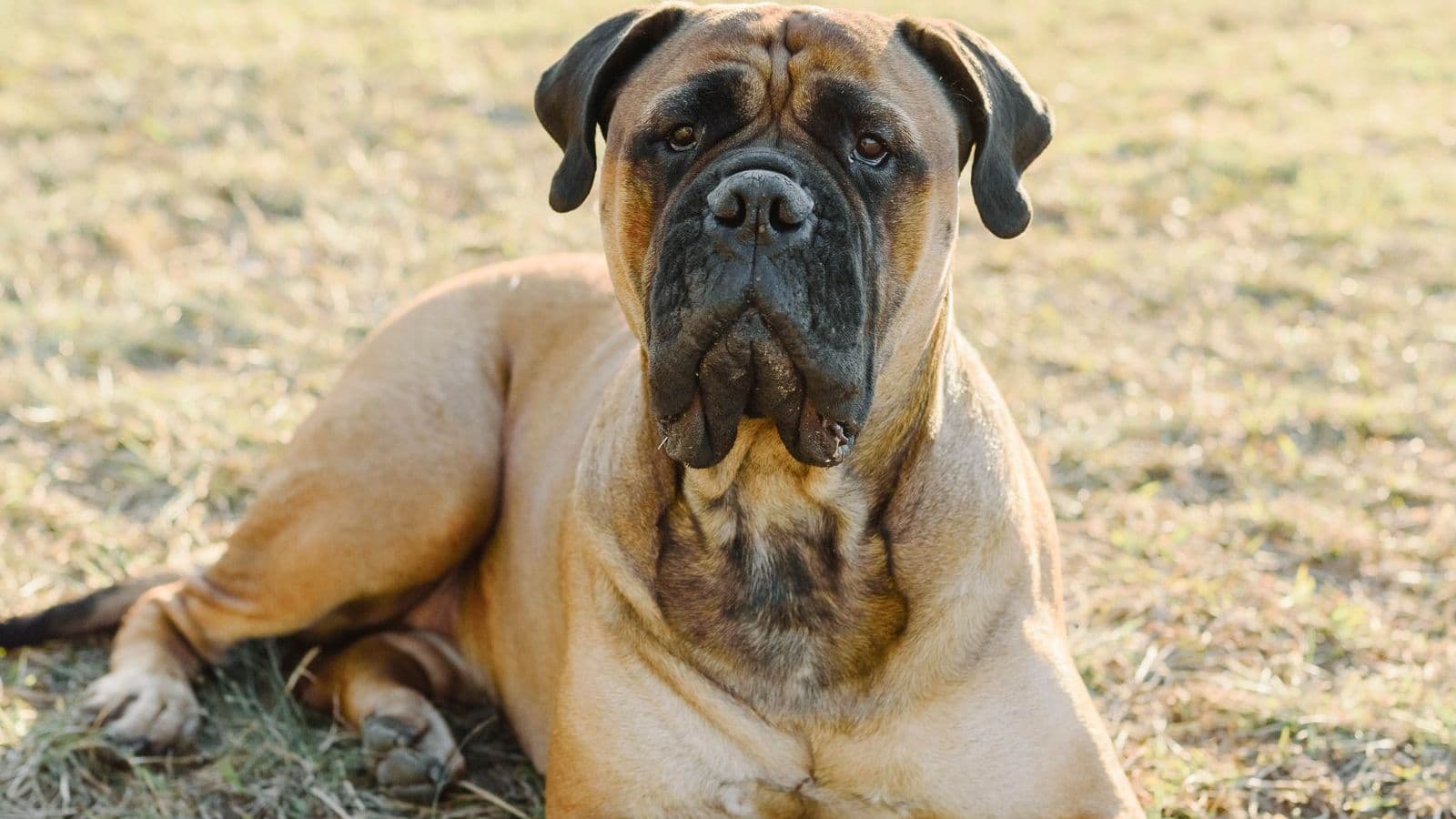
The Bullmastiff is a powerful, devoted guardian breed. It was bred in 19th-century England by crossing the Mastiff with the Bulldog to make the "gamekeeper's night dog," a dog fast and strong enough to catch and pin poachers without hurting them badly. That history built a calm, confident, deeply loyal protector: large, imposing, watchful of strangers, and closely bonded to its family. The Bullmastiff is a gentle, loving companion at home and a real deterrent to intruders. It needs an owner who understands what it takes to own a powerful guardian dog.
Three things shape how you train a Bullmastiff: its size, its guardian nature, and its stubborn streak. This breed is smart and more willing to please than some other mastiffs, but it grows huge, so anything you allow as a puppy becomes a real problem in a 110-plus-pound adult. It is also naturally protective and a bit independent, plus sensitive, so harsh handling backfires.
Teach manners early while the dog is still small, socialize it a lot to keep its guarding instinct sound, and lead with calm consistency. Do this, and you get a magnificent, devoted, well-mannered guardian. Skip the early work, and you end up with a huge, stubborn, suspicious dog you can't manage. This is not a breed for a first-time dog owner.
This guide covers what works with a Bullmastiff, week by week, built around how this powerful, guarding, stubborn breed actually learns.
At a glance:
- Trainability: 7/10, more biddable than some mastiffs, but a stubborn streak
- Biggest risk factor: size, whatever a puppy gets away with becomes serious at 110+ pounds
- Health note: joint care while growing, drooling, and heat management for the brachycephalic-leaning face
- Example: a Bullmastiff puppy that jumps up and gets away with it can knock over an adult once fully grown
- Not for: first-time owners or homes that can't commit to early size-management training
What Makes Training a Bullmastiff Different
Four breed traits shape your approach.
1. Size makes manners urgent. A habit that's cute in a puppy, like jumping up or leaning on you, turns dangerous in a 110-plus-pound adult. You have a short window to teach polite greetings, loose-leash walking, and self-control while the dog is still small. This urgency is the main training challenge with this breed.
2. A guardian mindset. The Bullmastiff naturally watches strangers closely and protects its family and territory. Heavy, early, ongoing socializing is a must, so that instinct turns into good judgment instead of overreacting, especially given the dog's size and strength.
3. Stubborn and a bit independent. As a guardian bred to think for itself, the Bullmastiff weighs your requests and has its own opinions. It works well for calm, patient training with an owner it respects, and it pushes back against drilling and pressure.
4. Sensitive, low-energy, and needs extra care. Despite its power, the Bullmastiff is sensitive and shuts down under harsh treatment. It's fairly low-energy and calm, but its slow-growing joints need protecting, it drools, and its flatter face means you must watch it closely in heat.
Week-by-Week Training Plan for Your Bullmastiff
Below is the framework we use at TailorPup for a Bullmastiff-specific 12-week plan, written for a committed owner. Run it at home; the order and emphasis are the point.
Weeks 1 and 2 : Foundation and Intensive Socialization
Socialization leads with this guardian breed. Expose the puppy calmly and positively to many people, places, sounds, and well-controlled dogs while it is still small. Build engagement with high-value rewards in three to four short daily sessions, and begin gentle handling for grooming and care.
Weeks 3 and 4 : Core Commands and Impulse Control
Lure sit and down, mark, reward, and add cues once reliable, expecting a stubborn but biddable learner. Start impulse-control work, wait at doors and calm settling, which matters enormously in a future giant. Keep sessions short, patient, and end on a win.
Weeks 5 and 6 : Leash Work (While It Is Possible)
This is critical with a future 110-plus-pound dog. Teach loose-leash walking now, while you can still physically manage the puppy. Use stop-and-stand for pulling and a front-clip harness, and practice daily so the behavior is solid before the dog reaches full size, keeping exercise low-impact to protect growing joints.
Weeks 7 and 8 : Recall, Greetings, and Counter-Conditioning
Build recall with rewards on a long line, aiming for reliable control. Work hard on calm greetings, since a leaning or jumping Bullmastiff is overwhelming at full size, and begin counter-conditioning to strangers so the guarding instinct stays discerning. Our reactivity guide lays out the method.
Weeks 9 and 10 : Settling, Management, and Care
Teach a solid settle behavior so the dog has a calm default around visitors, and establish clear household rules for guests. Keep up gentle exercise and care, manage the dog carefully in heat, and keep socializing throughout, since guardian breeds need it lifelong.
Weeks 11 and 12 : Generalization
Work on manners and calm in more distracting settings, controlled responses to strangers, and reliable leash behavior. The goal is a stable, well-mannered, controllable guardian that is safe and predictable in real life, not a precision obedience dog.
Common Bullmastiff Training Mistakes
Three mistakes show up repeatedly with this breed.
Mistake 1 : Delaying manners because the puppy is calm. The window to teach leash and greeting manners while the dog is small closes fast. Owners who wait end up with an enormous dog that never learned the rules. Start early and stay consistent.
Mistake 2 : Under-socializing the guardian instinct. This is the dangerous one. Without heavy, early, ongoing socialization, the Bullmastiff's protectiveness becomes indiscriminate suspicion, a serious matter in a dog this size. Socialization is not optional.
Mistake 3 : Trying to force a stubborn, sensitive dog. Confrontation and harsh handling make a Bullmastiff dig in and damage trust. Use calm, patient, reward-based methods and realistic expectations. The full list is in our Bullmastiff training mistakes guide.
Frequently Asked Questions
Are Bullmastiffs easy to train ? Moderately, with patience. They are intelligent and more biddable than some mastiffs, so reward-based training works, but they are stubborn, independent, and protective. Early manners are essential given the size, and force backfires.
Are Bullmastiffs good for first-time owners ? Generally not. The size, strength, guarding instinct, and stubborn streak suit owners with some experience who can commit to early socialization, manners, and calm leadership.
How much exercise does a Bullmastiff need ? Relatively little: moderate daily walks, kept low-impact while the dog is growing to protect the joints and gentle overall given heat sensitivity. The breed is calm and low-energy but still needs daily engagement and socialization.
Why is my Bullmastiff protective ? Because it was bred as a guardian, so watchfulness toward strangers is instinct. Thorough, positive socialization shapes it into sound judgment, letting the dog tell a guest from a real threat. Channel it through training rather than encouraging it.
Do Bullmastiffs drool a lot ? Yes, the breed drools, along with needing care for its facial folds. These are part of owning the breed, and building handling tolerance early makes grooming and care easier.
Is positive reinforcement effective for Bullmastiffs ? Yes, paired with calm, patient leadership. The sensitive, stubborn breed responds to reward-based training and resents harsh handling, which damages trust and deepens the stubbornness.
Are Bullmastiffs good family dogs ? Yes, for committed families. They are devoted, gentle, and affectionate with their people, including children, but their size and protectiveness mean early socialization, manners, and supervision are essential.
Why TailorPup Was Built for Bullmastiffs
A generic plan ignores what defines this breed: the size that makes early manners non-negotiable, the guarding instinct, the stubbornness, and the sensitivity. That mismatch is genuinely risky with a dog this powerful.
TailorPup builds a 12-week plan around your specific dog: its guardian nature, its age, and the realities of living with it. For a Bullmastiff that means front-loaded intensive socialization, early manners and leash work while the dog is small, calm patient reward-based leadership, counter-conditioning, and a heavy emphasis on management.
Daily 12-minute sessions plus weekly adjustments based on your dog's progress. Plans from $9.99/month, no trial; annual starts at $2 for 7 days. Cancel anytime.
Related: Bullmastiff Training Mistakes · Recall Training · Reactivity Training · Leash Pulling