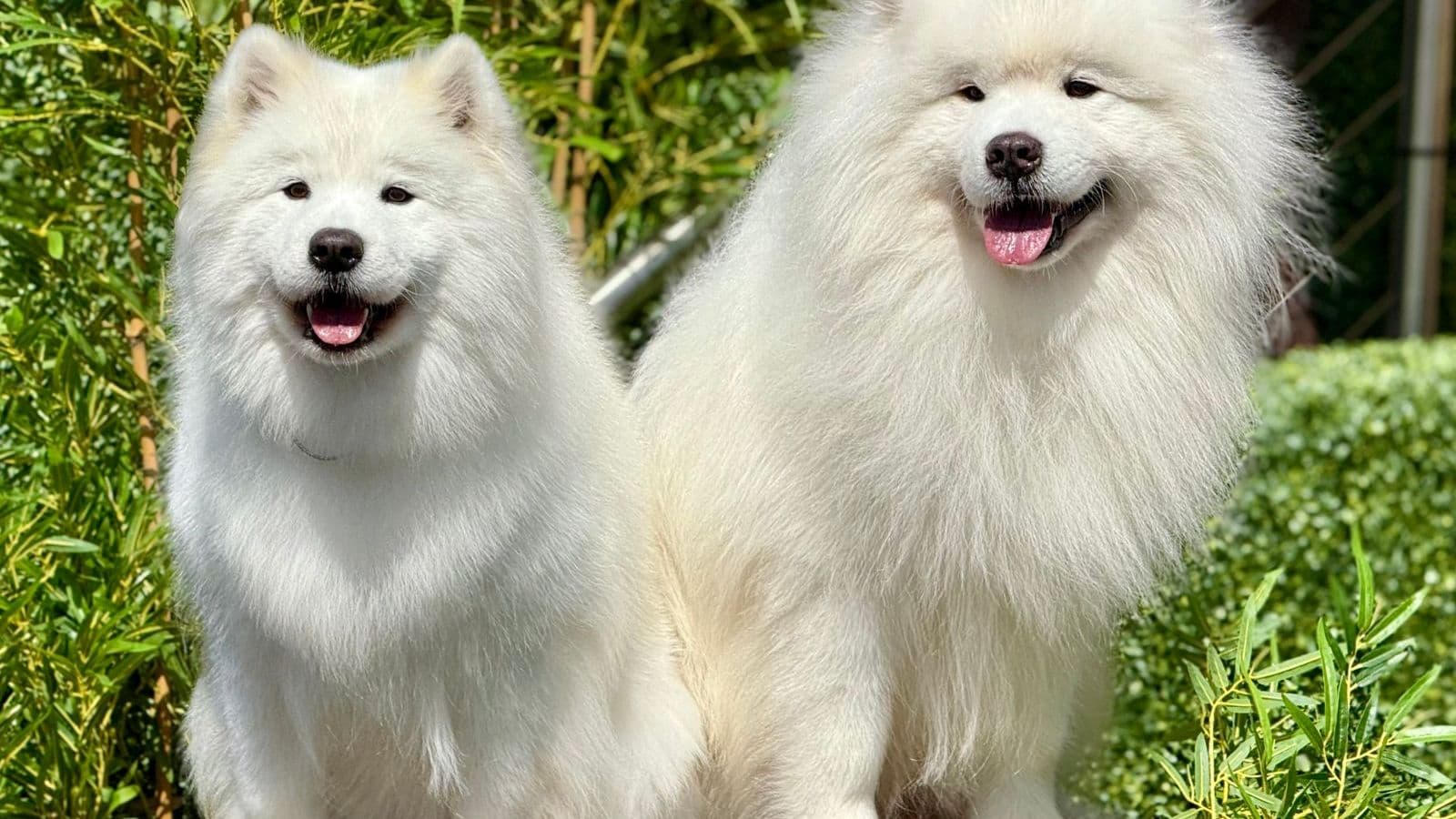
The Samoyed is the smiling, snow-white sled dog of Siberia, bred by the nomadic Samoyede people to haul sledges, herd reindeer, and sleep among the family to keep everyone warm. That last detail matters: unlike many working spitz, the Samoyed lived closely with people, which made it unusually friendly, social, and people-oriented for an Arctic breed. With its famous "Sammy smile," lush white coat, and joyful temperament, the Samoyed is an affectionate, lively, beautiful companion, and a genuine handful of energy, fluff, and independence.
That friendly-but-independent spitz nature is the key to training one. The Samoyed is intelligent and more biddable than some spitz, but it retains a real independent streak, a strong tendency to bark, high energy, and a love of digging and escaping. Its sociability also makes it a poor guard dog and prone to loneliness. Channel the energy, manage the barking early, keep training engaging and reward-based, and provide secure containment, and you get a delightful, devoted, joyful companion. Bore it or leave it isolated, and you get a loud, digging, escape-prone dog.
This guide covers what works with a Samoyed, week by week, built around how a friendly, energetic, independent sled dog actually learns.
At a glance:
- Trainability: 7/10, more biddable than many spitz but retains a sled dog's independence
- Biggest risk factor: boredom, a bored Samoyed digs, escapes, and barks
- Not a guard dog: loves everyone, which makes it a poor watchdog despite the noise
- Example: a Samoyed left alone in the yard without enough exercise can dig its way out within a single afternoon
- Not for: owners who won't commit to secure, escape-proof containment
What Makes Training a Samoyed Different
Four breed traits shape your approach.
1. Friendly but independent. The Samoyed is more social and people-oriented than most spitz, which helps with training, but it retains a sled dog's independent streak and will weigh whether a request is worth its while. It cooperates for engaging, rewarding sessions and tunes out repetition and pressure.
2. A strong tendency to bark. Samoyeds are genuinely vocal, talking, barking, and "wooing" freely, especially when bored or under-stimulated. This is the breed's main management issue, and early, consistent quiet-shaping is essential to keep an expressive dog from becoming a nuisance barker.
3. High energy and a love of digging and escaping. Bred to work hard in the cold, the Samoyed needs substantial daily exercise and mental work, and a bored one digs, escapes, and barks. Secure, escape-proof containment and a real exercise outlet are both essential.
4. Social, not a guard dog, and coat-intensive. The Samoyed loves everyone, so it makes a poor guard dog and dislikes being left alone. Its profuse white double coat also needs serious, regular grooming, and the breed is sensitive to heat.
Week-by-Week Training Plan for Your Samoyed
Below is the framework we use at TailorPup for a Samoyed-specific 12-week plan. Run it at home; the order and emphasis are the point.
Weeks 1 and 2 : Foundation, Socialization, and Quiet
Engagement is fairly easy with this friendly breed. Run three to four five-minute sessions a day with high-value rewards, socialize broadly, and begin barking awareness immediately, rewarding quiet, since getting ahead of the vocal tendency is key. Begin grooming handling for the heavy coat, and establish an exercise routine.
Weeks 3 and 4 : Core Commands
Samoyeds learn well for spitz. Lure sit and down, mark, reward, and add cues once reliable. Keep sessions short, lively, and varied to hold the interest of an independent dog, and add tricks, which this clever breed enjoys.
Weeks 5 and 6 : Leash Work
A strong, energetic Samoyed can pull, with sled dog in its blood. Use stop-and-stand for pulling and a front-clip harness for control. Keep early walks engaging, reward checking in, and pair leash work with real exercise so the dog is not bursting with energy on the lead.
Weeks 7 and 8 : Barking and Recall
Formalize the quiet work, the breed's key management piece: reward calm, manage triggers, and teach a clear "quiet" cue rather than reacting to the noise. Build recall on a long line, paying every success well, since the independent streak and prey drive can pull the dog away. See our barking guide for the full protocol.
Weeks 9 and 10 : Channeling Energy and Containment
Give the energetic, clever dog real outlets: hiking, running, sledding or carting, fetch, and scent games all suit it. At the same time, audit your fencing, because a bored Samoyed digs and escapes. A well-exercised, mentally satisfied Samoyed is far less interested in getting out, and a job genuinely suits the breed.
Weeks 11 and 12 : Generalization
Prove the skills in the real world: loose-leash walking past distractions, recall in a fenced area, quiet on cue around triggers, and settled behavior in busier places. A Samoyed that listens at home but not outside is only partly trained, and these last two weeks finish the job.
Common Samoyed Training Mistakes
Three mistakes show up repeatedly with this breed.
Mistake 1 : Ignoring the barking. The Samoyed is genuinely vocal, and the barking becomes a serious habit if unmanaged, especially in a bored dog. Shape and reward quiet from day one, manage triggers, and meet the dog's exercise needs rather than reacting later.
Mistake 2 : Underestimating the energy and leaving the dog isolated. A bored, under-exercised, or lonely Samoyed digs, escapes, and barks. The breed needs real daily exercise, mental work, and company, since its sociability means it does poorly left alone.
Mistake 3 : Weak containment and neglecting the coat. The breed is a digger and escaper, so secure fencing is essential, and the profuse coat mats without regular grooming. Secure your yard and stay on top of grooming. The full list is in our Samoyed training mistakes guide.
Frequently Asked Questions
Are Samoyeds easy to train ? Reasonably, for a spitz. They are friendly and more biddable than many spitz, so reward-based training works, but the independent streak, high energy, and barking mean they need engaging sessions and patience. Managing the barking and energy is the real work.
Why does my Samoyed bark so much ? Because the breed is genuinely vocal and expressive, and boredom makes it worse. Shape and reward quiet early, manage triggers, and meet the dog's substantial exercise and companionship needs, and the barking becomes manageable.
How much exercise does a Samoyed need ? A lot: an hour or more of activity daily plus mental work and ideally a job. This is a working sled dog, and under-exercised Samoyeds dig, escape, and bark. Hiking, running, and pulling sports all suit the breed.
Are Samoyeds good guard dogs ? No, and that is part of their charm. They are friendly with everyone, including strangers, so they make poor guard dogs but wonderful, sociable companions, provided they are not left lonely.
Do Samoyeds shed a lot ? Enormously. The thick white double coat sheds year-round and blows out heavily a couple of times a year, and it needs frequent, thorough grooming. The coat should never be shaved, as it protects against both heat and cold.
Is positive reinforcement effective for Samoyeds ? Yes, ideally. The friendly, clever breed responds well to engaging reward-based training and resists repetition and harsh handling, which only bring out the independent streak.
Are Samoyeds good family dogs ? Yes, excellent ones, for active families. They are affectionate, joyful, and great with children, with a famously sociable nature. They need their exercise, grooming, barking, and companionship needs met, and secure containment.
Why TailorPup Was Built for Samoyeds
A generic plan ignores what defines this breed: the friendly independence, the strong barking tendency, the high energy, and the love of digging and escaping. That mismatch is why standard advice leaves Samoyed owners with a loud, escape-prone dog.
TailorPup builds a 12-week plan around your specific dog: its sled-dog nature, its age, and the behaviors you are seeing. For a Samoyed that means an early barking protocol, real exercise and a job, careful recall around the independence, secure-containment focus, grooming handling, and engaging reward-based methods.
Daily 12-minute sessions plus weekly adjustments based on your dog's progress. Plans from $9.99/month, no trial; annual starts at $2 for 7 days. Cancel anytime.
Related: Samoyed Training Mistakes · Barking Solutions · Recall Training · Leash Pulling