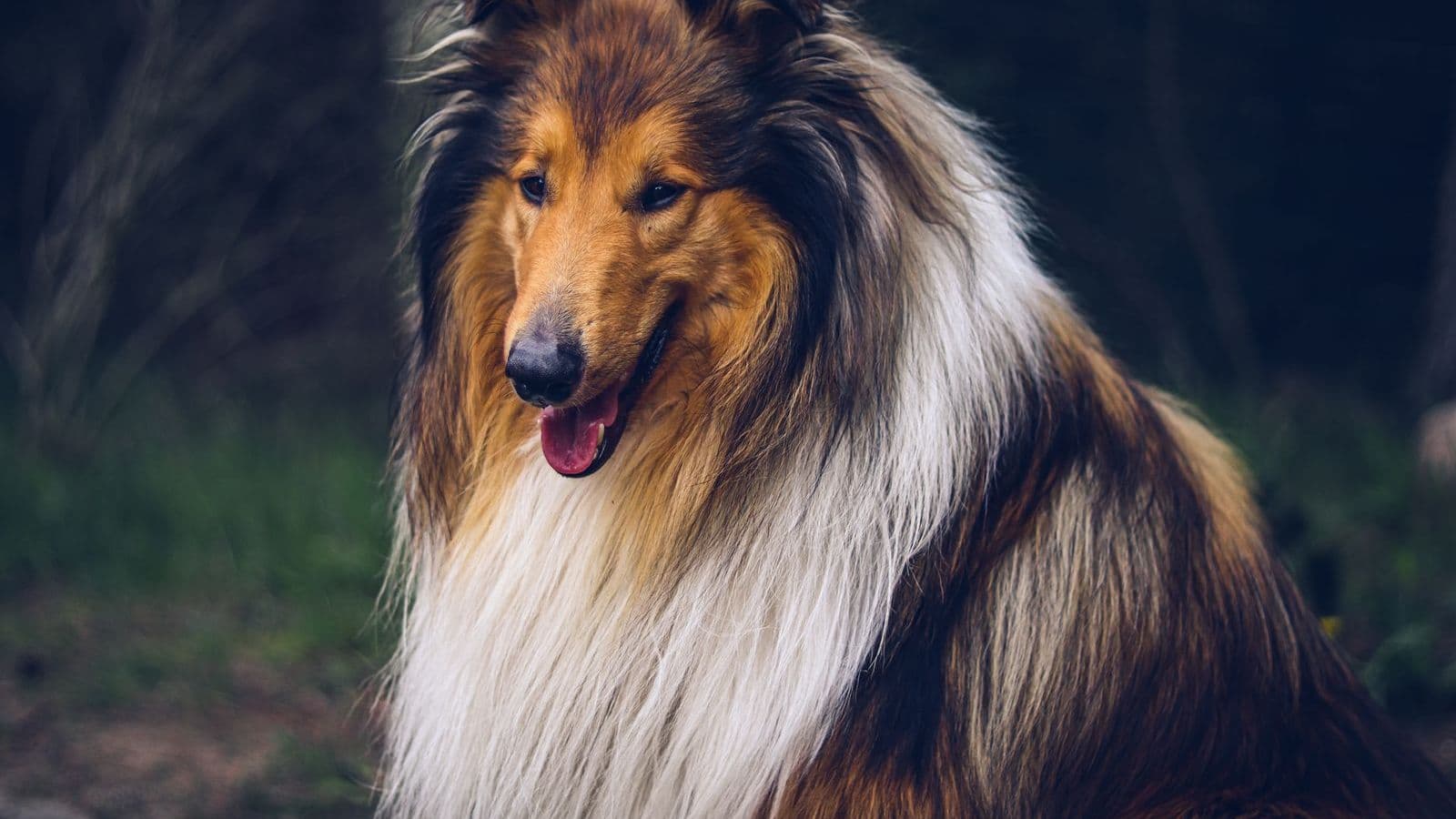
The Rough Collie has the most recognizable face in dog history. Lassie transformed the breed into a cultural icon in the mid-twentieth century, and the image has stuck: the long mahogany-and-white coat, the elegant mane, the soulful eyes. What the films did not always convey is that Lassie's intelligence was not exaggerated, Rough Collies are genuinely sensitive, perceptive, and deeply responsive to human emotion. What the films also did not show is the barking.
The Rough Collie was developed in Scotland and northern England as a herding breed working long days on hillsides with minimal handler supervision. That history produced a dog that is independent enough to make decisions, vocal enough to move livestock, and sensitive enough to read the flock's moods, and your moods. Modern Rough Collies have those same traits.
The sensitivity makes them exceptionally responsive to gentle training. The independence means they have opinions. The vocal drive means a barking habit can develop quickly if not managed from puppyhood. The herding instinct means running children, cyclists, and joggers may be irresistible without training.
The Rough Collie trained correctly is one of the most elegant companion dogs: attentive, responsive, affectionate, and genuinely beautiful to watch work. The Rough Collie trained generically tends toward anxious barking, herding family members, and reactivity to fast movement.
At a glance:
- Trainability: 8/10, sensitive and responsive, learns quickly with gentle, positive methods
- Biggest risk factor: harsh corrections, this breed shuts down or turns anxious under pressure
- Vocal instinct: strong vocal drive toward movement, strangers, and sounds that needs early "quiet" shaping
- Example: a raised voice during a session leaves a Rough Collie shut down instead of focused.
- Not for: owners planning pressure-based training or unable to manage herding around children and bikes
What Makes Training a Rough Collie Different
Four breed characteristics define the training experience.
1. Exceptional emotional sensitivity. Rough Collies read owners with precision. They respond visibly to tone of voice, body language, and handler stress. Harsh corrections, raised voices, and inconsistent handling produce anxiety in this breed more reliably than in most herding dogs. Training sessions must be calm, clear, and upbeat. A session where the handler is frustrated produces a shut-down or anxious dog.
2. Vocal drive that requires early management. Collies bark, at movement, at strangers, at sounds, at perceived threats. The vocal drive is genetic and useful in a herding context but needs management in domestic life. Shaping "quiet" from puppyhood is orders of magnitude easier than trying to reduce an established barking habit in an adult. Our barking guide covers the full protocol.
3. Strong herding instinct toward movement. Running children, cyclists, joggers, and other dogs trigger herding behavior: nipping at heels, circling, barking, and intense staring. This needs to be addressed with recall and redirection work in adolescence, before the behaviors become habits.
4. High exercise and mental stimulation needs. Rough Collies are athletic dogs bred for all-day work. They need sixty or more minutes of vigorous exercise daily and mental engagement. An under-exercised Rough Collie is typically an anxious, over-reactive, loudly barking one.
Week-by-Week Training Plan for Your Rough Collie
Below is the framework we use at TailorPup for a Rough Collie-specific 12-week plan.
Weeks 1 and 2 : Foundation and Calm Engagement
Establish training as a calm, positive activity from day one; Rough Collies pick up on excitement and over-stimulate easily.
- Keep sessions short, eight to ten minutes, with your voice low and your energy measured.
- Establish name recognition, mark voluntary eye contact, and reward generously.
- Begin broad socialization with people, dogs, and new environments.
- Prioritize early exposure to running children and bikes, the herding triggers that need desensitizing first.
Weeks 3 and 4 : Core Commands and "Quiet"
Install the core cues, which this quick breed learns fast, and begin shaping a "quiet" cue in parallel. Our puppy basics guide covers the mechanics.
- Teach sit, down, and stay with positive luring, marking and rewarding the instant they happen.
- Begin "quiet" shaping: when the dog is calm and not barking, mark and reward the silence.
- Build quiet into a cued behavior, not just the absence of barking.
Weeks 5 and 6 : Loose Leash Walking and Movement Desensitization
Install leash manners and start counter-conditioning the breed's sensitivity to fast movement.
- Use the stop-and-stand method for loose-leash walking, rewarding every step on a slack leash.
- Reward the dog for watching a child run or a cyclist pass at distance without reacting.
- Build proximity gradually; distance management is easier than working on threshold.
Weeks 7 and 8 : Recall and Herding Interruption
Build recall and install an interrupter for the stalk-and-chase herding sequence before it completes.
- Train recall in a fenced area with high-value rewards.
- Install a strong "leave it" or "off" cue for the moment the dog fixes its gaze on a moving target.
- Cue once, reward the look back to you, and redirect to a toy or game rather than only interrupting.
Weeks 9 and 10 : Barking Management
Work the specific barking triggers one at a time, the front window, the doorbell, and passing dogs. Our barking guide covers environmental modification in detail.
- For window barking: block visual access and train a "go to mat" away from the window, rewarding heavily.
- For the doorbell: desensitize with recordings first, then move to live practice.
- Reward calm, quiet responses to each trigger as it loses its charge.
Weeks 11 and 12 : Generalization and Herding Channeling
Proof the foundations in new environments and give the herding drive a legitimate outlet.
- Proof all cues, including recall and "quiet," in gradually busier settings.
- Channel the herding drive into agility flatwork, herding balls, or structured fetch.
- Keep a real outlet in the routine; a Collie with a job rarely turns that drive on the children.
Common Rough Collie Training Mistakes
Three mistakes repeat with this breed.
Mistake 1 : Using harsh corrections with a sensitive breed. A Rough Collie corrected harshly either shuts down completely or becomes anxious and reactive. The breed's sensitivity is its greatest training asset and its biggest vulnerability. Keep everything calm and positive.
Mistake 2 : Allowing barking to become habitual. "It's a Collie, they bark" leads owners to tolerate barking that becomes harder to manage with every passing week. Shape quiet from puppyhood; the genetic drive cannot be eliminated but the habit is entirely preventable.
Mistake 3 : Inadequate exercise before expecting focus. A Rough Collie that has not had physical exercise is not equipped to focus on training. Exercise first, train after, always. The full list is in our Rough Collie training mistakes guide.
Frequently Asked Questions
Are Rough Collies easy to train ? Yes. They are sensitive, responsive, and eager to work with their owners. The challenges are managing the barking and herding instincts, not teaching commands.
Why does my Rough Collie bark so much ? The vocal drive is genetic, they were bred to work on hillsides where barking was a tool. Management and shaping quiet from early on significantly reduces it; complete silence is not realistic.
Do Rough Collies have the Lassie intelligence ? Yes. The breed is genuinely intelligent and was not misrepresented in that regard. They learn quickly, read human emotion accurately, and make independent decisions.
How much exercise does a Rough Collie need ? An hour or more of vigorous exercise daily, plus mental stimulation. They were bred for all-day work and need significant activity to be calm at home.
Are Rough Collies good with children ? With socialization, yes, but the herding instinct means they may try to herd running children. Early desensitization and a reliable recall prevent most issues.
Do Rough Collies shed a lot ? Significantly, particularly the seasonal "blowing the coat" twice a year when the undercoat comes out in volumes. Regular brushing manages it; grooming handling should be introduced from puppyhood.
Can a Rough Collie be left alone ? For moderate periods with adequate exercise beforehand, yes. The breed forms strong bonds and may develop separation anxiety if isolated without preparation. Gradual alone-time training prevents this.
Why TailorPup Was Built for Rough Collies
Generic plans apply pressure-based training to a breed that shuts down under pressure, ignore the barking management that needs to start in week one, and miss the herding-instinct desensitization that prevents the biggest behavioral problems.
TailorPup builds a 12-week plan around your specific Rough Collie: its age, its current barking level, and the behaviors you are managing. For a Rough Collie that means gentle progressive training, a barking protocol from day one, and a movement-desensitization track that runs alongside all the other work.
Daily 12-minute sessions plus weekly adjustments based on your dog's progress. Plans from $9.99/month, no trial; annual starts at $2 for 7 days. Cancel anytime.
Related: Rough Collie Training Mistakes · Barking Solutions · Recall Training · Puppy Training Basics