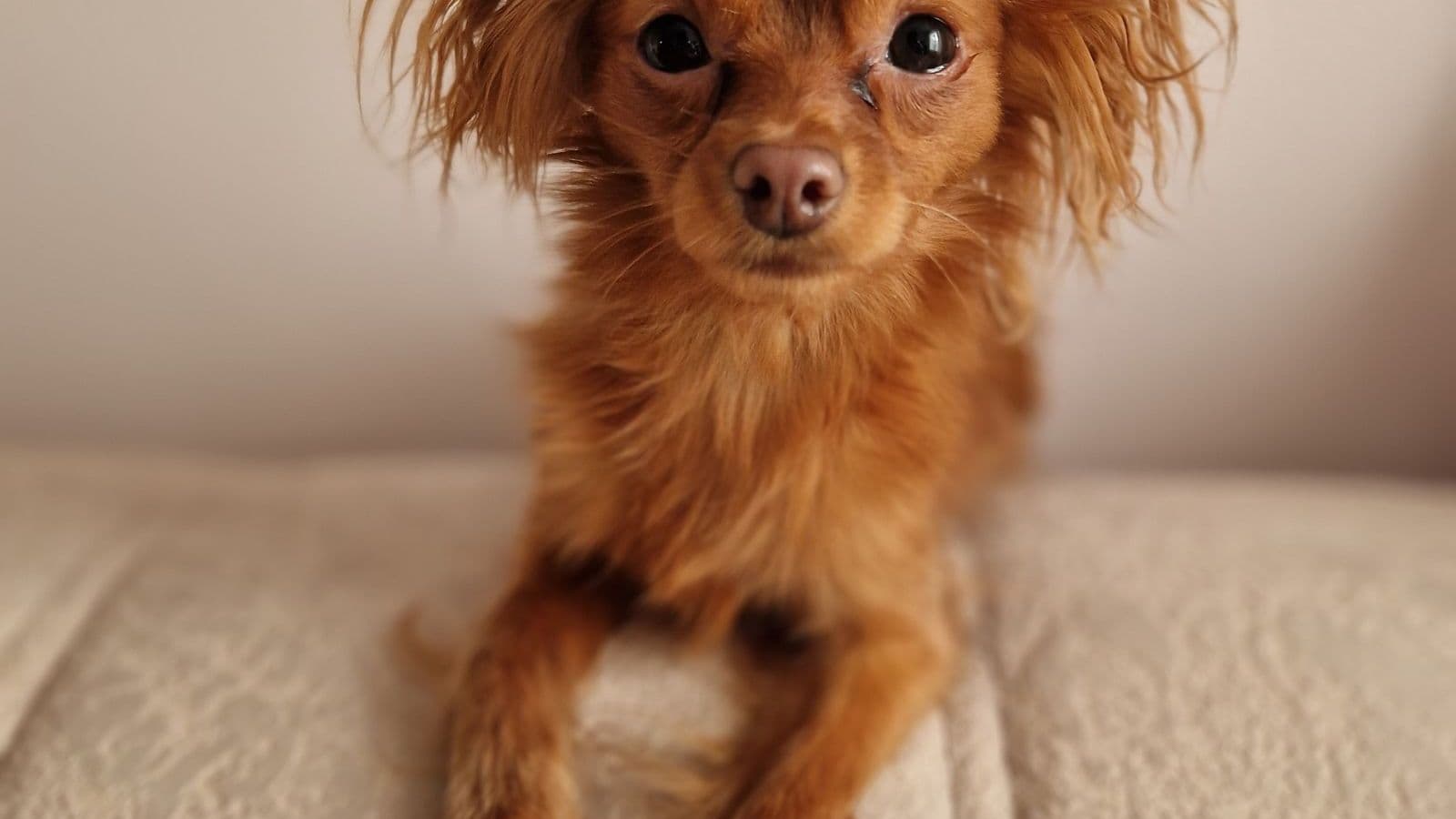
The Russian Toy (Russkiy Toy) is one of the smallest dog breeds in the world, weighing just 1-3 kg, and one of the most distinctly Russian. It descends from the English Toy Terrier, which arrived in Russia in the eighteenth century as a fashionable import among the nobility and a capable ratter. The breed nearly vanished after the Russian Revolution, when foreign breeds fell out of favor, and was revived during the Soviet era almost entirely from the small surviving population, with minimal outside genetic material, which is why it developed into a breed quite distinct from its English ancestor.
The Russian Toy comes in two coat varieties, smooth-coated and long-coated, the latter with distinctive feathering on the ears that gives an almost Papillon-like elegance. Despite a body small enough to fit in a coat pocket, the breed carries far more energy and terrier vivacity than most owners expect from a dog of this scale. This is not a passive lap ornament; it is an alert, quick-moving, lively, and playful little dog with a real terrier ancestry showing through.
For an owner, the Russian Toy's combination of tiny size and genuine energy defines the training challenge. Its terrier-derived liveliness means it needs real engagement and exercise, not just cuddles; its alert nature makes barking a consideration; and its diminutive frame tempts the carrying and indulgence that produce small dog syndrome. The breed is also genuinely fragile, vulnerable to injury from falls and rough handling. Given consistent rules, early bark management, daily activity, and reward-based training, all while protecting the delicate body, the Russian Toy is a charming, devoted, and surprisingly capable companion.
At a glance:
- Trainability: 7/10, quick and bright, learns readily when owners take training seriously
- Biggest risk factor: small dog syndrome, owners are reluctant to enforce rules with such a tiny dog
- Physical note: genuine fragility at 1-3 kg, falls and rough handling risk serious injury
- Example: a Russian Toy that's always carried never learns to walk confidently on its own four feet.
- Not for: homes with very young or boisterous children who could handle it too roughly
What Makes Training a Russian Toy Different
1. High energy in a minimal frame. The Russian Toy is terrier-derived and carries the corresponding activity level, alert, quick, and playful. It needs real engagement and exercise, and an owner who treats it as a passive lap dog will find a frustrated, mischievous one.
2. Small dog syndrome as the primary risk. The tiny size makes owners reluctant to enforce rules, but the Russian Toy is fully capable of learning manners. The question is whether the owner takes training seriously and holds consistent rules.
3. An alert, vocal nature. The terrier heritage brings watchful alertness and a readiness to bark, so a "quiet" cue installed early prevents a persistent barking habit in this easily-excited little dog.
4. Genuine physical fragility. At 1-3 kg, the Russian Toy can be seriously injured by falls, rough handling, or rough play from larger dogs. This does not justify behavioral exceptions, but it does mean managing the physical environment carefully.
Week-by-Week Training Plan for Your Russian Toy
Weeks 1 and 2 : Physical Safety and Consistent Rules
Establish rules without size-based exceptions and protect the fragile body. Our puppy basics guide covers the mechanics.
- Set household rules with no exceptions for the dog's tiny size.
- Prevent falls from heights, which are a serious injury risk.
- Begin a "quiet" cue and pair short sessions with tiny, high-value rewards.
- Socialize with calm dogs of all sizes (managed) and diverse people.
Weeks 3 and 4 : Core Commands
Sit, down, and stay come readily with the quick, bright mind.
- Lure the behaviors and reward the instant they happen.
- Keep sessions to three to five minutes, since the breed tires of repetition fast.
- Install "quiet" before the alert-barking habit forms.
Weeks 5 and 6 : Loose Leash, Walking, Not Carrying
Install leash manners on a trachea-safe harness.
- Use a Y-harness, essential for the tiny neck.
- Apply the stop-and-stand method for loose-leash walking.
- Let the dog walk on its own four feet rather than being carried.
Weeks 7 and 8 : Bark Management and Recall
Proof "quiet" and build a reliable recall.
- Apply "quiet" at windows, doors, and visitor arrivals.
- Train recall on a long line in a fenced area.
- Reward calm, settled behavior generously.
Weeks 9 and 10 : Social Confidence Building
Build confidence through calm, positive exposure.
- Arrange calm, positive exposures to new environments.
- Socialize carefully with larger dogs, managing the physical risk.
- Reward relaxed, curious behavior.
Weeks 11 and 12 : Tricks and Advanced Skills
Engage the quick, lively mind.
- Teach trick chains, which the breed's terrier quickness makes enjoyable.
- Introduce nose work and puzzle feeders.
- Establish a sustainable rhythm of activity, enrichment, and grooming.
Common Russian Toy Training Mistakes
Mistake 1 : Carrying because the dog is tiny. A carried Russian Toy develops carrying-dependency and often becomes demanding and anxious about being put down. Let it walk.
Mistake 2 : Allowing all jumping because the dog is small. Jumping on people and furniture still risks injury and reinforces demanding behavior. Rules apply.
Mistake 3 : Underestimating the energy level. This is not a sit-quietly-in-a-bag dog; it needs exercise, mental stimulation, and active engagement.
Mistake 4 : Allowing alert barking. Install a "quiet" cue early to keep the terrier alertness in check. Full breakdown : Russian Toy training mistakes.
Frequently Asked Questions
Are Russian Toys easy to train ? With consistent positive training taken seriously, yes, they are quick, bright, and food-motivated. The main obstacle is the owner's reluctance to enforce rules with such a tiny dog; treated as a real dog, the Russian Toy learns manners readily and enjoys trick training.
How much exercise does a Russian Toy need ? Twenty to thirty minutes of moderate activity daily, plus mental stimulation. Despite the tiny size, the terrier heritage gives the breed real energy, so daily walks, play, and engagement matter rather than just lap time.
Are Russian Toys hypoallergenic ? No. Both the smooth and long coat varieties shed moderately, and the breed is not hypoallergenic. Regular brushing, especially for the long-coated variety, manages the shedding.
Are Russian Toys good apartment dogs ? Excellent, they are tiny and adaptable, but they need daily walks and play, not just confinement. A reliable "quiet" cue is important in close quarters given the alert, vocal nature.
Are Russian Toys good with children ? With gentle, older children only. The genuine physical fragility means a fall or rough handling can cause serious injury, so the breed is generally not suited to homes with very young or boisterous children.
Are Russian Toys rare ? Outside Russia and the Baltic states, yes, uncommon globally, though a growing international following exists. Finding a reputable breeder usually requires some research.
How long do Russian Toys live ? Typically twelve to fifteen years. Responsible breeders health-test for the dental, patella, and heart conditions seen in toy breeds, and keeping the Russian Toy lean with good dental care and protection from falls supports a long, comfortable life.
Why TailorPup Was Built for Russian Toys
A generic small-dog plan treats every tiny breed as a low-energy lap dog, missing the Russian Toy's terrier-derived energy and intelligence. TailorPup's Russian Toy plan matches the breed's real temperament with daily engagement, manages the alert barking, and holds the consistent rules that prevent small dog syndrome, all while respecting the fragile body.
Daily 12-minute training sessions plus weekly adjustments. Plans from $9.99/month, no trial; annual starts at $2 for 7 days. Cancel anytime.
Related: Russian Toy Training Mistakes · Barking Solutions · Puppy Training Basics