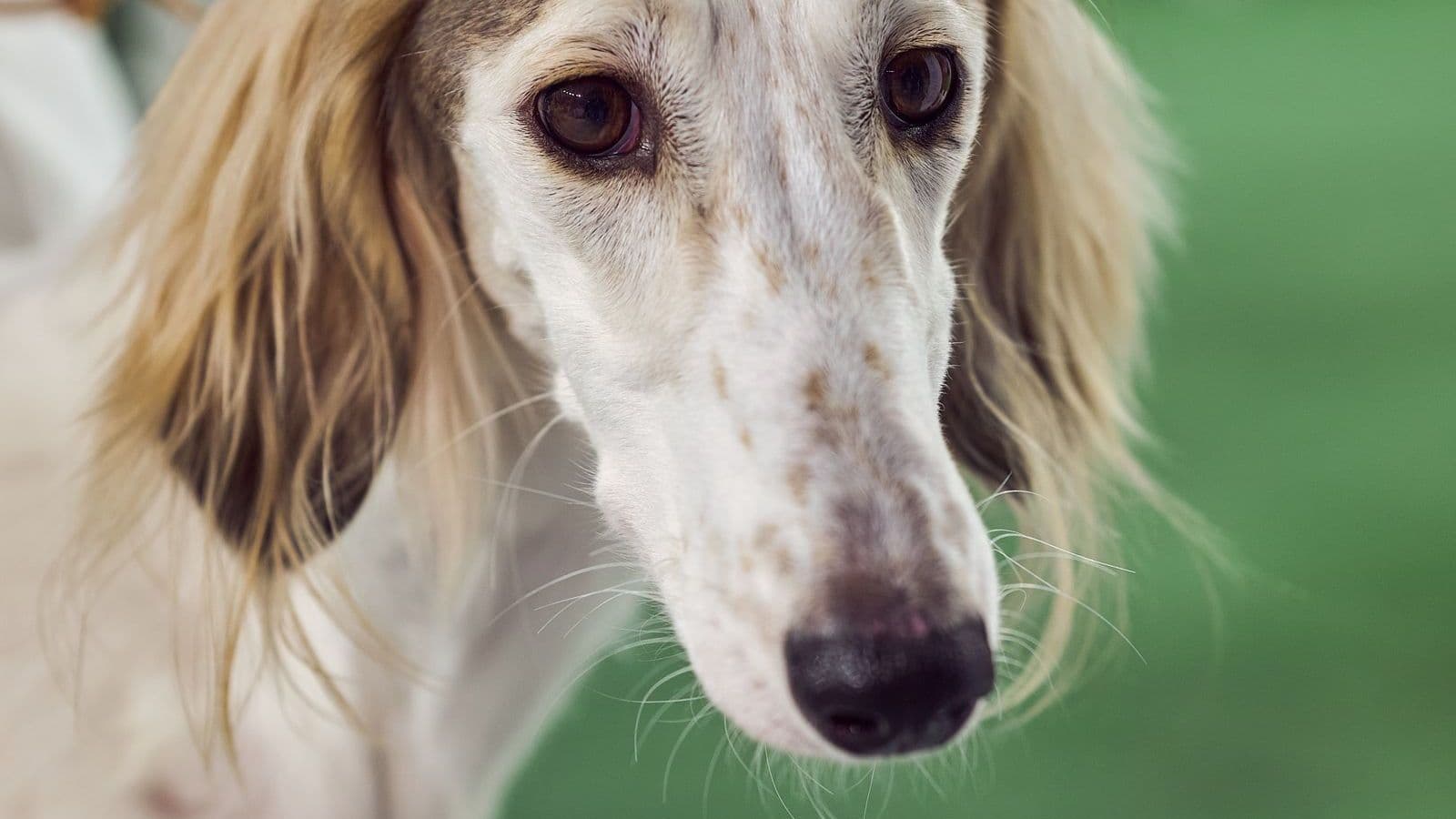
The Saluki is one of the oldest breeds in existence, an elegant Middle Eastern sighthound that hunted gazelle alongside nomadic tribes for thousands of years and was treasured as a noble, almost sacred companion. Slender, graceful, and built for blistering speed and endurance across open desert, the Saluki is among the fastest dogs on earth over distance. It is also deeply independent, sensitive, and aloof, a dog that bonds quietly and devotedly with its family while keeping its own counsel and answering, above all, to its own ancient hunting instincts.
That ancient sighthound nature is the key to training one, and it is why the Saluki has one of the lowest trainability ratings of any breed, not from lack of intelligence but from sheer independence. Bred to spot game and pursue it for miles entirely on its own judgment, the Saluki does not look to humans for direction the way working breeds do.
It has an immense prey drive, a recall that is genuinely unreliable around movement, and a soft, sensitive temperament that harsh handling devastates. Train gently, manage the prey drive with secure containment, and adjust your expectations to the breed, and you get an exquisite, devoted companion. Fight its nature, and you will lose.
This guide covers what works with a Saluki, week by week, built around how an ancient, independent, sensitive sighthound actually learns.
At a glance:
- Trainability: 4/10, one of the lowest ratings of any breed, from extreme independence, not low intelligence
- Biggest risk factor: immense prey drive, recall around movement is genuinely unreliable and unsafe off-leash
- Sensitivity note: a soft temperament that harsh handling devastates, gentle reward-based methods only
- Example: a rabbit darts across the yard and a Saluki is gone in seconds, chase instinct overriding any recall.
- Not for: owners expecting obedience-breed responsiveness or lacking secure, tall fencing
What Makes Training a Saluki Different
Four breed traits shape your approach.
1. Extreme independence. The Saluki was bred to hunt at a distance on its own judgment for thousands of years, so it simply does not defer to handlers the way working breeds do. This is not stupidity; it is one of the most independent canine minds there is. Training must be genuinely rewarding and your expectations realistic.
2. An immense prey drive and blazing speed. A fleeing animal triggers an instant, all-consuming chase, and the Saluki is fast enough to be far away in seconds. Recall around movement is genuinely unreliable, off-leash freedom in unfenced areas is unsafe, and secure, tall fencing is essential.
3. Highly sensitive. Behind the aloof dignity is a soft, sensitive dog that cannot tolerate harshness. Corrections, raised voices, or pressure shut a Saluki down and damage trust completely. Gentle, patient, reward-based training is the only approach that works.
4. Aloof but devoted, and athletic. The Saluki is reserved with strangers and quietly bonded to its family, and it needs regular chances to run flat-out in a safe, enclosed space. Socialization keeps the reserve confident, and exercise keeps the athlete content.
Week-by-Week Training Plan for Your Saluki
Below is the framework we use at TailorPup for a Saluki-specific 12-week plan. Run it at home; the order and emphasis are the point, and patience is everything.
Weeks 1 and 2 : Foundation and Socialization
Build engagement with high-value, gentle rewards and socialize broadly so the Saluki's reserve stays confident. Run three to four short sessions a day: name, mark eye contact, reward warmly. Keep everything low-pressure, because this sensitive, independent hound forms its view of training early. Our puppy basics guide covers the foundations.
Weeks 3 and 4 : Core Commands
Lure sit and down, mark, reward, and add cues once reliable, expecting a deliberate, independent learner who needs a genuine reason to comply. Keep sessions very short, gentle, and richly rewarded, and never drill. End on a success, and celebrate small wins.
Weeks 5 and 6 : Leash Work
Use a comfortable harness and a martingale collar, since a Saluki's slim head slips flat collars easily. Use stop-and-stand for any pulling, and reward checking in. Keep early walks calm and avoid situations likely to fire the prey drive.
Weeks 7 and 8 : Recall (Manage Expectations)
Build recall on a long line in low-distraction areas, jackpot every success, and never call the dog for anything it dislikes. Be realistic: a Saluki is among the least reliable breeds for off-leash recall around prey, and that is normal. Treat the long line and secure fencing as permanent, not temporary, tools.
Weeks 9 and 10 : Channeling Energy and Drive
Give the breed safe outlets for its need to run: free galloping in a securely fenced field, lure coursing, and gentle play all suit it. A Saluki that gets to stretch out at full speed in safety is serene and content at home, where it loves to lounge on soft surfaces.
Weeks 11 and 12 : Generalization
Prove the skills in the real world: calm leash walking past distractions, recall inside fenced areas with mild temptation, and settling at home, which sighthounds do beautifully. A Saluki that listens indoors but not outside is normal for the breed, so these two weeks consolidate gentle, realistic progress rather than chasing perfect off-leash obedience.
Common Saluki Training Mistakes
Three mistakes show up repeatedly with this breed.
Mistake 1 : Trusting off-leash recall. This is the dangerous one. The prey drive and extraordinary speed make an unfenced Saluki a serious risk; many are lost this way. Treat open spaces as long-line or securely fenced only, and accept that reliable off-leash freedom is not realistic for the breed.
Mistake 2 : Using harsh handling. The exquisitely sensitive Saluki shuts down completely under corrections or pressure, and trust can take a long time to rebuild. Keep every session gentle, patient, and reward-based without exception.
Mistake 3 : Expecting obedience-breed responsiveness. Owners who measure a Saluki against a Labrador are constantly frustrated. Adjust your expectations to one of the most independent breeds on earth, reward generously, and celebrate small successes. The full list is in our Saluki training mistakes guide.
Frequently Asked Questions
Are Salukis easy to train ? No, they are among the most challenging breeds for formal obedience, not from lack of intelligence but from extreme independence. They can learn with gentle, genuinely rewarding training and realistic expectations, but recall and reflexive obedience will never match a working breed.
Can I let my Saluki off-leash ? In a securely fenced area, yes, and the breed needs that space to run. In open, unfenced spaces, no; the prey drive and speed make recall unreliable and a Saluki can be gone in seconds. A long line and tall, secure fencing are essential.
How much exercise does a Saluki need ? Regular chances to gallop in a safe, enclosed space plus daily walks. The breed is built for speed and endurance, but after a good run it is famously calm and loves to lounge on soft furniture for the rest of the day.
Why is my Saluki so aloof and independent ? Because thousands of years of breeding to hunt independently at a distance made it that way. The aloofness and self-reliance are core to the breed, not a training failure. It bonds quietly and devotedly with its family while keeping its own counsel.
Is positive reinforcement effective for Salukis ? It is the only approach that works at all. The exquisitely sensitive breed shuts down under harshness, while gentle, patient, richly rewarded training earns what cooperation an independent sighthound can give.
Why does my Saluki ignore me outside ? Because its instincts to scan for and chase movement override almost everything, including your voice. This is hardwired, not disobedience. Manage it with secure fencing and long lines, and build what recall you can gently. Our recall guide covers the approach.
Are Salukis good family dogs ? Yes, for calm households that understand the breed. They are gentle, devoted, and clean, good with respectful children, but their independence, sensitivity, and prey drive mean they need secure containment, gentle handling, and realistic expectations.
Why TailorPup Was Built for Salukis
A generic plan ignores everything that defines this ancient breed: the extreme independence, the immense prey drive, the speed, and the sensitivity. That mismatch is why standard advice leaves Saluki owners frustrated and chasing an off-leash recall that will never come.
TailorPup builds a 12-week plan around your specific dog: its sighthound nature, its age, and the behaviors you are seeing. For a Saluki that means gentle reward-based methods, a realistic recall approach with long-line and fencing built in, safe outlets for the need to run, and expectations matched honestly to one of the most independent breeds on earth.
Daily 12-minute sessions plus weekly adjustments based on your dog's progress. Plans from $9.99/month, no trial; annual starts at $2 for 7 days. Cancel anytime.
Related: Saluki Training Mistakes · Recall Training · Leash Pulling · Puppy Training Basics