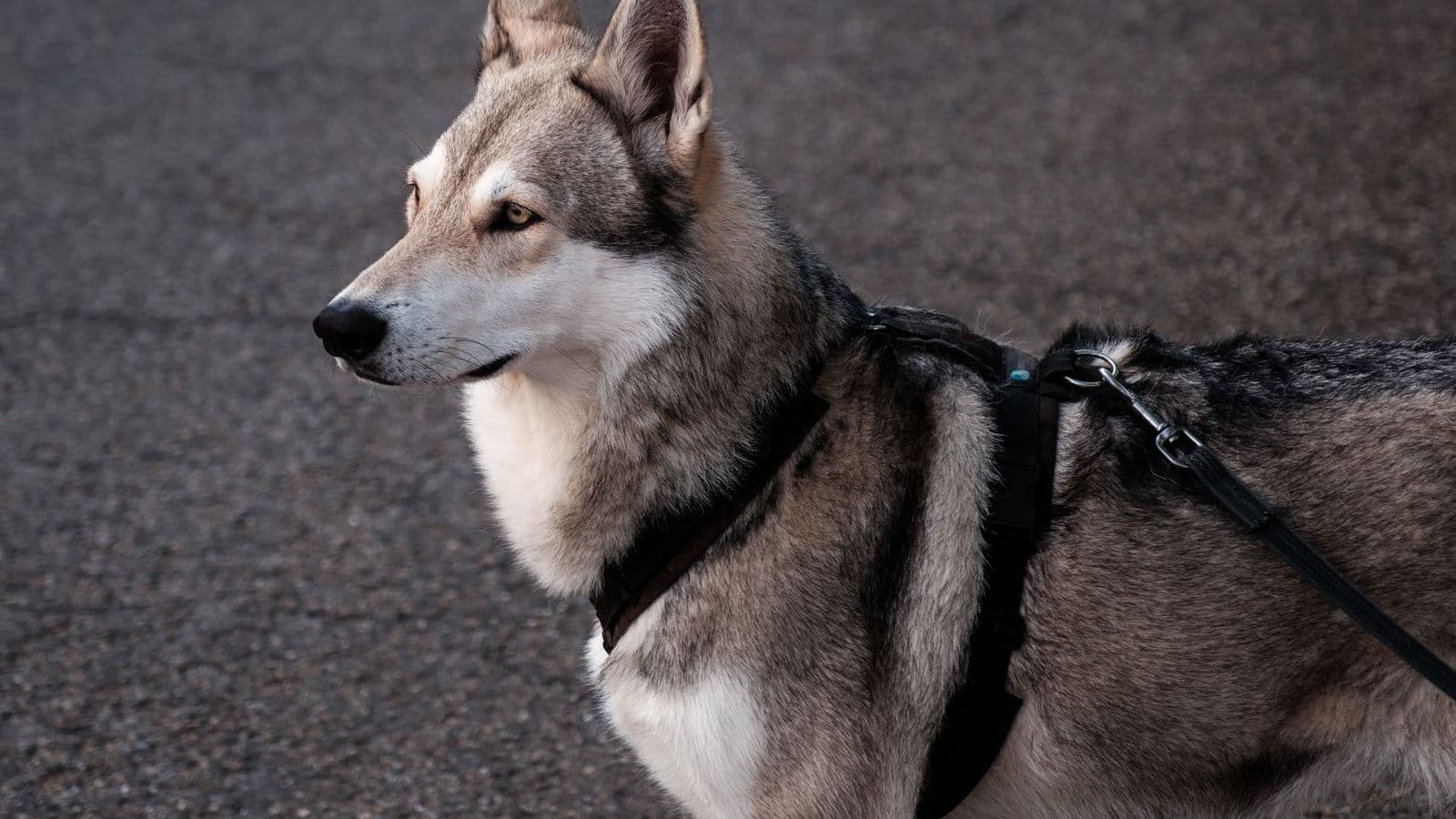
The Saarloos Wolfdog was the creation of one determined Dutchman. Beginning in 1932, Leendert Saarloos crossed German Shepherd Dogs with European wolves, convinced that domestic dogs had grown too soft and that an infusion of wolf blood would restore natural vigor, stamina, and instinct. His goal was never a working or military dog, unlike the Czechoslovak army's later, more utilitarian project, but something closer to nature itself. The breed he founded was recognized in the Netherlands in 1975, a few years after his death, and named in his honor.
The result is a large, wolf-like dog of 36-45 kg that carries considerably more wolf temperament than its better-known Czech counterpart. The Saarloos is shyer, more avoidant of confrontation, more intensely bonded to its pack, and markedly more difficult in conventional obedience contexts. Where the CSV will at least negotiate, the Saarloos tends simply to withdraw. It is bred and kept by a small, dedicated community, mostly in the Netherlands, and remains genuinely rare worldwide.
For an owner, the defining truth is that the Saarloos relates to people on wolf terms, not dog terms. It does not seek to please, it does not respond to pressure with compliance, and it meets stress by retreating rather than confronting. Training is less about teaching commands than about building trust, managing a flight-prone animal safely, and accepting realistic limits. This is a breed for experienced handlers with a genuine understanding of wolf-dog behavior, and for no one else.
At a glance:
- Trainability: 5/10, very low conventional trainability, never selected for biddability
- Biggest risk factor: forced interaction causing flight and slow-to-repair withdrawal
- Bonding style: extreme pack attachment; struggles to function alone or away from its group
- Example: a Saarloos pressured into greeting a stranger freezes, then retreats and avoids that person for weeks.
- Not for: first-time owners or anyone expecting standard obedience or eager-to-please compliance
What Makes Training a Saarloos Wolfdog Different
1. Wolf-influenced shyness and avoidance. The Saarloos is more wolf-like in temperament than almost any other recognized breed. It is naturally wary of strangers and novelty, and it copes with pressure by fleeing or freezing rather than complying. Forced interaction produces flight, not exposure therapy, so every step must be voluntary and the dog must always feel it has an escape.
2. Extreme pack bonding. The breed attaches with unusual intensity to its group, human or canine, and can be very difficult to handle alone or in unfamiliar settings away from that group. Independence, where it exists at all, must be built slowly and gently, and many Saarloos remain reliant on a companion for confidence.
3. Very low conventional trainability. The Saarloos was never selected for biddability, and it shows. It does not respond to standard obedience methods the way a dog bred to work with humans does, and managing expectations is essential, competitive obedience is simply not a realistic goal for most individuals.
4. Trust before everything. The entire relationship rests on trust, built through patient, predictable, positive interaction. A Saarloos that trusts its handler will follow and cooperate within its limits; one that has been pressured or frightened withdraws, and that withdrawal is slow and difficult to repair.
Week-by-Week Training Plan for Your Saarloos Wolfdog
Weeks 1 and 2 : The Socialization Window, Everything Depends On It
The wolf-influenced shyness makes early, voluntary socialization the whole ballgame. Our puppy basics guide covers the mechanics.
- Expose the puppy gently and positively to people, places, and stimuli.
- Never force contact; let the puppy approach on its own terms.
- Pair every new experience with high-value food.
- Keep the environment calm and predictable.
Weeks 3 and 4 : Trust Building, Not Command Drilling
Spend these weeks earning trust through positive, predictable interaction.
- Build a strong association between you and good things.
- Introduce basic cues gently, as invitations rather than demands.
- Accept slow progress; trust is the foundation everything else rests on.
Weeks 5 and 6 : Containment and Secure Leash Work
Manage a flight-prone, athletic animal safely.
- Verify secure fencing of at least 1.8 m.
- Use a martingale collar, which a narrow head cannot slip.
- Introduce loose-leash walking in calm, familiar settings only.
Weeks 7 and 8 : Recall in Secure, Familiar Spaces
Build recall only where failure is impossible.
- Train recall on a long line in a familiar, fenced area.
- Do not attempt recall in novel or stimulating environments yet.
- Reward generously and keep it pressure-free.
Weeks 9 and 10 : Expanding the Familiar Range, Gradually
Extend the dog's comfort zone at its own pace.
- Introduce new environments slowly and one at a time.
- Watch for stress signals and retreat before the dog shuts down.
- Never push past the pace the wolf-shy temperament allows.
Weeks 11 and 12 : Realistic Goals and Proofing
Consolidate within honest limits.
- Aim for a dog that follows reliably and accepts family handling.
- Proof only what is solid; do not chase obedience-trial precision.
- Maintain trust and socialization as lifelong work.
Common Saarloos Wolfdog Training Mistakes
Mistake 1 : Forcing interaction or socialization. The wolf shyness means force produces flight or fear, not exposure. All socialization must be voluntary.
Mistake 2 : Expecting conventional obedience. The Saarloos was never bred for compliance. Adjust expectations to realistic goals.
Mistake 3 : Acquiring the breed for its appearance. The wolf look is striking; the wolf temperament is genuinely challenging and not for most owners.
Mistake 4 : Training before trust is built. The relationship is built on trust first, commands second. Rushing breaks it. Full breakdown : Saarloos Wolfdog training mistakes.
Frequently Asked Questions
Is the Saarloos Wolfdog good for first-time owners ? No. The breed requires experienced handlers with specific knowledge of wolf-dog behavior, the patience to build trust over months, and realistic expectations. It is among the least suitable breeds for inexperienced owners.
Are Saarloos Wolfdogs legal everywhere ? Not necessarily. Some jurisdictions restrict wolf-content or wolf-hybrid dogs and may require licensing or insurance. Research your local laws before acquiring one.
How much exercise does a Saarloos need ? Ninety minutes or more of vigorous daily activity, ideally with a trusted companion. The breed has high stamina and needs substantial physical outlets, though always within its comfort zone. Because the Saarloos draws so much confidence from its pack, exercise in familiar territory or alongside a trusted dog tends to go far better than solo outings in busy, unfamiliar places, which can overwhelm a shy individual rather than tire it productively.
Are Saarloos Wolfdogs good family dogs ? Within their bonded group they are deeply loyal and affectionate, but they are reserved to the point of avoidance with outsiders and unsuited to homes with frequent visitors or an expectation of an outgoing pet.
Are Saarloos Wolfdogs healthy ? Generally robust, though the small gene pool warrants attention to hereditary conditions, and responsible breeders screen carefully. The breed's genetic base is narrow, so source matters.
Are Saarloos Wolfdogs rare ? Very. The breed is concentrated mainly in the Netherlands with small populations elsewhere, and reputable breeders are few and selective about homes.
How long do Saarloos Wolfdogs live ? Typically ten to twelve years, with the general hardiness common to wolf-influenced breeds.
Why TailorPup Was Built for Saarloos Wolfdogs
A generic plan expects a dog that wants to please and bounces back from pressure, the opposite of a Saarloos, which withdraws and remembers. TailorPup's Saarloos Wolfdog plan starts with trust rather than commands, makes every step of socialization voluntary, and sets realistic, honest goals for a rare and demanding wolf-cross breed.
Daily 12-minute training sessions plus weekly adjustments. Plans from $9.99/month, no trial; annual starts at $2 for 7 days. Cancel anytime.
Related: Saarloos Wolfdog Training Mistakes · Recall Training · Leash Pulling · Puppy Training Basics