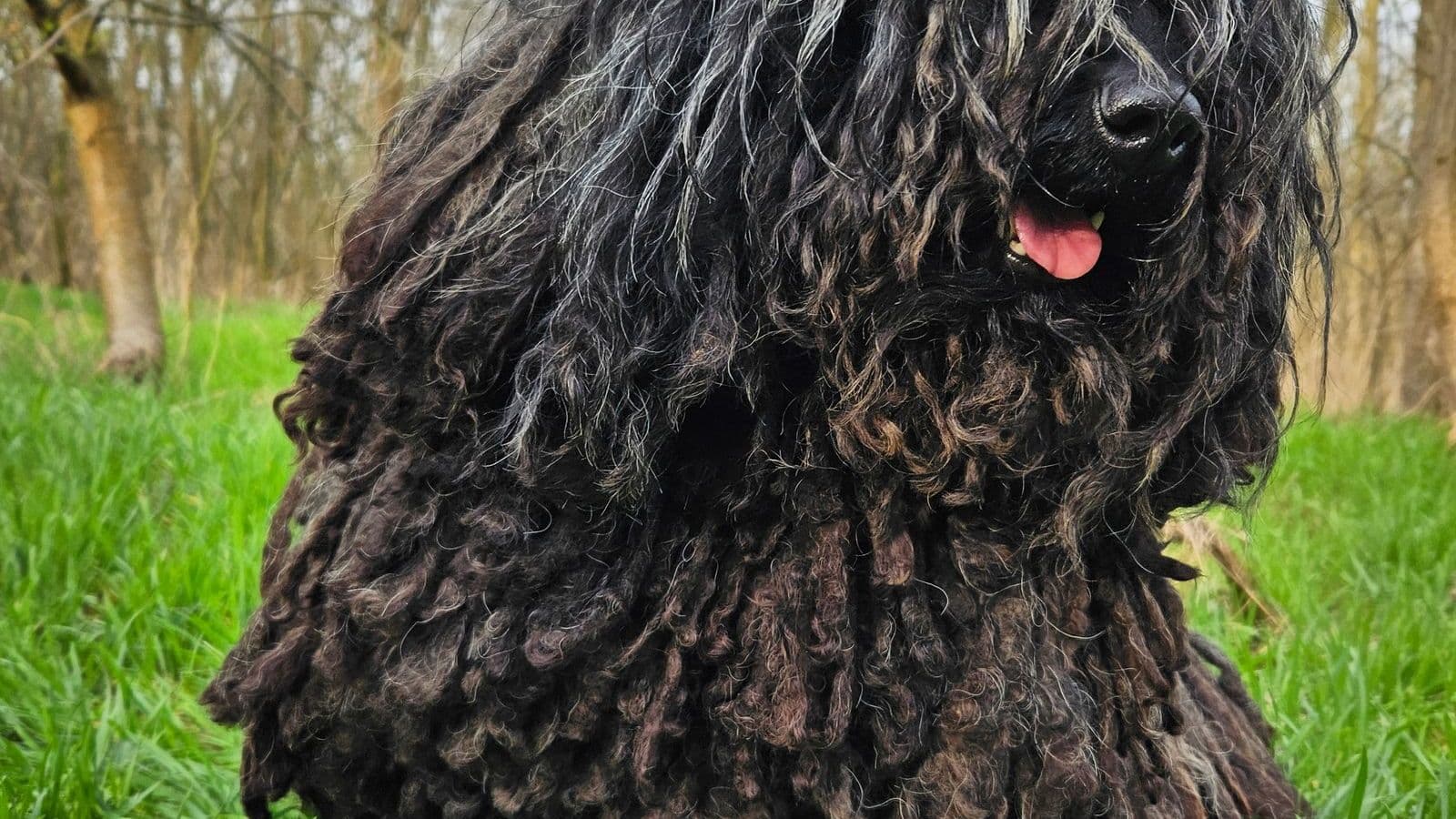
The Puli is the most instantly recognizable of Hungary's herding breeds, famous worldwide for its extraordinary corded coat, long, weatherproof cords that form naturally as the dense undercoat and wavy outer coat weave together, giving the dog the appearance of an animated mop. Brought to the Carpathian Basin over a thousand years ago by the migrating Magyars, the Puli worked as a nimble sheep-driving dog, prized for an agility so remarkable that it was said to turn a flock by running across the backs of the sheep. It typically worked alongside the larger Komondor, the Puli driving and gathering by day while the Komondor guarded by night.
Weighing 10-15 kg beneath all those cords, the Puli is an agile, energetic, intensely intelligent herding dog with a lively, self-assured character. It is devoted and affectionate with its family, alert and watchful by nature, and famous for a spring-loaded athleticism that belies its mop-like appearance. Like all the old herding breeds, it carries genuine working drive, real independence, and a strong vocal streak inherited from its alerting, driving role.
For an owner, the Puli is a brilliant but demanding dog whose herding heritage and unique coat shape its training. Its working drive needs a real outlet and daily exercise plus mental work, or the energy turns to mischief; its herding instinct may target movement and needs redirection; its alert, watchful nature makes barking a genuine consideration; its independence means it cooperates through engaging reward-based work rather than blind obedience; and its corded coat needs real maintenance.
Given a real outlet, early bark management, cord care, and engaging reward-based training, the Puli is a lively, devoted, and remarkably capable companion.
At a glance:
- Trainability: 7/10, highly intelligent, cooperates through engaging work rather than blind obedience
- Biggest risk factor: under-stimulation, a bored Puli invents its own jobs
- Care note: the corded coat needs hand-separation and real maintenance from puppyhood
- Example: a Puli left without a real outlet can start herding the family cat or the kids within days
- Not for: owners without time for daily mental work or coat care
What Makes Training a Puli Different
1. An independent herding drive. The Puli was bred to drive and gather sheep on its own initiative, and that working drive and independence carry home. It needs a real outlet and cooperates through engaging, reward-based work rather than blind obedience, and a bored Puli invents its own jobs.
2. An alert, vocal nature. The breed's alerting, watchdog heritage produces a persistent bark without management, so a "quiet" cue installed early keeps the vocal tendency in check.
3. A herding instinct that targets movement. The Puli may try to herd children, other pets, and moving objects, so consistent redirection to appropriate outlets from the first occurrence is part of training.
4. The corded coat needs real care. The cords do not form themselves perfectly, they must be separated by hand as they develop, and a corded coat needs regular maintenance and careful drying, so handling should be conditioned from puppyhood.
Week-by-Week Training Plan for Your Puli
Weeks 1 and 2 : Foundation and Bark Priority
Build engagement, socialize broadly, and begin a "quiet" cue and coat handling. Our puppy basics guide covers the mechanics.
- Pair short, upbeat sessions with high-value food or toy rewards.
- Begin a "quiet" cue before alert barking becomes a habit.
- Socialize broadly with people, dogs, surfaces, and sounds.
- Begin gentle coat handling for the developing cords.
Weeks 3 and 4 : Core Commands With Challenge
Sit, down, stay, and leave it come fast to this intelligent breed.
- Teach the core cues and progress to distance and duration quickly.
- Keep sessions short, varied, and twice daily.
- Reward speed, precision, and willing engagement.
Weeks 5 and 6 : Herding Redirect and Recall
Channel the herding instinct and build recall.
- Redirect any herding of people or pets to a toy or task.
- Train recall on a long line with high-value rewards before off-leash freedom.
- Reward focus on you around movement.
Weeks 7 and 8 : A Real Job and Bark Management
Give the working drive an outlet and proof the "quiet" cue.
- Introduce agility, herding, or treibball to channel the drive.
- Proof "quiet" at windows, doors, and outdoor sounds.
- Reward controlled, focused work over frantic activity.
Weeks 9 and 10 : Advanced Work and Cord Care
Engage the bright mind and fold cord care into the routine.
- Advance the chosen sport and add skill chains.
- Separate the developing cords by hand and make grooming a calm, rewarded session.
- Reward deliberate, precise work.
Weeks 11 and 12 : Proofing
Consolidate the foundations with ongoing challenge.
- Proof all cues, including recall and "quiet," in distracting environments.
- Maintain a consistent daily routine and cord care.
- Establish a sustainable rhythm of vigorous exercise, work, and mental challenge.
Common Puli Training Mistakes
Mistake 1 : Under-stimulation. The Puli is an intelligent working dog; without daily physical and mental work it becomes mischievous. Provide a real job.
Mistake 2 : Allowing alert barking. The watchdog tendency produces persistent barking if unmanaged. Install a "quiet" cue early.
Mistake 3 : Allowing herding of family. The herding instinct targets movement; redirect it to structured work.
Mistake 4 : Neglecting cord care. The corded coat needs hand-separation and maintenance; condition handling from puppyhood. Full breakdown : Puli training mistakes.
Frequently Asked Questions
Are Pulik easy to train ? With engaging, reward-based methods, yes, they are highly intelligent and learn quickly, excelling at agility and obedience. The independence means they cooperate when training is interesting and rewarding rather than repetitive, so the work is in channeling the drive and holding their attention rather than overcoming any difficulty learning.
How much exercise does a Puli need ? Sixty minutes of vigorous activity daily, plus mental work and ideally a job. The breed is an energetic working herder, and an under-exercised Puli redirects its energy into barking and mischief.
Is the corded coat hard to care for ? It is a real commitment, though not a daily one. The cords must be separated by hand as they form over the first year or two, and a corded coat takes a long time to dry after bathing, but once established it needs maintenance rather than constant brushing. Some owners keep the coat clipped instead.
Are Pulik good family dogs ? With active families, excellent, they are devoted, lively, and good with children when socialized. Their working drive, energy, and vocal nature mean they suit engaged homes that will exercise and challenge them.
Are Pulik hypoallergenic ? The corded coat is low-shedding and often tolerated by allergy sufferers, since loose hair is held within the cords rather than dropped, though no dog is truly hypoallergenic.
Are Pulik rare ? Outside Hungary, moderately uncommon, though a dedicated international following exists. Finding a reputable breeder usually requires some research.
How long do Pulik live ? Typically twelve to sixteen years, a long-lived, hardy breed with few hereditary problems, thanks to its functional working background. Responsible breeders screen for hip dysplasia and eye conditions, and a well-exercised Puli stays athletic and capable well into old age.
Why TailorPup Was Built for Pulik
A generic plan does not channel the Puli's herding independence or account for its vocal nature and unique coat. TailorPup's Puli plan channels the herding drive into a real outlet, builds in bark management and cord care, and keeps training engaging and reward-based for this lively, intelligent Hungarian herder.
Daily 12-minute training sessions plus weekly adjustments. Plans from $9.99/month, no trial; annual starts at $2 for 7 days. Cancel anytime.
Related: Puli Training Mistakes · Recall Training · Barking Solutions · Puppy Training Basics