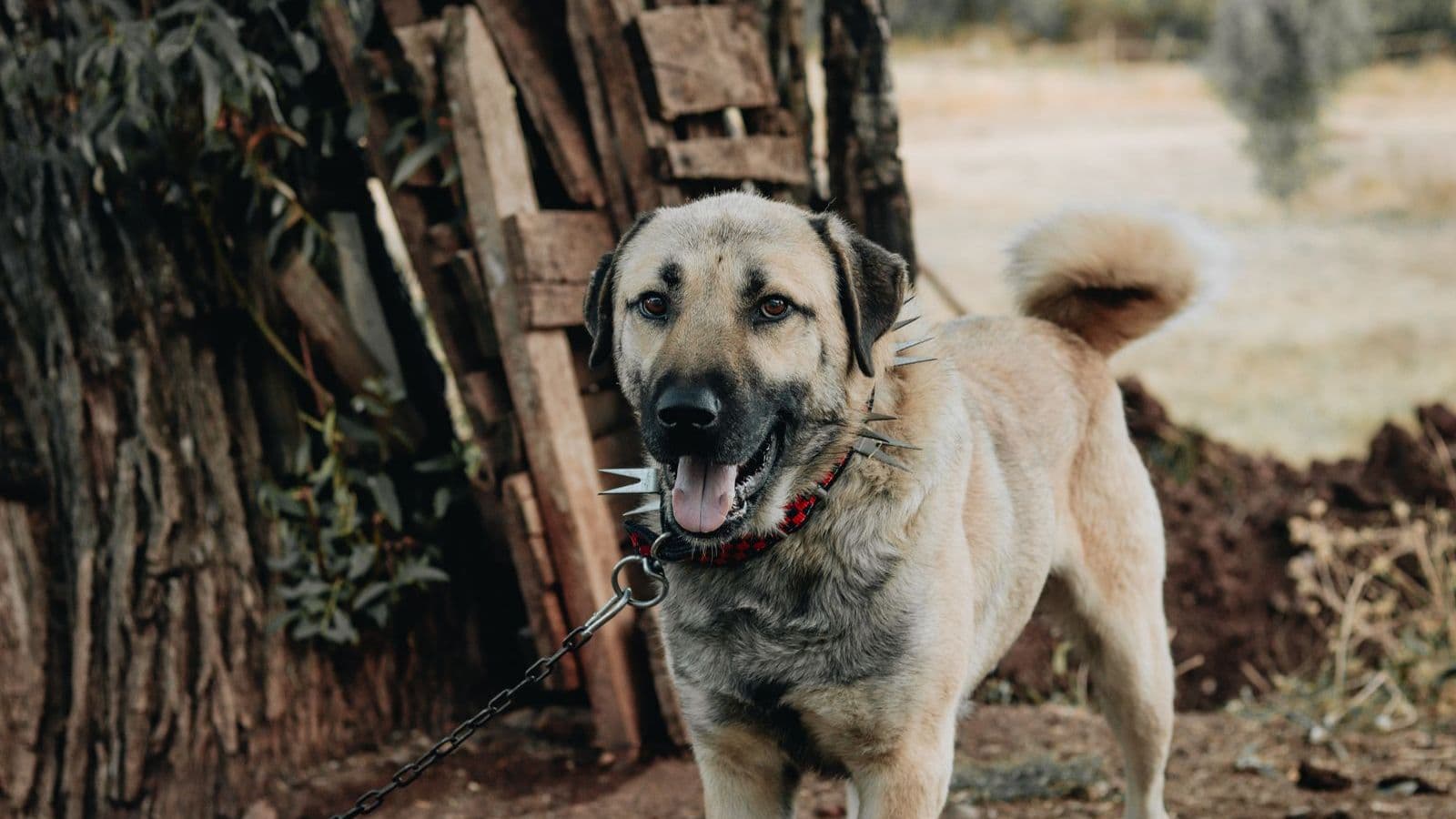
The Kangal Shepherd is Turkey's national dog and one of the most respected livestock guardians in the world. Developed in the Sivas region of central Anatolia, it has protected flocks against wolves and bears for centuries, working independently across vast, open country. Males weigh 50-65 kg and stand up to 80 cm at the shoulder, and the breed is famous for possessing one of the strongest measured bite forces of any domestic dog, a reminder that this is a serious working animal, not a scaled-up pet.
What sets the Kangal apart from many guardian breeds is its temperament: it is notably calm, steady, and discerning. A well-bred Kangal is not a hair-trigger reactor but a thoughtful protector that assesses before it acts. That calm, however, sits on top of a fully autonomous guardian mind, the Kangal decides for itself what constitutes a threat and responds decisively. Training it means respecting that independence while installing the management, leash manners, and social discrimination that let a powerful, self-directed dog live safely in the modern world.
The Kangal's reputation for a record-setting bite tends to dominate conversations about the breed, but it gives the wrong impression of what these dogs are actually like to live with. A bite force statistic describes physical capacity, not temperament, and the Kangal's temperament is the opposite of a hair-trigger. In its homeland the breed is prized precisely because it is judicious, it lives among the flock and the family, tolerates the ordinary comings and goings of farm life, and reserves its power for genuine threats.
A dog that reacted to everything would be useless as a shepherd's partner, because it would exhaust itself and alarm the stock.
That selective, measured quality is what a good Kangal brings to a modern home: enormous capability paired with a calm, discerning disposition. The training job is to preserve and shape that judgment, to socialize the dog so its sense of "normal" is broad, and to manage the situations where its protective instinct might misfire, rather than to manufacture aggression or to suppress an instinct that is the whole point of the breed.
At a glance:
- Trainability: 6/10, intelligent and capable but weighs requests rather than obeying reflexively
- Biggest risk factor: a fully autonomous guardian mind that decides for itself what is a threat
- Bite force: one of the strongest measured bite forces of any domestic dog, a reminder of its serious working nature
- Example: A stranger approaches the yard. The Kangal assesses calmly first rather than reacting on a hair trigger, unless genuinely threatened.
- Not for: first-time owners or anyone wanting a scaled-up pet rather than a working guardian
What Makes Training a Kangal Shepherd Different
1. The guardian instinct is the dog, not a behavior to remove. The Kangal's watchfulness and willingness to confront threats are its entire purpose. You channel and manage these traits; you do not punish them out. An owner who tries to suppress the guardian instinct ends up with a confused, frustrated dog rather than a safer one.
2. It works on its own authority. Like all true livestock guardians, the Kangal was bred to make decisions without human input. It is intelligent and capable of learning, but it weighs requests rather than obeying reflexively. Consistent, rewarding training earns cooperation; pressure and repetition do not.
3. Calm does not mean low-maintenance. The Kangal is steadier than many guardians, but it still patrols, expands its sense of territory, and guards by night. Secure containment and clear management are essential, and the breed needs space rather than apartment confinement.
4. Size and power demand early foundations. A 60 kg dog with no leash manners is unmanageable. The puppy window is the only time to install loose-leash walking and basic control, and it must not be wasted on a dog this strong.
Week-by-Week Training Plan for Your Kangal Shepherd
Weeks 1 and 2 : Foundation and Discriminating Socialization
Begin engagement and broad, positive socialization at once, with the aim of a confident, discriminating guardian. Our puppy basics guide covers the mechanics.
- Pair short, calm sessions with high-value food.
- Socialize positively with people, places, surfaces, and livestock if relevant.
- Begin body handling for stress-free vet and grooming care.
- Establish household rules now and keep them consistent.
Weeks 3 and 4 : Core Commands
Sit, down, and stay are installed calmly while the dog is still manageable.
- Lure sit and down, then fade to hand signals.
- Build stay from seconds, rewarding stillness first.
- Ask once and wait; the Kangal is thoughtful, not slow.
Weeks 5 and 6 : Loose Leash Before Full Size
A Kangal that pulls at full size is unmanageable. Install loose-leash walking now.
- Use a front-clip harness rather than a flat collar.
- Apply stop-and-stand the instant the leash tightens.
- Reward every step on a slack leash, daily.
Weeks 7 and 8 : Stranger Protocol
The guardian instinct means strangers are managed by you, not left to the dog. Build a clear routine.
- Secure the dog before unfamiliar people enter the property.
- Teach a default "place" for visitor arrivals.
- Reward calm at a distance; never force interaction.
Weeks 9 and 10 : Containment and Territory
The Kangal will patrol and claim territory, so secure boundaries and calm boundary behavior matter.
- Verify secure, high perimeter fencing.
- Discourage persistent fence-patrol and alarm-barking at passers-by.
- Reinforce calm when people move past the property.
Weeks 11 and 12 : Proofing the Foundations
Lock in the basics and the management habits the adult dog will rely on.
- Proof loose-leash walking and "place" in mildly distracting settings.
- Rehearse the visitor protocol until it is automatic.
- Maintain consistent rules as the dog matures.
Common Kangal Shepherd Training Mistakes
Mistake 1 : Trying to suppress the guardian instinct. The watchfulness and territorial response are the breed's purpose. Channel and manage them; do not punish them out.
Mistake 2 : Skipping socialization. Without broad early exposure, the guardian wariness becomes indiscriminate. Socialize to build appropriate discrimination.
Mistake 3 : Weak fencing. A Kangal will patrol and expand its territory. Secure, high perimeter fencing is essential.
Mistake 4 : Expecting obedience-trial compliance. The Kangal is an independent decision-maker. Build a working relationship. Full breakdown : Kangal Shepherd training mistakes.
Frequently Asked Questions
Are Kangals good family dogs ? With experienced owners, yes, they are calm, steady, and deeply loyal to their own family. Their size, power, and guardian instincts require careful management around children and visitors, and they suit rural or spacious homes best.
How much exercise does a Kangal need ? Despite the size, moderate, about thirty to sixty minutes of daily activity. The breed patrols its territory and conserves energy rather than needing vigorous exercise.
Are Kangals aggressive ? Not in the sense of being unstable. A well-bred Kangal is calm and discerning, confronting genuine threats but tolerant of the ordinary. Problems almost always trace to poor breeding, missed socialization, or weak management.
Are Kangals good for first-time owners ? Generally no. The breed's size, strength, and autonomous guardian mind require experienced handlers who can provide containment, structure, and consistent management.
Do Kangals get along with other animals ? With the livestock and animals they are raised to protect, yes, guarding is their purpose. Introductions to unfamiliar animals require careful, supervised management.
How big do Kangals get ? Males commonly reach 50-65 kg and stand up to 80 cm; females are somewhat smaller. The breed is powerful and substantial without being as heavy as some mastiff-type guardians.
How long do Kangals live ? Typically twelve to fifteen years, which is notably long for a large guardian breed.
Why TailorPup Was Built for Kangal Shepherds
A generic plan tries to drill obedience into a dog bred to think for itself, and it ignores the containment and visitor management that responsible Kangal ownership requires. TailorPup's Kangal plan channels the guardian instinct rather than fighting it, front-loads socialization and leash work, and builds the management structure a powerful, autonomous protector needs.
Daily 12-minute training sessions plus weekly adjustments as your dog grows. Plans from $9.99/month, no trial; annual starts at $2 for 7 days. Cancel anytime.
Related: Kangal Shepherd Training Mistakes · Leash Pulling · Puppy Training Basics