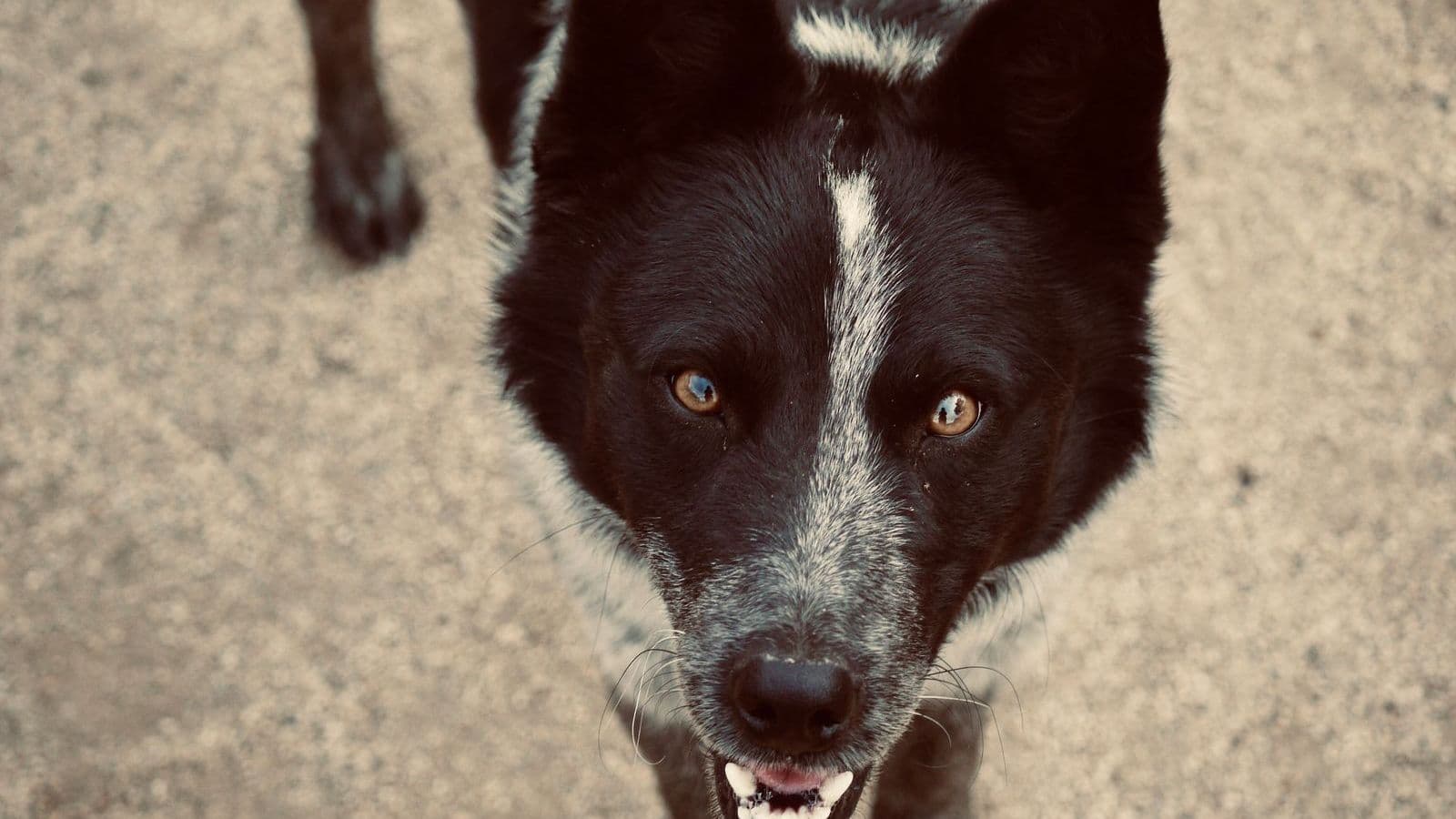
This dog's job was to find a bear alone in the forest, chase it down, corner it, and hold it there with furious barking, staying just out of reach of an animal that could kill it in one hit, until the hunter caught up. That's the Karelian Bear Dog, Finland's most prized big-game hunter. Only the boldest, most independent dogs survived that selection long enough to breed.
At 20-23kg with a striking black-and-white coat, the Karelian is exactly what you'd expect from that history: fearless to the point of reckless, fiercely independent, intensely driven, and often dog-aggressive. In North America, wildlife agencies actually use that boldness for good, Karelians work in bear-aversion programs, teaching problem bears that humans mean an unpleasant time, then moving them away from towns.
None of that makes for an easy house pet. This is a serious working animal that needs an experienced, confident handler, real daily exercise, and honest awareness of its limits. Its dog-aggression rules out dog parks. Its prey drive makes off-leash recall near wildlife unreliable. And its fearlessness means it never submits to intimidation, it responds only to calm, confident, consistent handling. Give it an experienced home and a working outlet, and the Karelian becomes a magnificent, loyal partner. This is absolutely not a beginner's dog.
At a glance:
- Trainability: 6/10, responds only to calm confidence, never to force
- Biggest risk factor: dog-aggression, especially same-sex, dog parks are a bad idea
- Fearlessness: bred to face bears, doesn't back down from intimidation of any kind
- Example: a Karelian that spots another dog off-leash will often square up rather than avoid it, this breed doesn't back down
- Not for: first-time owners or multi-dog households without experienced management
What Makes Training a Karelian Bear Dog Different
1. Real dog-aggression. This breed came out of competitive, combative hunting work, and same-sex aggression especially is common. Dog parks and off-leash group settings are a bad idea. Multi-dog homes need careful, experienced handling.
2. Extreme independence. The Karelian worked alone, far from any handler, deciding for itself how to handle dangerous game. It doesn't look to you for direction. Recall near prey, or in any exciting environment, is unreliable. Manage the dog. Don't trust the recall.
3. Fearless confidence. This dog doesn't fear bears. It doesn't fear other dogs, and it doesn't back down from intimidation. It responds only to calm, confident, consistent handling, never to harshness, which it simply ignores or resents.
4. A very strong prey drive. The big-game hunting heritage means intense prey drive toward every kind of animal. Managing cats, small dogs, and wildlife around this dog isn't optional. Secure containment is essential.
Week-by-Week Training Plan for Your Karelian Bear Dog
Weeks 1 and 2 : Socialization and Hierarchy
Front-load socialization and establish calm leadership; the Karelian respects confidence. Our puppy basics guide covers the mechanics.
- Socialize intensively with diverse people and controlled, calm dog interactions.
- Establish calm, confident leadership through consistent rules.
- Pair short sessions with high-value food.
- Verify secure containment before any yard time.
Weeks 3 and 4 : Core Commands, Confident and Consistent
Sit, down, and stay are installed with clear, confident handling.
- Lure the behaviors and reward the instant they happen.
- Ask once and enforce calmly; the breed ignores hesitant handling.
- Keep sessions short and rewarding.
Weeks 5 and 6 : Dog-Management Protocol
Establish lifelong habits for safe behavior around other dogs.
- Practice structured on-leash passing of other dogs at a comfortable distance.
- Reward calm focus on you when another dog appears.
- Never permit on-leash greetings that involve tension or arousal.
Weeks 7 and 8 : Leash Control and Prey Management
Install leash manners and manage the intense prey drive.
- Use a front-clip harness and the stop-and-stand method for loose-leash walking.
- Keep the dog leashed and managed around small animals and wildlife.
- Reward focus on you in stimulating environments.
Weeks 9 and 10 : Recall, Understanding the Limits
Build the best recall you can while respecting its limits.
- Train recall on a long line in a securely fenced area.
- Accept that recall near game or wildlife is not reliable; manage instead.
- Reserve off-leash freedom for secure, fenced areas only.
Weeks 11 and 12 : Working Outlet
Give the powerful drive a safe, satisfying outlet.
- Introduce tracking, nose work, or lure coursing to channel the hunting drive.
- Provide vigorous daily exercise to meet the breed's needs.
- Establish a sustainable rhythm of exercise, work, and management.
Common Karelian Bear Dog Training Mistakes
Mistake 1 : Off-leash dog parks. The dog-aggression tendency makes dog parks inappropriate for most Karelians.
Mistake 2 : Expecting submissive compliance. The Karelian does not submit through fear or intimidation. Confident, consistent handling earns cooperation.
Mistake 3 : Under-exercising. A hunting dog with unspent drive becomes aggressive, destructive, or anxious. Provide vigorous daily activity.
Mistake 4 : Trusting recall near prey. The bear-hunting prey drive overrides recall. Use fenced areas and manage. Full breakdown : Karelian Bear Dog training mistakes.
Frequently Asked Questions
Are Karelian Bear Dogs good family dogs ? With very experienced owners and thorough socialization, deeply loyal to their own family, yes, but this is a demanding working dog, not an easygoing pet. The dog-aggression and prey drive need constant management, so this fits experienced, active rural homes far better than a typical family household.
Are Karelian Bear Dogs good with other dogs ? Generally not, without careful management. This breed's dog-aggression, especially same-sex, is real, and many do best as the only dog. A multi-dog home needs experienced handling and constant supervision.
How much exercise does a Karelian Bear Dog need ? 60 to 90 minutes of real outdoor activity a day, plus mental work. This high-stamina hunting breed gets destructive and harder to manage without it.
Are Karelian Bear Dogs good for first-time owners ? No. The fearlessness, independence, dog-aggression, and prey drive rule this breed out for a novice. It needs confident, knowledgeable handling and a genuinely active lifestyle.
Are Karelian Bear Dogs good with cats ? With very careful, early socialization, some coexist with cats they're raised alongside. Otherwise, the strong prey drive makes them a real risk around cats and small animals.
Are Karelian Bear Dogs rare ? Outside Finland and hunting/conservation circles, yes, uncommon. Finding a good breeder takes real research, and they screen homes carefully given how demanding this breed is.
How long do Karelian Bear Dogs live ? 11 to 13 years typically, a hardy breed shaped by natural selection. A good breeder screens for hip dysplasia and eye conditions. Well-exercised and well-managed, this dog stays sound well into old age.
Why TailorPup Was Built for Karelian Bear Dogs
A generic plan has no framework for a fearless, dog-aggressive, intensely prey-driven hunting breed, and its standard methods either fail or provoke this confident dog. TailorPup's Karelian Bear Dog plan front-loads socialization and confident leadership, builds a dog-management protocol, and channels the powerful working drive into a safe outlet for an experienced owner.
Daily 12-minute training sessions plus weekly adjustments. Plans from $9.99/month, no trial; annual starts at $2 for 7 days. Cancel anytime.
Related: Karelian Bear Dog Training Mistakes · Recall Training · Leash Pulling · Puppy Training Basics