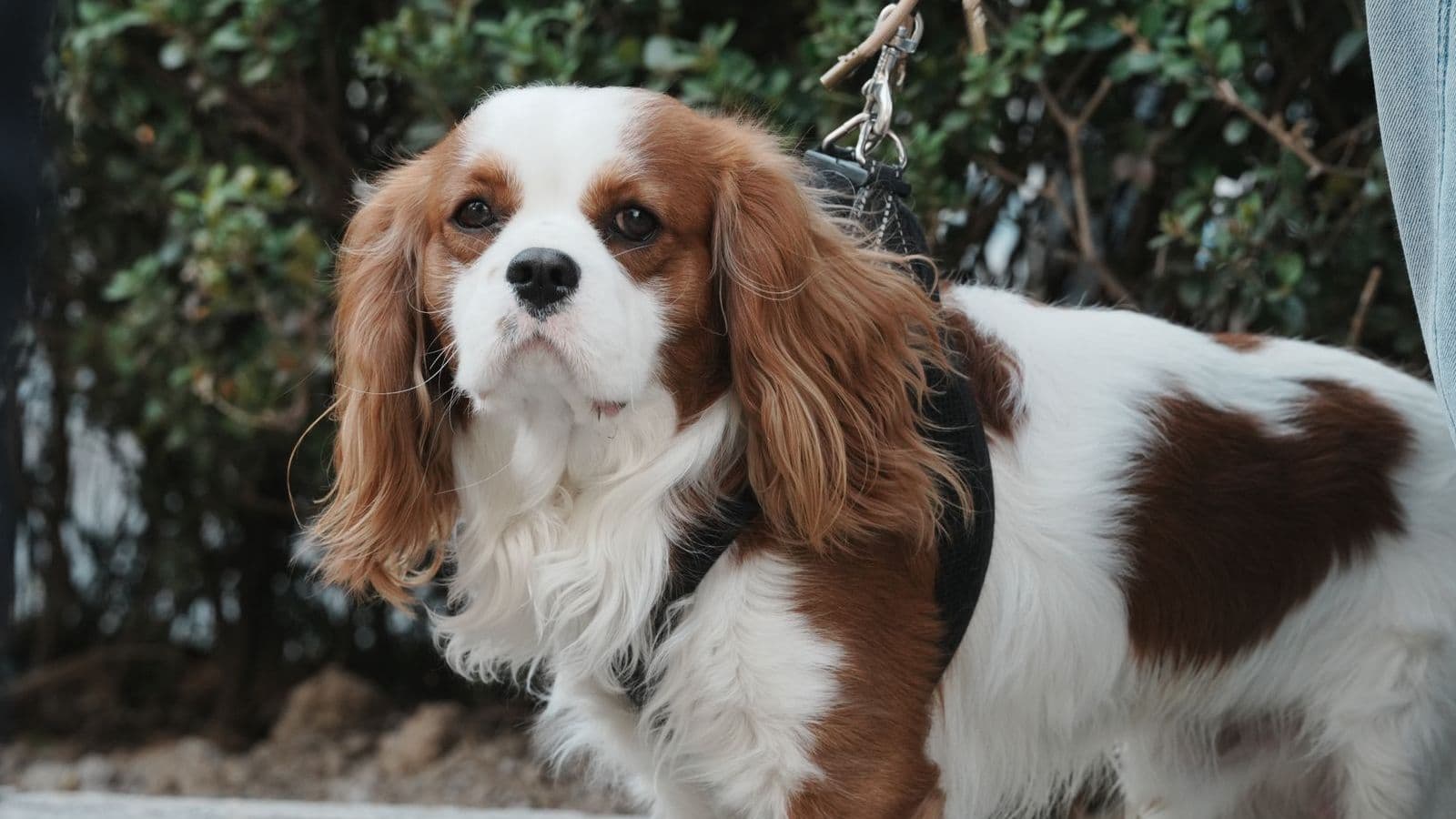
The King Charles Spaniel, known in North America as the English Toy Spaniel, is the original toy spaniel of the English court, and not to be confused with its more famous descendant, the Cavalier King Charles Spaniel. This is the older breed, the flat-faced, dome-headed royal companion that King Charles II adored so completely that he was reportedly criticized for paying more attention to his spaniels than to affairs of state.
The Cavalier was recreated in the 1920s to restore the longer-nosed look of the original Stuart-era dogs; the King Charles is the breed those efforts diverged from, retaining the flatter face and more compact, cobbier body.
Weighing 3.6-6.4 kg, the King Charles Spaniel comes in four classic color varieties, King Charles (black-and-tan), Prince Charles (tricolor), Blenheim (red-and-white), and Ruby (rich chestnut). Temperamentally it is an ancient, unhurried companion: calm, gentle, affectionate, and notably quieter and more reserved than the effusive Cavalier. It is a true lap dog, bred for centuries purely for companionship, and it bonds closely and contentedly to its people.
For an owner, the King Charles asks for an approach shaped by two things: its companion temperament and its physical reality. The deep devotion that makes it such a sweet companion also brings a real risk of separation anxiety, so independence work matters from day one. And the breed's pronounced brachycephalic build, that charming flat face, brings genuine health considerations, including breathing difficulty in heat and exertion, that shape how it can be exercised and trained.
Given early independence work, gentle reward-based training, careful heat management, and a health-tested start, the King Charles Spaniel is a serene, devoted, and delightful companion.
At a glance:
- Trainability: 7/10, gentle and food-motivated, but sessions must stay short and cool.
- Biggest risk factor: separation anxiety from its deep companion bonding.
- Health note: the brachycephalic build brings breathing difficulty and heat intolerance.
- Example: a King Charles left alone without conditioning can spiral into anxious barking within minutes.
- Not for: owners who can't commit to early alone-time training or heat-aware exercise.
What Makes Training a King Charles Spaniel Different
1. A brachycephalic build with real exercise limits. The flat face is a genuine physical consideration: the breed overheats quickly, cannot sustain vigorous activity, and is prone to breathing difficulty. Training sessions and walks must be short, cool, and matched to the dog's limited physical capacity.
2. Deep devotion and separation-anxiety risk. The King Charles is a true lap dog with centuries of companion breeding behind it, and it can struggle badly when left without preparation. Early alone-time conditioning is the single most important preventive investment.
3. A quieter, more reserved temperament. Compared with the outgoing Cavalier, the King Charles is calmer, more dignified, and more self-contained, affectionate with family but sometimes reserved with strangers. Gentle socialization keeps that reserve appropriate.
4. Serious health considerations. The extreme brachycephalic conformation is associated with breathing problems, eye conditions, and cardiac disease, so health-tested breeding and attentive care are essential to a comfortable life.
Week-by-Week Training Plan for Your King Charles Spaniel
Weeks 1 and 2 : Independence Training First
Begin alone-time conditioning immediately; the companion temperament makes it the top priority. Our puppy basics guide covers the mechanics.
- Begin alone-time conditioning at once, very short absences, gradually extended.
- Begin gentle engagement training and socialization appropriate to the breed's energy.
- Pair short sessions with high-value food.
- Begin gentle handling for grooming and routine care.
Weeks 3 and 4 : Core Commands, Brief and Gentle
Sit, down, and stay come readily with food motivation.
- Lure the behaviors and reward the instant they happen.
- Keep sessions to five minutes, since the flat face means panting begins quickly.
- Always end on a positive note.
Weeks 5 and 6 : Loose Leash and Temperature Management
Install leash manners with heat in mind.
- Use a Y-harness rather than a collar on the short neck.
- Plan walks for the cool parts of the day; the breed is very heat-sensitive.
- Stop at any loud or labored breathing.
Weeks 7 and 8 : Alone-Time Extension
Deepen the independence work that prevents separation anxiety.
- Build comfortable alone time toward two to three hours.
- If anxiety signs appear, reduce the absence and rebuild gradually.
- Keep departures and arrivals calm and low-key.
Weeks 9 and 10 : Barking and Public Manners
Address any alert or attention-barking and build polite greetings.
- Apply a "quiet" cue at trigger points.
- Install a "sit to greet" for polite public interactions.
- Reward calm, settled behavior generously.
Weeks 11 and 12 : Tricks and Enrichment
Engage the gentle, intelligent mind at a calm pace.
- Teach gentle trick chains and introduce simple nose work.
- Use puzzle feeders for low-impact mental enrichment.
- Establish a sustainable rhythm of gentle activity, enrichment, and care.
Common King Charles Spaniel Training Mistakes
Mistake 1 : Exercising in heat. The brachycephalic build means heat-stroke risk is real. Walk and train in the cool parts of the day only, and watch for labored breathing.
Mistake 2 : Never conditioning alone time. The companion temperament without independence training produces debilitating separation anxiety. Build it early.
Mistake 3 : Choosing an unhealthy puppy. The breed's serious cardiac and breathing concerns make a health-testing breeder essential.
Mistake 4 : Allowing attention barking. Address alert and demand-barking patterns early with a "quiet" cue. Full breakdown : King Charles Spaniel training mistakes.
Frequently Asked Questions
How is the King Charles different from the Cavalier ? The King Charles has a flatter face, more domed skull, and a more compact body, and is generally quieter and more reserved. The Cavalier was recreated in the 1920s to restore the longer nose of the original type, so it is the King Charles's longer-nosed, more outgoing descendant.
Are King Charles Spaniels easy to train ? Yes, they are gentle, food-motivated, and responsive to reward-based methods. The main considerations are keeping sessions short because of the breed's limited stamina and front-loading the independence work that prevents separation anxiety, rather than any difficulty learning.
How much exercise does a King Charles Spaniel need ? Twenty to thirty minutes of gentle daily exercise in cool conditions. The brachycephalic build limits both stamina and heat tolerance, so short, cool walks and play suit the breed far better than vigorous activity.
Are King Charles Spaniels good apartment dogs ? Excellent, they are compact, calm, and quiet, and they thrive on closeness to their people. The key consideration is the early independence work that prevents the separation anxiety the breed is prone to.
Do King Charles Spaniels have health problems ? Yes, the extreme brachycephalic conformation brings breathing difficulty, and the breed is prone to heart disease, eye conditions, and syringomyelia. Health-tested breeding and attentive, heat-aware care are essential.
Are King Charles Spaniels good with children ? With gentle, respectful children, yes, they are sweet and devoted. Their small size and physical fragility mean interactions with very young children should be supervised.
How long do King Charles Spaniels live ? Typically ten to twelve years. Responsible breeders screen for cardiac disease, eye conditions, and breathing problems, and attentive weight and heat management plus regular cardiac checks support the longest, most comfortable life possible.
Why TailorPup Was Built for King Charles Spaniels
A generic plan ignores both the breed's physical limits from its brachycephalic build and the separation anxiety its companion breeding produces. TailorPup's King Charles Spaniel plan respects the breed's stamina and heat sensitivity, front-loads independence conditioning, and keeps every session gentle and reward-based for this serene, devoted companion.
Daily 12-minute training sessions plus weekly adjustments. Plans from $9.99/month, no trial; annual starts at $2 for 7 days. Cancel anytime.
Related: King Charles Spaniel Training Mistakes · Barking Solutions · Puppy Training Basics