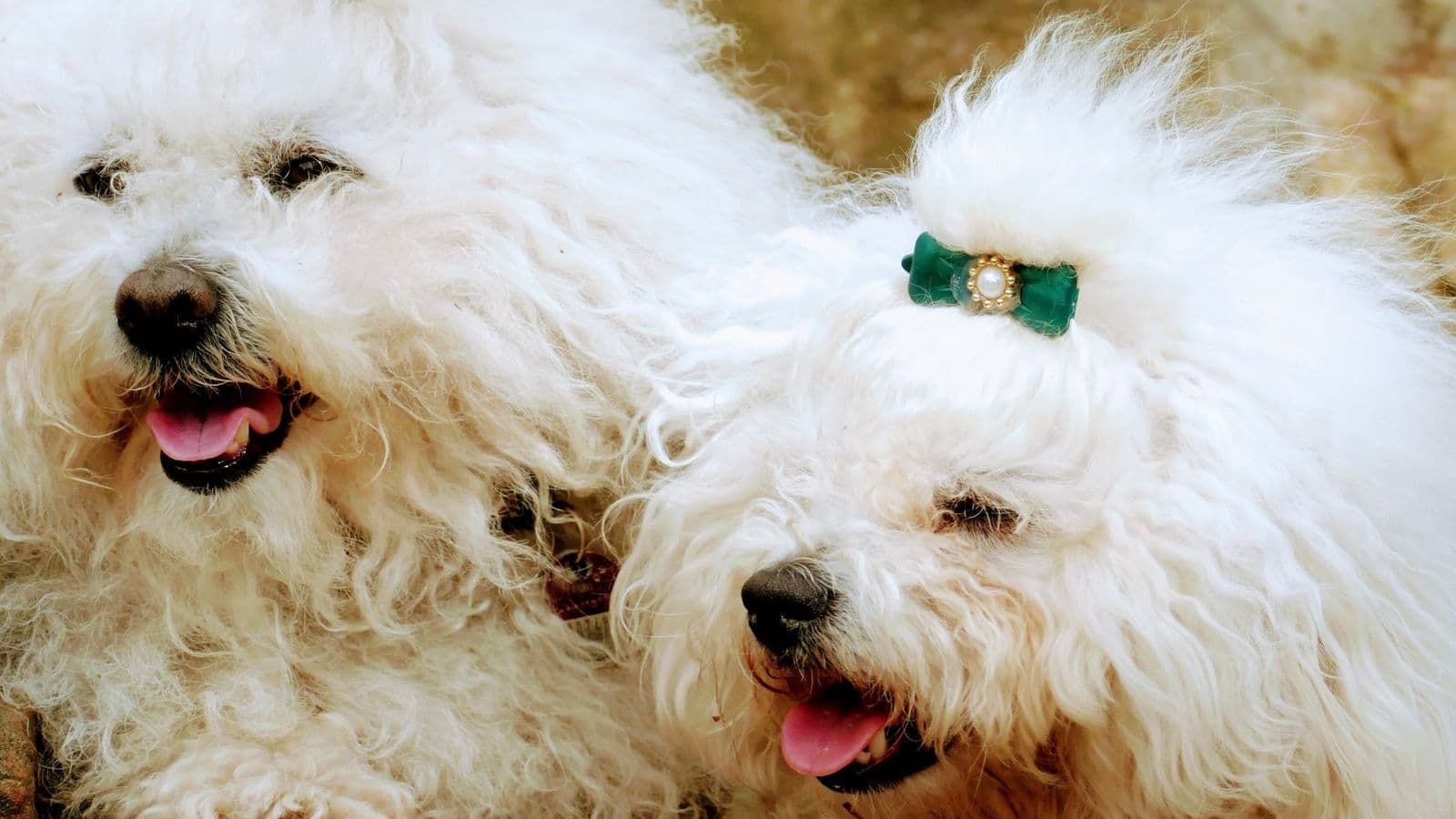
Cosimo de' Medici once sent Bolognese dogs to Belgian nobles as diplomatic gifts. That's how prized this little white dog from Bologna was in Renaissance Europe, it shows up in paintings by Titian and Goya. For five hundred years, it's had exactly one job: be a devoted, attentive companion. Never a hunter, never a worker.
That history shaped who it is today. At 2.5-4kg under a fluffy white coat, the Bolognese is calmer and more serious than its cousin the Bichon Frisé, quieter than most toy breeds, and deeply attached to its person. It's smart and watchful, almost cat-like in how closely it studies you. That devotion is both the charm and the challenge.
Here's the thing owners need to know: the Bolognese is one of the breeds most prone to separation anxiety. Being alone genuinely distresses it, and a dog never taught to handle that can develop a real attachment disorder. Independence training isn't optional. It starts day one. Beyond that, this dog is smart, food-motivated, and pleasant to train, as long as you skip the constant carrying and babying that turns a small dog demanding. Do the early independence work and keep consistent rules, and you get a calm, affectionate, deeply devoted companion.
At a glance:
- Trainability: 7/10, calm, food-motivated, and pleasant to train
- Biggest risk factor: separation anxiety, this breed is among the most prone to it
- Coat: non-shedding and fluffy, needs regular brushing to avoid mats
- Example: a Bolognese never taught to be alone can start howling within minutes of the front door closing
- Not for: owners who can't commit to independence training from day one
What Makes Training a Bolognese Different
1. Intense attachment, real separation anxiety risk. This breed bonds hard and finds being alone genuinely distressing. Independence training from day one is the single most important thing you can do for this dog.
2. Calm, but can be stubborn. The Bolognese isn't a high-drive performer, it's a thoughtful little dog. Patient, food-based training works well. Repetitive drilling does not. Keep sessions short and interesting.
3. Some alert barking, less than most small breeds. The Bolognese isn't naturally a big barker, but it can pick up alert or demand-barking if you accidentally reward it. Manage it early and it stays as quiet as its reputation says.
4. A coat that needs real upkeep. That fluffy non-shedding coat mats without regular brushing, and needs professional grooming now and then. Get the puppy used to gentle handling early.
Week-by-Week Training Plan for Your Bolognese
Weeks 1 and 2 : Independence Foundation, the Critical Priority
Begin alone-time conditioning immediately; nothing matters more for this breed. Our puppy basics guide covers the mechanics.
- Begin alone-time conditioning at once, very short absences, gradually extended.
- Introduce crate or safe-space training as a calm, positive den.
- Begin engagement training and gentle socialization.
- Pair short sessions with high-value food.
Weeks 3 and 4 : Core Commands, Patient and Rewarded
Sit, down, and stay come readily with food motivation.
- Lure the behaviors and reward the instant they happen.
- Keep sessions to five minutes and always end positively.
- Begin gentle grooming handling, rewarding calm.
Weeks 5 and 6 : Loose Leash and Public Confidence
Install leash manners and build confidence on the ground.
- Use a Y-harness and the stop-and-stand method for loose-leash walking.
- Let the dog walk rather than being carried.
- Take calm public outings to build confidence.
Weeks 7 and 8 : Alone-Time Extension
Deepen the independence work that prevents separation anxiety.
- Build comfortable alone time toward two to three hours.
- If anxiety signs appear, reduce the absence and rebuild more gradually.
- Keep departures and arrivals calm and low-key.
Weeks 9 and 10 : Barking Management
Address any alert or demand-barking patterns.
- Apply a "quiet" cue at trigger points.
- Never reward demand barking with attention or pickups.
- Reward calm, settled behavior generously.
Weeks 11 and 12 : Tricks and Enrichment
Engage the quiet, intelligent mind.
- Teach trick chains and introduce nose work, which the breed enjoys.
- Use puzzle feeders for gentle mental enrichment.
- Establish a sustainable rhythm of activity, enrichment, and grooming.
Common Bolognese Training Mistakes
Mistake 1 : Never leaving the dog alone. A Bolognese without alone-time conditioning develops severe separation anxiety. Build independence from day one.
Mistake 2 : Carrying everywhere. The Bolognese must walk on its own four feet to develop confidence and normal behavior.
Mistake 3 : Reinforcing demand barking or attention-seeking. Every reinforced demand becomes a harder-to-change habit. Do not reward it.
Mistake 4 : Treating it as too calm to train. The Bolognese is intelligent and food-motivated; engage it with trick training and nose work. Full breakdown : Bolognese training mistakes.
Frequently Asked Questions
Are Bolognese dogs easy to train ? Yes, with patient, positive methods. They're smart and food-motivated, and short sessions suit their calm focus well. The real work is the early independence training that prevents separation anxiety, not any difficulty learning commands.
Are Bolognese hypoallergenic ? No dog is truly hypoallergenic, but the non-shedding coat is usually well tolerated by allergy sufferers. It needs regular brushing to avoid mats, plus occasional professional grooming.
How much exercise does a Bolognese need ? 20 to 30 minutes of moderate activity a day, plus some gentle mental play. This is a low-energy breed, short walks and playtime are genuinely enough.
Are Bolognese good apartment dogs ? Excellent. Calm, compact, quiet when trained well, and happiest close to their people. The one thing to get right: early independence work, so the dog doesn't develop separation anxiety.
Are Bolognese good with children ? With gentle, respectful kids, yes, sweet and devoted. Because of the small size, rough handling is a real risk, so supervise interactions with very young children.
How rare are Bolognese ? Outside Italy and parts of Europe, uncommon. Finding a reputable breeder usually takes real research and patience.
How long do Bolognese live ? 12 to 14 years typically, a long-lived little breed. A good breeder screens for eye, patella, and dental issues common in small dogs. Keep the dog lean, dentally healthy, and emotionally secure, and it stays active well into old age.
Why TailorPup Was Built for Bolognese
A generic plan designed for more robust, independent small breeds ignores the Bolognese's intense attachment and the separation anxiety it produces. TailorPup's Bolognese plan builds independence training in from day one, holds consistent rules, and engages the breed's quiet intelligence, preventing the attachment problems that define poorly raised Bolognese.
Daily 12-minute training sessions plus weekly adjustments. Plans from $9.99/month, no trial; annual starts at $2 for 7 days. Cancel anytime.
Related: Bolognese Training Mistakes · Barking Solutions · Puppy Training Basics