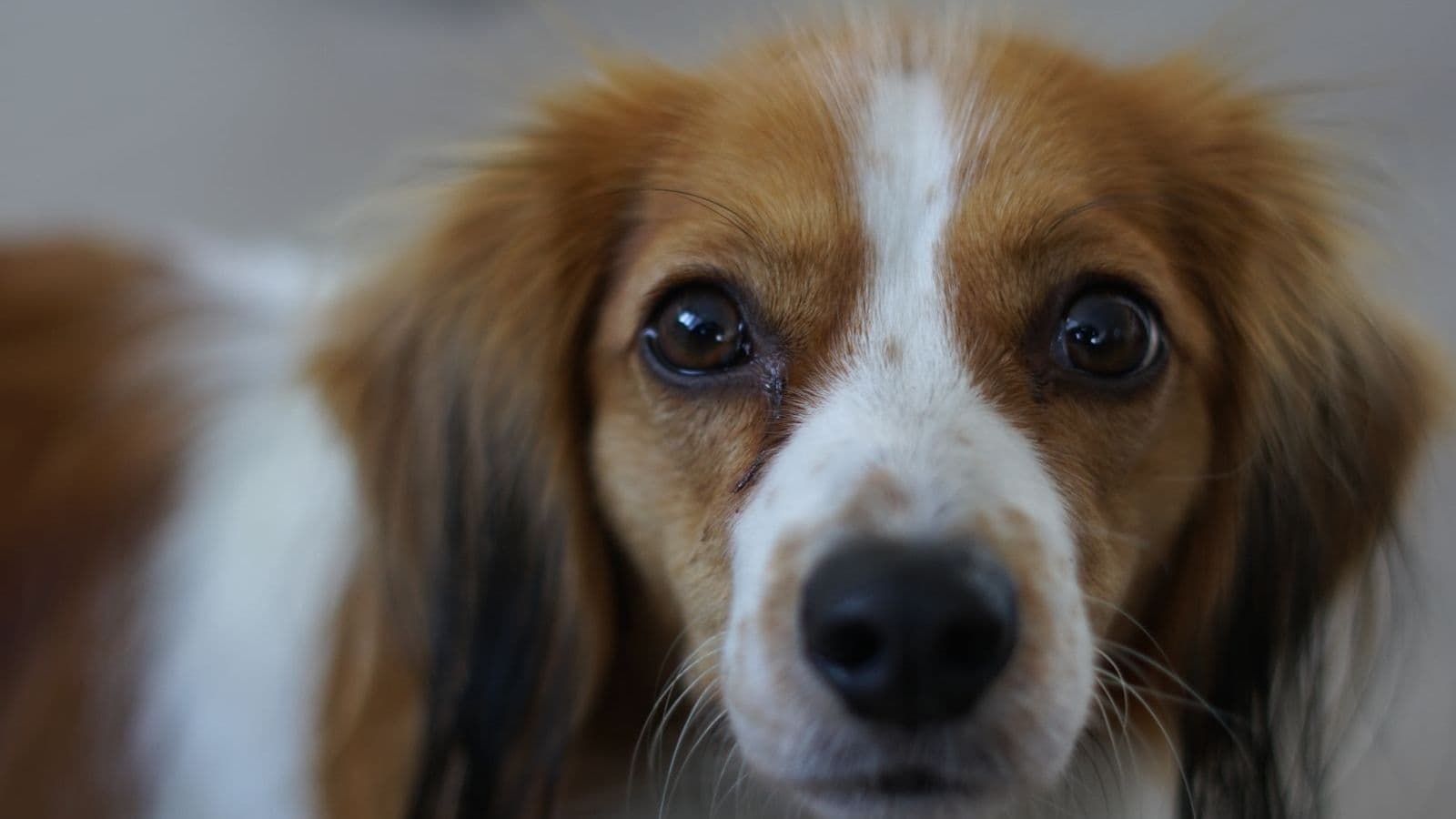
Picture a small orange-red dog dancing along a water's edge, its white flag of a tail catching a duck's curious eye, luring it down a curving channel into a trap. That was the Kooikerhondje's job for centuries in the Netherlands, working the eendenkooi duck-decoy traps that gave the breed its name. It called for a clever, self-directed dog working in close partnership with one person, not a crowd-pleaser.
That history built a very different dog from the typical friendly sporting spaniel. At 9-11kg, the Kooiker is choosy about who it likes, sensitive to handling, and often wary of strangers at first. It bonded with one or two people and worked quietly with them. The modern dog kept that private, discerning character. Affectionate and playful with its own family. Not quick to trust anyone else.
For an owner, that means the Kooiker is rewarding but particular to train. It's smart and capable, but you cannot flood it, force it, or handle it harshly without it losing confidence. Its natural reserve needs careful, positive socialization to stay healthy instead of turning into shyness. It also has a watchdog bark that needs early management. Train it gently, socialize it thoughtfully, respect the sensitivity, and the Kooikerhondje becomes a devoted, clever, quietly charming companion.
At a glance:
- Trainability: 8/10, smart and willing, but genuinely sensitive to pressure
- Biggest quirk: reserved with strangers at first, assesses before trusting
- Handling note: harsh corrections cause shutdown, not compliance, in this breed
- Example: raise your voice at a Kooiker mid-mistake and it often shuts down for the rest of the session, not out of defiance
- Not for: owners who rely on pressure-based or correction-heavy methods
What Makes Training a Kooikerhondje Different
1. Choosy, reserved with strangers. The Kooiker doesn't warm up to everyone right away, it assesses new people first. That's normal for the breed. Real socialization keeps that reserve healthy instead of letting it turn into fear.
2. Genuinely sensitive to pressure. Among sporting breeds, the Kooiker stands out for sensitivity. Harsh handling or frustration causes shutdown, not compliance. Keep training gentle, positive, and encouraging, it suits this dog's quick, willing mind.
3. An alert-barking habit. The Kooiker watches everything and announces what it sees. Manage that from puppyhood. Teach a "quiet" cue early, before the habit sets in.
4. A clever mind that needs a job. Behind the reserve is real intelligence and a love of problem-solving, straight from its decoy-work past. This breed thrives on nose work and gentle mental challenge, and gets anxious or mischievous without it.
Week-by-Week Training Plan for Your Kooikerhondje
Weeks 1 and 2 : Gentle Foundation and Socialization
Broad, positive socialization is the first priority, since the natural reserve makes early experiences decisive. Our puppy basics guide covers the mechanics.
- Expose the puppy positively to diverse people, always letting it approach on its own terms.
- Pair every new person, place, and sound with high-value food.
- Begin a "quiet" cue in the first week to head off the alert-barking habit.
- Keep all early experiences calm, short, and within the puppy's comfort.
Weeks 3 and 4 : Core Commands, Short and Positive
Sit, down, and stay come quickly to this bright breed with positive methods.
- Lure the behaviors and reward the instant they happen.
- Keep sessions to five minutes, ending while the dog is still eager.
- Never apply pressure or frustration; the sensitivity will not tolerate it.
Weeks 5 and 6 : Loose Leash and Public Exposure
Install leash manners and build confidence in calm public settings.
- Use a Y-harness and the stop-and-stand method for loose-leash walking.
- Take short, positive outings where the dog can observe without pressure.
- Reward relaxed, curious behavior in new environments.
Weeks 7 and 8 : Recall and Nose Work
Build recall and engage the working mind with scent.
- Train recall on a long line with high-value rewards.
- Introduce nose work, a natural fit for the breed's hunting heritage and intelligence.
- Reward calm focus and willing engagement over excitement.
Weeks 9 and 10 : Stranger Protocol
Extend the socialization work to new people at the dog's pace.
- Arrange structured, unpressured introductions, letting the Kooiker choose when to approach.
- Reward any offered, relaxed interaction with strangers.
- Respect the assessment process rather than rushing it, which builds a confident dog.
Weeks 11 and 12 : Sport and Advanced Skills
Channel the intelligence into ongoing challenge.
- Introduce agility, rally obedience, or continued nose work.
- Proof cues, including "quiet," in mildly distracting environments.
- Establish a sustainable rhythm of exercise and mental enrichment.
Common Kooikerhondje Training Mistakes
Mistake 1 : Forcing socialization. A Kooiker forced into interactions becomes more fearful, not more confident. Let the dog approach on its own terms.
Mistake 2 : Using any pressure-based methods. The sensitivity means pressure produces a shut-down dog. Reward-based training only.
Mistake 3 : Ignoring alert barking. Install a "quiet" cue from puppyhood, before the habit establishes itself.
Mistake 4 : Expecting immediate friendliness with strangers. The Kooiker assesses before warming up. Respect the process. Full breakdown : Kooikerhondje training mistakes.
Frequently Asked Questions
Are Kooikerhondjes easy to train ? With positive methods, yes, they are intelligent and willing, and they take to nose work and obedience readily. The main considerations are respecting the breed's sensitivity and managing the alert barking, not overcoming any difficulty learning.
Are Kooikerhondjes friendly with strangers ? After a period of assessment, generally yes, but they are not immediately effusive with new people. The reserve is breed character, and forcing greetings backfires; allowing the dog to warm up at its own pace produces a confident adult.
Are Kooikerhondjes good apartment dogs ? With adequate exercise and active bark management, yes. They are compact and affectionate indoors, though the watchdog tendency means a "quiet" cue is essential in close quarters.
Are Kooikerhondjes hypoallergenic ? No. The medium-length coat sheds moderately and needs regular brushing, so the breed is not a strong choice for allergy sufferers.
How much exercise does a Kooikerhondje need ? Forty-five to sixty minutes of vigorous activity daily, plus mental work such as nose games. The breed is an active sporting dog that needs both physical and cognitive outlets.
Are there health concerns in the breed ? Yes. The Kooiker's small founding population means it is predisposed to von Willebrand disease, a clotting disorder, and hereditary necrotising myelopathy, so sourcing from health-tested breeders is essential.
How long do Kooikerhondjes live ? Typically twelve to fifteen years, with good general health when sourced from responsible, health-screening breeders. Because the modern breed was rebuilt from a tiny number of dogs after the Second World War, conscientious breeders pay close attention to genetic diversity and screen for the breed's known hereditary conditions, so the source matters a great deal to a puppy's long-term health.
Why TailorPup Was Built for Kooikerhondjes
A generic plan designed for gregarious, easy-to-socialize sporting breeds misses the Kooiker's sensitivity and its selective, private nature, applying pressure that erodes the dog's confidence. TailorPup's Kooikerhondje plan respects the breed's character from the first session, builds socialization gently and on the dog's terms, and manages the alert barking before it sets.
Daily 12-minute training sessions plus weekly adjustments. Plans from $9.99/month, no trial; annual starts at $2 for 7 days. Cancel anytime.
Related: Kooikerhondje Training Mistakes · Barking Solutions · Recall Training · Puppy Training Basics