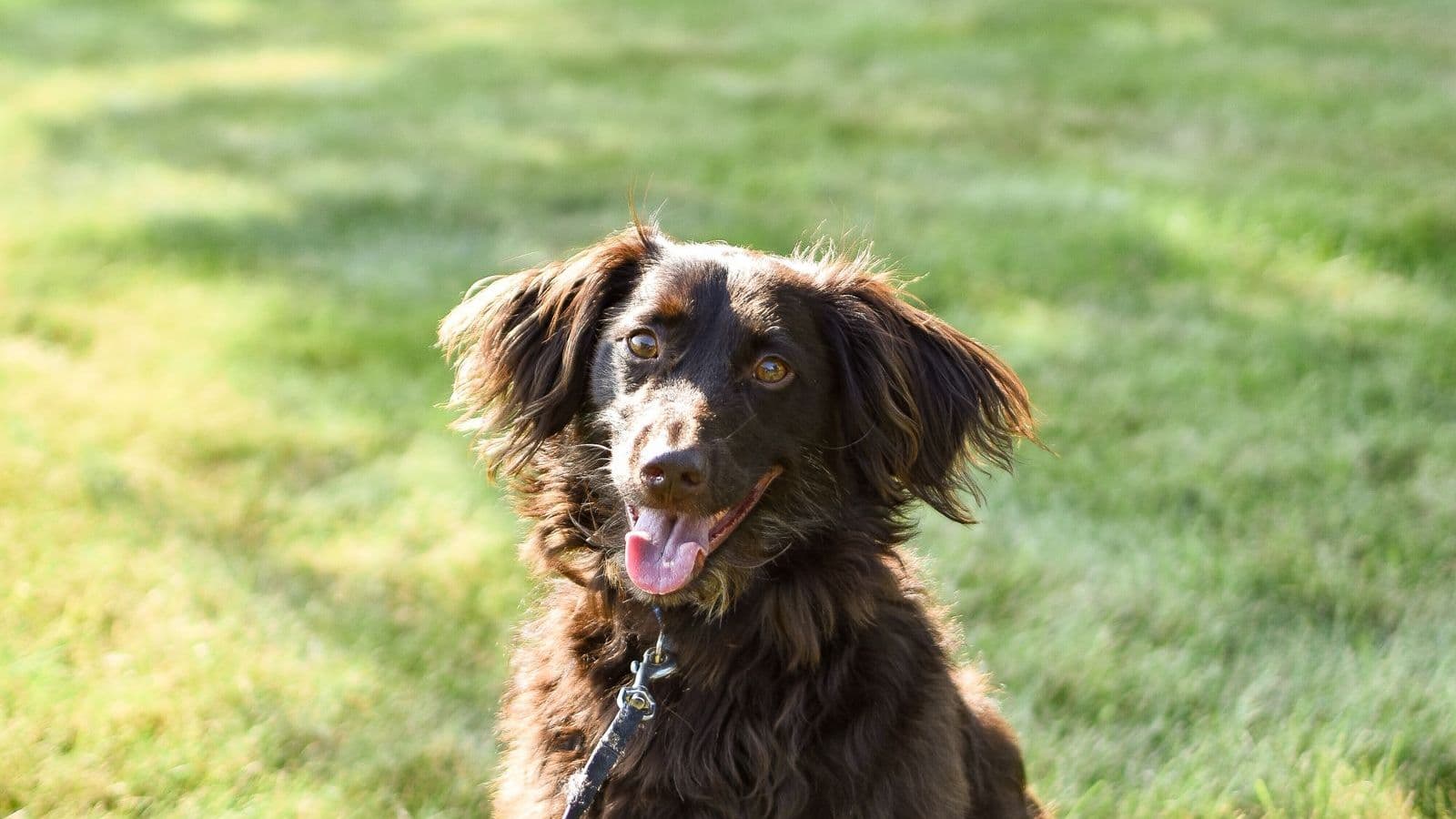
The Boykin Spaniel is the official state dog of South Carolina, and its origin story is pure Southern Americana. In the early twentieth century, a stray spaniel-type dog was found near a church in Spartanburg, taken in by a hunter named Whit Boykin, and discovered to have a remarkable nose and a natural love of water. From that single dog, bred to other spaniels, came a compact brown gun dog purpose-built for the Wateree River Swamp: small enough to ride in a canoe, eager enough to flush wild turkey, and tough enough to retrieve ducks from cold water.
The result, weighing 11-18 kg with a wavy chocolate coat, is among the most versatile of all the spaniels. A Boykin will happily flush upland birds in the morning, retrieve waterfowl in the afternoon, and curl up with the family in the evening, and it does all of it with an infectious, tail-wagging enthusiasm. Its eagerness to please and high trainability make it a genuine pleasure to work with, for owners who can match its energy.
That last qualification is the heart of training a Boykin. This is a working hunting dog first and a companion second, and it needs real daily exercise, a strong recall built against a powerful nose, and an outlet for its drive. Given those things, the Boykin is biddable, affectionate, and a joy to train. Denied them, the same enthusiasm curdles into the destructiveness and hyperactivity of a working dog with nothing to do. The breed rewards an active owner extravagantly and frustrates a sedentary one.
At a glance:
- Trainability: 8/10, genuinely eager to please with real biddability from its working heritage
- Biggest risk factor: a powerful nose and flush instinct that makes recall around birds a months-long project
- Water obsession: many Boykins will find and enter every available body of water without controlled outlets
- Example: A Boykin passing a pond mid-walk will head straight in unless water access is already managed.
- Not for: sedentary owners who cannot provide 60-90 minutes of vigorous daily activity
What Makes Training a Boykin Spaniel Different
1. High energy from a working heritage. The Boykin was bred to hunt all day, and that stamina does not switch off in a suburban living room. Without sixty to ninety minutes of real daily activity, the unspent energy turns into chewing, digging, and restlessness, so exercise is the foundation that makes training possible.
2. A powerful nose and a flush-and-chase instinct. The breed is built to find and flush birds, and in daily life that means strong distraction by scent and wildlife. Recall reliability in a bird-rich environment is a genuine, months-long project that demands extravagant rewards and patient layering of distractions.
3. Eagerness to please and real biddability. Unlike some independent hunting breeds, the Boykin genuinely wants to work with its person. That cooperative streak makes reward-based training highly effective and lets a committed owner reach advanced skills relatively quickly.
4. A deep love of water. Many Boykins will find and enter every available body of water, a charming trait when managed and a complicating one when not. Channeling that enthusiasm into controlled swimming, rather than fighting it, keeps walks and outings manageable.
Week-by-Week Training Plan for Your Boykin Spaniel
Weeks 1 and 2 : Energy Management and Foundation
The Boykin's energy must be channeled, not suppressed, so build in physical outlets alongside engagement work. Our puppy basics guide covers the mechanics.
- Provide two short physical outlets plus training each day to keep the dog focused.
- Build engagement with both food and toy rewards, since the breed values both.
- Socialize broadly with people, dogs, water, surfaces, and sounds.
- Reward voluntary attention to establish a strong check-in habit.
Weeks 3 and 4 : Core Commands With Hunting Vocabulary
Sit, down, stay, and here come quickly to this biddable breed.
- Teach the core cues with food luring, fading quickly to hand signals.
- If field work is a goal, introduce a "whoa" (stop and freeze) cue early.
- Keep sessions short, upbeat, and varied to match the eager temperament.
Weeks 5 and 6 : Recall and Nose Management
Invest heavily in recall before any off-leash freedom, because the nose competes hard.
- Train recall on a long line, paying with the highest-value rewards available.
- Layer in scent distractions gradually, building reliability step by step.
- Never call the recall cue when you cannot reward or enforce it.
Weeks 7 and 8 : Loose Leash and Water Exposure
Install leash manners and introduce controlled swimming.
- Use a front-clip harness and the stop-and-stand method for loose-leash walking.
- Introduce controlled water entry on cue, channeling the breed's love of water.
- Reward calm focus around the high-excitement triggers of birds and water.
Weeks 9 and 10 : Retrieving Foundations
Channel the retrieve drive into structured work.
- For field goals, introduce dummy retrieves to shape a clean delivery.
- For a companion dog, build structured fetch with rules and an off-switch.
- Reward controlled retrieves over frantic, self-rewarding chasing.
Weeks 11 and 12 : Advanced and Field Proofing
Proof the skills in challenging, scent-rich environments.
- Proof recall in bird-scent settings, the breed's hardest distraction.
- Add advanced cues and, if intended, begin formal hunt training.
- Establish a sustainable weekly rhythm of exercise, training, and water work.
Common Boykin Spaniel Training Mistakes
Mistake 1 : Under-exercising. A Boykin with unspent energy becomes destructive and hyperactive. Meet the substantial physical needs first.
Mistake 2 : Skipping recall investment. The nose overrides everything in a scent-rich environment. Build recall on a long line with extravagant rewards before any real-world off-leash exposure.
Mistake 3 : Treating it as a calm companion. The Boykin is a working hunting dog that happens to make a great companion. Manage the energy rather than expecting calm by default.
Mistake 4 : Fighting the water love. Channel the obsession with controlled access rather than battling it everywhere. Full breakdown : Boykin Spaniel training mistakes.
Frequently Asked Questions
Are Boykin Spaniels easy to train ? Yes, among the more biddable spaniel breeds, with a strong eagerness to please that makes reward-based training effective. The main work is meeting the energy needs and building recall against a powerful nose, not overcoming any reluctance to learn.
How much exercise does a Boykin Spaniel need ? Sixty to ninety minutes of vigorous activity daily, and the breed especially thrives with swimming and retrieving. Walks alone will not satisfy a working gun dog.
Are Boykin Spaniels good family dogs ? Excellent, they are enthusiastic, affectionate, and gentle with children, and they slot happily into active family life once their exercise needs are met.
Do Boykin Spaniels shed ? Moderately. The wavy coat needs regular brushing and occasional trimming, and it benefits from drying and ear care after the breed's frequent swims.
Are Boykin Spaniels good apartment dogs ? With very committed exercise they can manage, but they are far happier in a house with yard access and water nearby. The limiting factor is meeting the breed's energy needs, not the space itself.
Are Boykin Spaniels good hunting dogs ? Yes, they are versatile flushers and retrievers, equally capable on upland birds and waterfowl, and they remain a popular working gun dog in the American Southeast.
How long do Boykin Spaniels live ? Typically fourteen to sixteen years, a healthy, robust breed, with responsible breeders screening for hip dysplasia and eye conditions.
Why TailorPup Was Built for Boykin Spaniels
A generic companion plan ignores the Boykin's hunting drive, its scent-fueled distraction, and its substantial energy needs, leaving an owner with a frustrated, under-worked dog. TailorPup's Boykin Spaniel plan channels the breed's working instincts, builds recall against the nose, and gives the energy a real outlet, so the enthusiastic, biddable companion the breed should be actually shows up.
Daily 12-minute training sessions plus weekly adjustments. Plans from $9.99/month, no trial; annual starts at $2 for 7 days. Cancel anytime.
Related: Boykin Spaniel Training Mistakes · Recall Training · Leash Pulling · Puppy Training Basics