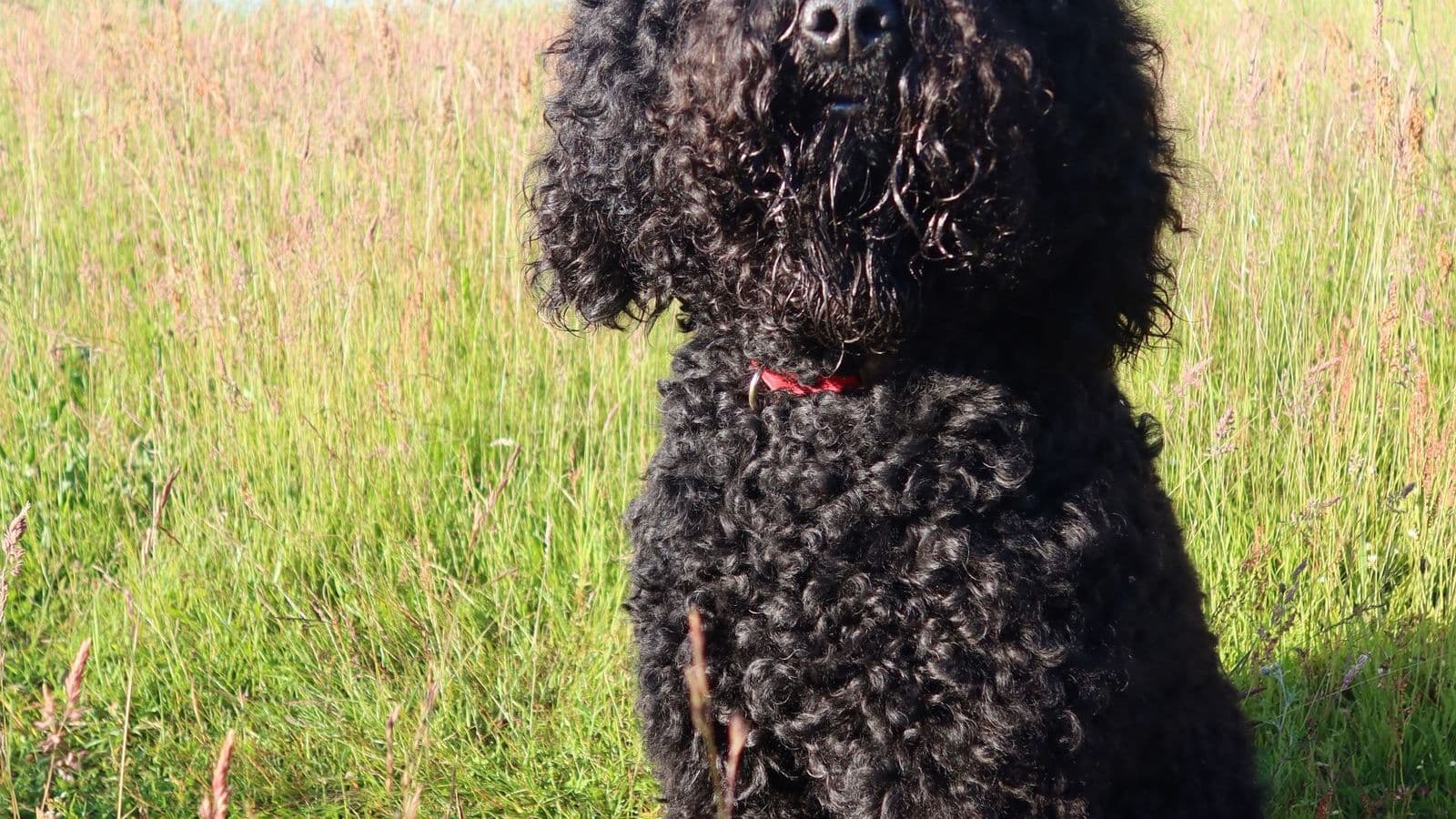
The Barbet is one of France's oldest and rarest working breeds, a curly-coated water dog documented since the sixteenth century and considered an ancestor of the Poodle, the Bichon, and several other European water and companion dogs. Its name likely derives from barbe, French for beard, a nod to the woolly coat that frames its whole face. For centuries the Barbet worked the marshes and rivers of France, retrieving waterfowl in conditions that would deter most dogs, and its rustic, all-weather build reflects that demanding job.
By the mid-twentieth century the Barbet had nearly vanished, and the breed today exists thanks to careful reconstruction by a small number of dedicated breeders. It remains uncommon even in France. Weighing 17-28 kg under a dense, low-shedding, woolly coat, the modern Barbet is an intelligent, joyful, sociable working dog, and like the Poodle it helped create, it sits near the top of the trainability scale.
What distinguishes the Barbet from its refined Poodle descendant is temperament. The Barbet is a working dog at heart, happiest in mud, water, and activity, with a rustic enthusiasm that owners adore. It is highly intelligent and learns with remarkable speed, which means it needs genuine mental challenge to stay content, and it carries a deep love of water that shapes daily life. Trained with positive methods that respect its sensitivity and engage its considerable mind, the Barbet is a delightful, capable, devoted companion that bonds closely with its people.
At a glance:
- Trainability: 9/10, exceptionally intelligent and eager to work, among the brightest of the retriever group
- Biggest risk factor: a deep water obsession that overrides recall near ponds and streams
- Sensitivity: social and sensitive — harsh handling or isolation produces a withdrawn dog, not a compliant one
- Example: left near open water without training, a Barbet will plunge in the moment it's off leash
- Not for: owners who leave dogs alone for long stretches or can't manage recall near water
What Makes Training a Barbet Different
1. Exceptional trainability and intelligence. The Barbet learns rapidly and genuinely enjoys working, placing it among the brightest of the retriever and spaniel group. That ceiling is an opportunity and an obligation: a Barbet given only basic obedience is bored, while one given advanced skills and sport thrives.
2. A deep love of water and mud. The breed is a water dog to its core, and every puddle, stream, and pond is an invitation. Managing that enthusiasm in daily life takes a reliable recall and consistent focus work, ideally paired with regular, sanctioned swimming.
3. Social and sensitive. The Barbet is highly social and does not tolerate harsh handling or isolation; it needs to be with its people. Training must be consistently positive, and the breed's sensitivity means pressure produces a withdrawn dog rather than a compliant one.
4. A rare breed with a small gene pool. Because the Barbet was rebuilt from few dogs, finding a health-tested breeder matters more than usual. The breed is generally healthy, but vigilance and a careful choice of source are part of responsible ownership.
Week-by-Week Training Plan for Your Barbet
Weeks 1 and 2 : Foundation and Social Integration
The Barbet thrives on connection, so build engagement and socialize broadly from the start. Our puppy basics guide covers the mechanics.
- Pair short, upbeat sessions with high-value food to build a strong working bond.
- Socialize broadly with people, dogs, water, surfaces, and sounds.
- Reward voluntary attention to establish an eager check-in habit.
- Begin gentle coat handling, since the woolly coat needs lifelong grooming.
Weeks 3 and 4 : Core Commands, Progressed Quickly
The Barbet masters basics fast, so do not dwell on them.
- Teach sit, down, and stay in days, then add leave it and a distance stay.
- Introduce a recall early and reward it lavishly.
- Keep sessions varied to hold the quick, intelligent mind.
Weeks 5 and 6 : Recall Around Water
The water obsession makes recall near water the central challenge.
- Train recall on a long line in environments that include water access.
- Pay extravagantly for recall away from a tempting pond or stream.
- Build reliability before allowing any off-leash freedom near open water.
Weeks 7 and 8 : Retrieving and Loose Leash
Channel the natural retrieve drive and install leash manners.
- Introduce dummy retrieves, which the Barbet takes to instinctively.
- Use a front-clip harness and the stop-and-stand method for loose-leash walking.
- Reward controlled retrieves and calm focus over frantic activity.
Weeks 9 and 10 : Advanced Obedience and Sport
Engage the breed's high ceiling with real challenge.
- Introduce rally obedience, agility, or nose work to stretch the mind.
- Build skill chains and add difficulty steadily.
- Keep raising the bar; a bored Barbet invents its own projects.
Weeks 11 and 12 : Water Work and Proofing
Consolidate the foundations and lean into the breed's element.
- If hunting or water retrieval is a goal, begin formal water-work introduction.
- Proof all cues in diverse, challenging environments.
- Establish a sustainable rhythm of exercise, mental work, and swimming.
Common Barbet Training Mistakes
Mistake 1 : Too little mental challenge. A Barbet that has only mastered basic cues is bored. Add complexity and sport for this intelligent breed.
Mistake 2 : Allowing the water obsession to dominate. Reliable recall near water must be trained before any off-leash access near open water.
Mistake 3 : Harsh handling. The social, sensitive Barbet does not tolerate harshness, which produces a withdrawn dog. Reward-based methods only.
Mistake 4 : Not finding a reputable breeder. The small gene pool means the source genuinely matters. Full breakdown : Barbet training mistakes.
Frequently Asked Questions
Are Barbets rare ? Yes, one of the rarer recognized breeds globally, even in France. Finding a reputable, health-testing breeder requires research and patience, and prospective owners often join a waiting list.
Are Barbets hypoallergenic ? The dense, woolly coat is low-shedding and generally tolerated by allergy sufferers, though no dog is truly hypoallergenic. The trade-off is significant grooming: the coat mats without regular brushing and needs professional trimming every couple of months.
How much exercise does a Barbet need ? Sixty to ninety minutes of vigorous activity daily, plus mental work and, ideally, swimming. The breed is an athletic water dog and needs both physical and cognitive outlets.
Are Barbets good family dogs ? Excellent, they are joyful, gentle, sociable, and patient, and they bond closely with the whole family. Their need for connection means they do best in homes where they are not left alone for long.
Are Barbets good apartment dogs ? With very adequate exercise, yes, as they are calm and affectionate indoors. They adapt well to family life provided their substantial activity and grooming needs are met.
Is the Barbet coat high-maintenance ? Yes. The woolly coat requires regular brushing to prevent matting and professional trimming every eight to twelve weeks, and it holds water and mud, so post-swim care is part of the routine.
How long do Barbets live ? Typically twelve to fifteen years, with generally good health, though the small gene pool makes health-tested lines important. Responsible breeders screen for hip dysplasia and eye conditions, and because every modern Barbet traces back to a narrow founding population, choosing a breeder who tests and tracks their lines carefully is one of the most important decisions a prospective owner makes.
Why TailorPup Was Built for Barbets
A generic plan stops at basic obedience and never engages the Barbet's exceptional mind, leaving a brilliant water dog bored and under-challenged. TailorPup's Barbet plan advances at the pace this intelligent breed is genuinely capable of, builds reliable recall around its beloved water, and keeps every session positive for a sensitive, social dog.
Daily 12-minute training sessions plus weekly adjustments. Plans from $9.99/month, no trial; annual starts at $2 for 7 days. Cancel anytime.
Related: Barbet Training Mistakes · Recall Training · Puppy Training Basics