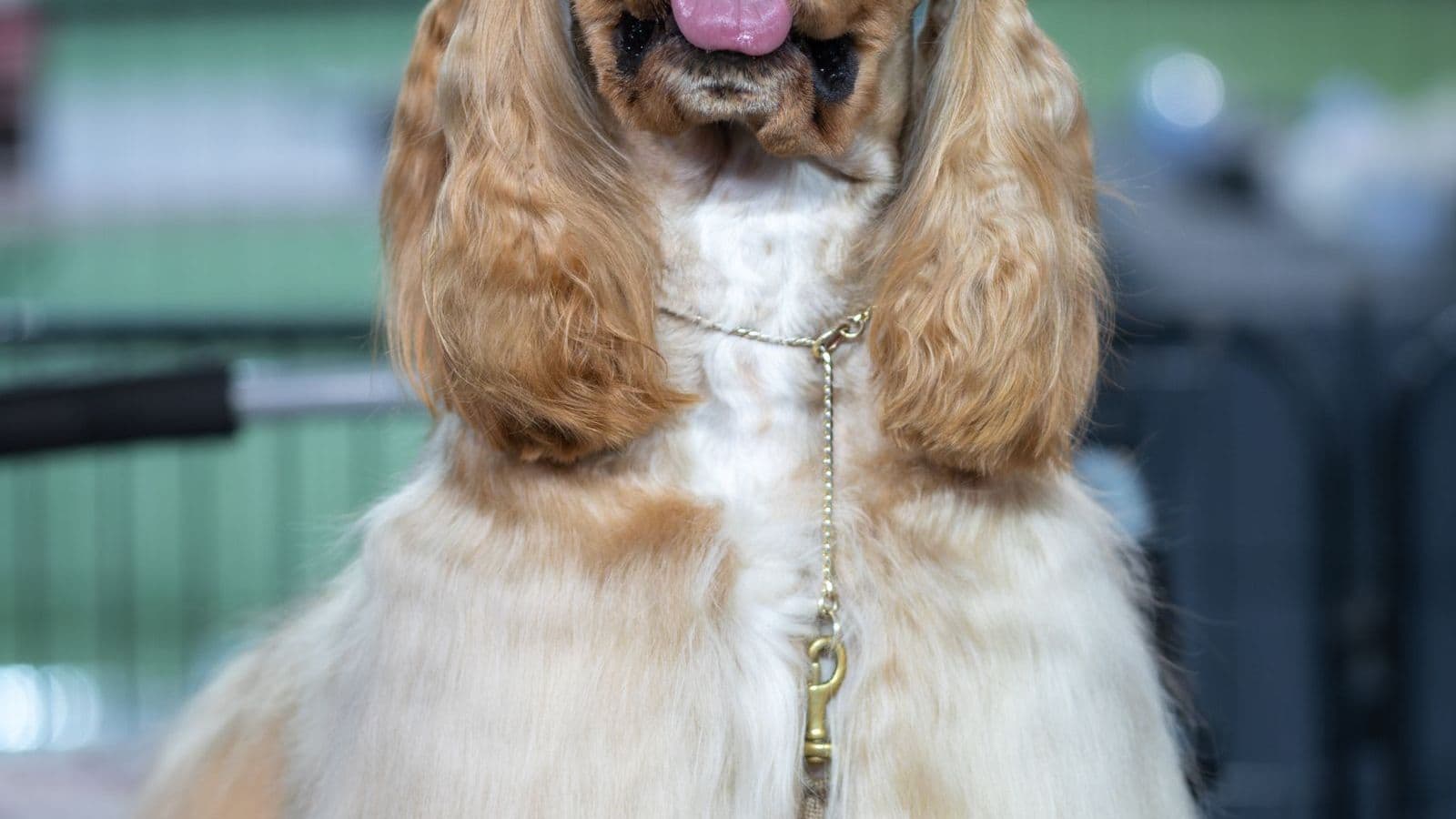
The American Cocker Spaniel is the smallest member of the sporting group and one of the most popular companion dogs in the United States. It was developed from the English Cocker into its own American breed: smaller, with a domed head, a shorter muzzle, and a full, flowing coat. It was first bred to flush and retrieve woodcock (that's where "cocker" comes from). Over the twentieth century, American breeders focused on companionship and the show ring. So today's American Cocker is first and foremost a gentle, loving family dog, not a working gun dog.
Weighing 7-14 kg, the American Cocker Spaniel is sweet-natured, cheerful, and people-oriented, with a famously soft look and an equally soft temperament. It is one of the most sensitive of the popular companion breeds: gentle, eager to please, and closely tuned to its owner's mood, sometimes to a degree that surprises new owners. That sensitivity is the key to training it well. It's also the source of the breed's most distinctive challenge: submissive and excitement urination.
For an owner, the American Cocker Spaniel needs a gentle, confidence-building approach. Because it's so sensitive, harsh handling causes shutdown or submissive urination, and scolding only makes it worse. Its tendency to bark needs early management. Its full coat and ears, which are prone to infection, need real grooming commitment. And its moderate energy needs a sensible daily outlet. Give it calm, reward-based training, confidence-building, and early bark and grooming management, and the American Cocker Spaniel becomes a devoted, joyful, deeply affectionate companion.
At a glance:
- Trainability: 7/10, eager to please but profoundly sensitive — harsh handling causes shutdown, not compliance
- Biggest risk factor: submissive or excitement urination triggered by scolding or overly excited greetings
- Grooming demands: a luxuriant coat and infection-prone ears that need regular brushing and ear care
- Example: greet the dog too excitedly or scold it, and it may urinate submissively on the spot
- Not for: owners who favor firm or harsh training methods
What Makes Training an American Cocker Spaniel Different
1. Deep sensitivity. The American Cocker is one of the most sensitive popular breeds. Harsh handling or a raised voice causes it to shut down, not comply. Gentle, reward-based training is both the most effective approach and the only right one.
2. Submissive and excitement urination. Some American Cockers urinate when greeted excitedly, scolded, or overwhelmed. This is a sensitivity response, not a house-training failure. Scolding makes it worse. The fix is calm, low-key greetings and patient confidence-building.
3. A tendency to bark. The breed can be vocal, barking at arrivals and noises. Teach a "quiet" cue early to stop the habit before it forms.
4. A coat and ears that need real care. The full coat needs regular brushing and professional grooming. The long, heavy ears are prone to infection. Start conditioning the dog to handling and ear care from puppyhood.
Week-by-Week Training Plan for Your American Cocker Spaniel
Weeks 1 and 2 : Gentle Foundation and Confidence
Build confidence with calm, positive handling, and condition grooming. Our puppy basics guide covers the mechanics.
- Pair short, gentle sessions with high-value food.
- Use calm, low-key greetings to prevent submissive or excitement urination.
- Socialize broadly and positively to build confidence.
- Begin gentle handling of the coat and ears, rewarding calm.
Weeks 3 and 4 : Core Commands, Gentle and Positive
Sit, down, and stay come readily with reward-based methods.
- Lure the behaviors and reward the instant they happen.
- Always end on a positive note while the dog is still keen.
- Install a "quiet" cue before alert barking sets in.
Weeks 5 and 6 : Loose Leash and Public Confidence
Install leash manners and build confidence in new places.
- Use a Y-harness and the stop-and-stand method for loose-leash walking.
- Take calm outings to build confidence at the dog's pace.
- Reward relaxed, curious behavior in new environments.
Weeks 7 and 8 : Recall and Bark Management
Build recall and proof the "quiet" cue.
- Train recall on a long line in a fenced area.
- Apply "quiet" at windows, doors, and visitor arrivals.
- Reward calm, settled behavior generously.
Weeks 9 and 10 : Grooming and Ear Care
Build tolerance for the breed's real grooming needs.
- Make brushing and ear cleaning calm, rewarded sessions.
- Condition the dog to professional grooming handling.
- Reward calm acceptance of handling.
Weeks 11 and 12 : Tricks and Enrichment
Engage the gentle, willing mind.
- Teach gentle trick chains and introduce simple nose work.
- Provide a sensible daily exercise outlet.
- Establish a sustainable rhythm of activity, enrichment, and grooming.
Common American Cocker Spaniel Training Mistakes
Mistake 1 : Harsh handling. The sensitive Cocker shuts down or urinates submissively under pressure. Reward-based, gentle training only.
Mistake 2 : Mishandling submissive urination. Never scold it, that worsens it. Build confidence with calm, low-key greetings.
Mistake 3 : Allowing alert barking. The breed can be vocal; install a "quiet" cue early.
Mistake 4 : Neglecting coat and ear care. The heavy coat and infection-prone ears need regular care; condition handling from puppyhood. Full breakdown : American Cocker Spaniel training mistakes.
Frequently Asked Questions
Are American Cocker Spaniels easy to train ? Yes, with gentle, positive methods, they are intelligent, eager to please, and food-motivated. The key is respecting the breed's profound sensitivity; harsh handling causes shutdown or submissive urination, so calm, confidence-building, reward-based training is essential rather than any special difficulty learning.
Why does my Cocker urinate when excited or scolded ? This is submissive or excitement urination, a sensitivity response rather than a house-training failure, and it is common in the breed. Scolding makes it worse; the fix is calm, low-key greetings, building the dog's confidence, and never punishing the behavior, which most dogs outgrow with patience.
How much exercise does an American Cocker Spaniel need ? Thirty to sixty minutes of moderate activity daily, plus mental work. The breed is a moderate-energy companion that enjoys walks, play, and gentle games rather than strenuous exercise.
Are American Cocker Spaniels good family dogs ? Excellent, they are gentle, affectionate, merry, and good with children, which is a large part of their enduring popularity. Their sensitivity means children should be calm and respectful, and interactions supervised.
Is the American Cocker coat high-maintenance ? Yes. The luxuriant coat needs brushing several times a week and professional grooming every six to eight weeks, and the long ears need regular cleaning to prevent the infections the breed is prone to.
Are American Cocker Spaniels good apartment dogs ? Yes, their moderate energy and affectionate nature suit apartment living, with a "quiet" cue to manage alert barking and daily walks and play to keep them content.
How long do American Cocker Spaniels live ? Typically twelve to fifteen years. Responsible breeders screen for the eye, ear, and heart conditions seen in the breed, and good ear care plus a lean weight support a long, comfortable life. The breed's long, heavy ears in particular need regular cleaning throughout life, since chronic ear infections are the most common avoidable health problem and a frequent reason for vet visits in the breed, and a few minutes of weekly ear care prevents most of them.
Why TailorPup Was Built for American Cocker Spaniels
A generic plan ignores the American Cocker's profound sensitivity and its tendency toward submissive urination, applying an approach that shuts a gentle dog down. TailorPup's American Cocker Spaniel plan is reward-based and confidence-building throughout, manages the alert barking, and builds in the grooming and ear care this sweet, sensitive breed needs.
Daily 12-minute training sessions plus weekly adjustments. Plans from $9.99/month, no trial; annual starts at $2 for 7 days. Cancel anytime.
Related: American Cocker Spaniel Training Mistakes · Barking Solutions · Puppy Training Basics