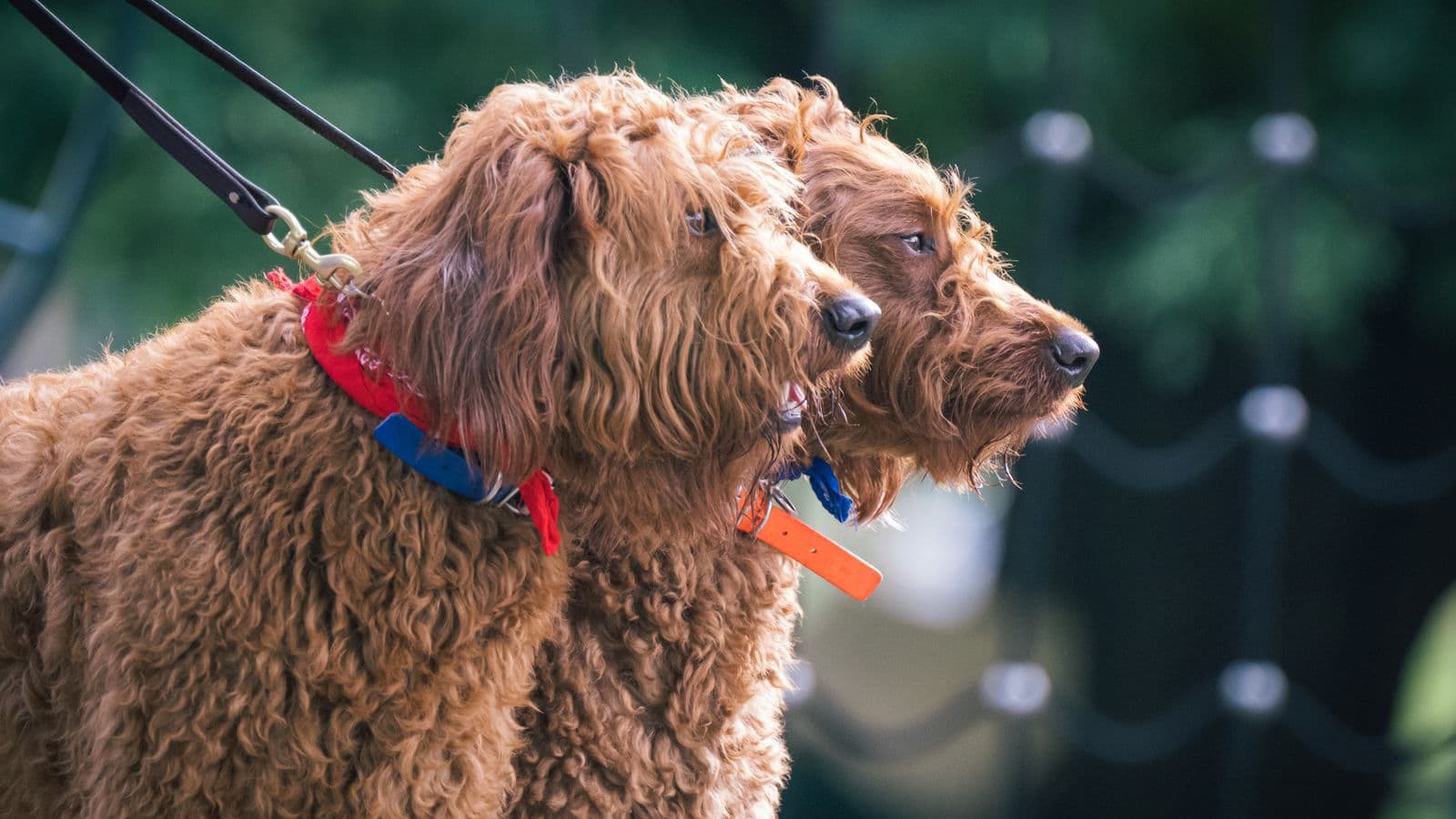
The Labradoodle is a cross between a Labrador Retriever and a Poodle. Breeders in Australia first made this cross in the late 1980s. They wanted a low-shedding guide dog. That history tells you a lot about the dog you get today. Both parent breeds are smart, trainable, and love to work. Put them together and you get a fun, athletic dog that loves people. A Labradoodle is smart and eager to please, so it is a joy to train. But it also has high energy and drive. It needs a real outlet, or that smart brain gets into trouble.
Here is the key fact about this breed: a Labradoodle is just as smart and active as its parents. People often expect less than they get. Owners picture a calm, fluffy companion. Instead they get a strong, athletic dog that needs real exercise, real mental work, and real structure. Give it those things and you get one of the best dogs around. Skip them, and you get a dog that mouths, jumps, barks, and gets anxious because it is bored.
This guide covers what works with a Labradoodle, week by week. It is built around how this smart, high-energy cross actually learns.
At a glance:
- Trainability: 9/10, exceptionally intelligent, a joy to train when given real outlets
- Biggest risk factor: under-exercise, both parent breeds are athletes, unmet needs cause hyperactivity
- Retriever habits: mouthing and jumping, both delivered with real enthusiasm
- Example: a Labradoodle given only a short walk can start inventing its own games with the furniture within days
- Not for: owners expecting a mellow, low-effort fluffy companion
What Makes Training a Labradoodle Different
Four traits shape your approach.
1. Very smart and easy to train. Both parent breeds are among the smartest dogs around, so the Labradoodle learns fast and loves to work. This is a gift. But a smart dog with no job will find its own, often a bad one. Give this breed daily mental work, not just physical exercise.
2. Very high energy. The Labrador and the working Poodle are both athletes. The cross often has even more energy than either parent. Most Labradoodles need a full hour or more of real exercise a day, plus games and puzzles. Without enough exercise, they get hyper, destructive, and hard to calm down.
3. Mouthy and jumpy as puppies. The retriever side gives them a strong urge to carry things in their mouth and to greet people with big enthusiasm. Without early training, mouthing and jumping become bad habits. Both fade fast if you start young.
4. A real risk of separation anxiety. Like both parents, the Labradoodle bonds closely and wants to stay near its people. Practice being alone from day one. This stops the clinginess and distress that can build up in such a social, attached dog.
Week-by-Week Training Plan for Your Labradoodle
Below is the framework we use at TailorPup for a Labradoodle-specific 12-week plan. Run it at home; the order and emphasis are the point.
Weeks 1 and 2 : Foundation, Socialization, and Independence
Engagement is easy with this eager cross, so use it. Run three to four five-minute sessions a day with high-value rewards, socialize broadly, and begin independence training immediately with short calm absences and a settle spot. Start redirecting mouthing onto toys from day one. Our puppy basics guide covers the foundations.
Weeks 3 and 4 : Core Commands and Tricks
Labradoodles learn quickly. Lure sit, down, and stay, mark, and reward, adding cues once reliable. Pile on trick training and name games, because this clever breed needs the mental work and thrives on it. The more its brain is busy, the calmer its body.
Weeks 5 and 6 : Loose Leash Walking
A strong, enthusiastic Labradoodle pulls hard toward everything interesting. Use stop-and-stand: stop the instant the leash tightens, advance only when it loosens, stay quiet. A front-clip harness helps with the power. Expect early walks to be slow, and reward checking in heavily.
Weeks 7 and 8 : Recall, Greetings, and Independence
Build recall on a long line, paying every success generously, and never call the dog for anything it dislikes. Work on the jumping with the statue method: reward four-on-the-floor, and remove all attention the instant paws leave the ground. Deepen independence work in parallel; if distress is appearing, see our separation anxiety guide.
Weeks 9 and 10 : Channeling Energy
Give the breed's drive and brains serious outlets: fetch, swimming, scent work, agility, and puzzle feeders all suit it. A Labradoodle that retrieves, runs, and problem-solves daily is a calm, satisfied dog. This is the phase where exercise and enrichment really take the edge off.
Weeks 11 and 12 : Generalization
Prove the skills in the real world: loose-leash walking past distractions, recall in a fenced area with temptation present, calm greetings with visitors, and settling in busier places. A Labradoodle that listens at home but not outside is only partly trained, and these last two weeks finish the job.
Common Labradoodle Training Mistakes
Three mistakes show up over and over with this cross.
Mistake 1 : Underestimating the energy and intelligence. This is the big one. People buy a fluffy companion and get a working athlete, then are overwhelmed by the hyperactivity, mouthing, and mischief that result from too little exercise and mental work. Treat the Labradoodle as the high-drive dog it is.
Mistake 2 : Letting jumping and mouthing become habits. The retriever enthusiasm is charming in an eight-pound puppy and a problem in a sixty-pound adult. Manage both from day one with redirection and consistent rules across the whole household.
Mistake 3 : Skipping independence training. A breed this social and attached can develop separation anxiety without early, deliberate alone-time practice. Build it from the first week. The full list is in our Labradoodle training mistakes guide.
Frequently Asked Questions
Are Labradoodles easy to train ? Yes, very. With two of the most intelligent breeds behind them, they learn fast and love to work. The challenge is not the learning but meeting their high energy and mental needs, and managing the retriever mouthing and jumping early.
How much exercise does a Labradoodle need ? Most need a solid hour or more of real activity daily plus mental work. Fetch, swimming, running, and scent work all suit the breed. Under-exercised Labradoodles become hyperactive and destructive.
Do Labradoodles get separation anxiety ? They can, because both parent breeds bond closely. Early, consistent independence training prevents most cases, and the breed does best when its considerable exercise and companionship needs are met.
Are Labradoodles hypoallergenic ? The Poodle influence can reduce shedding, and many allergy sufferers tolerate them, but it varies widely by coat type and no dog is truly hypoallergenic. The coat needs regular grooming to prevent matting.
Why does my Labradoodle jump and mouth so much ? Both come from the Labrador retriever heritage: an urge to greet enthusiastically and to carry things in the mouth. Redirect mouthing to toys, reward four-on-the-floor for greetings, and stay consistent, and both fade with maturity and training.
Is positive reinforcement effective for Labradoodles ? It is ideal. The breed is sensitive and highly food- and praise-motivated, so reward-based training is fast and reliable, while harsh handling is unnecessary and counterproductive.
Are Labradoodles good family dogs ? Excellent ones, for active families. They are friendly, smart, and devoted, and great with children, provided their high exercise and mental needs are met. They are a poor fit for a sedentary household.
Why TailorPup Was Built for Labradoodles
A generic plan treats your Labradoodle like a low-effort companion and ignores the very high energy, sharp intelligence, retriever habits, and attachment that define the cross. That mismatch is why standard advice leaves owners overwhelmed.
TailorPup builds a 12-week plan around your specific dog: its parentage, its age, and the behaviors you are seeing. For a Labradoodle that means plenty of exercise and mental work, early management of jumping and mouthing, front-loaded independence training, and reward-based methods that match its brains.
Daily 12-minute sessions plus weekly adjustments based on your dog's progress. Plans from $9.99/month, no trial; annual starts at $2 for 7 days. Cancel anytime.
Related: Labradoodle Training Mistakes · Recall Training · Leash Pulling · Puppy Training Basics