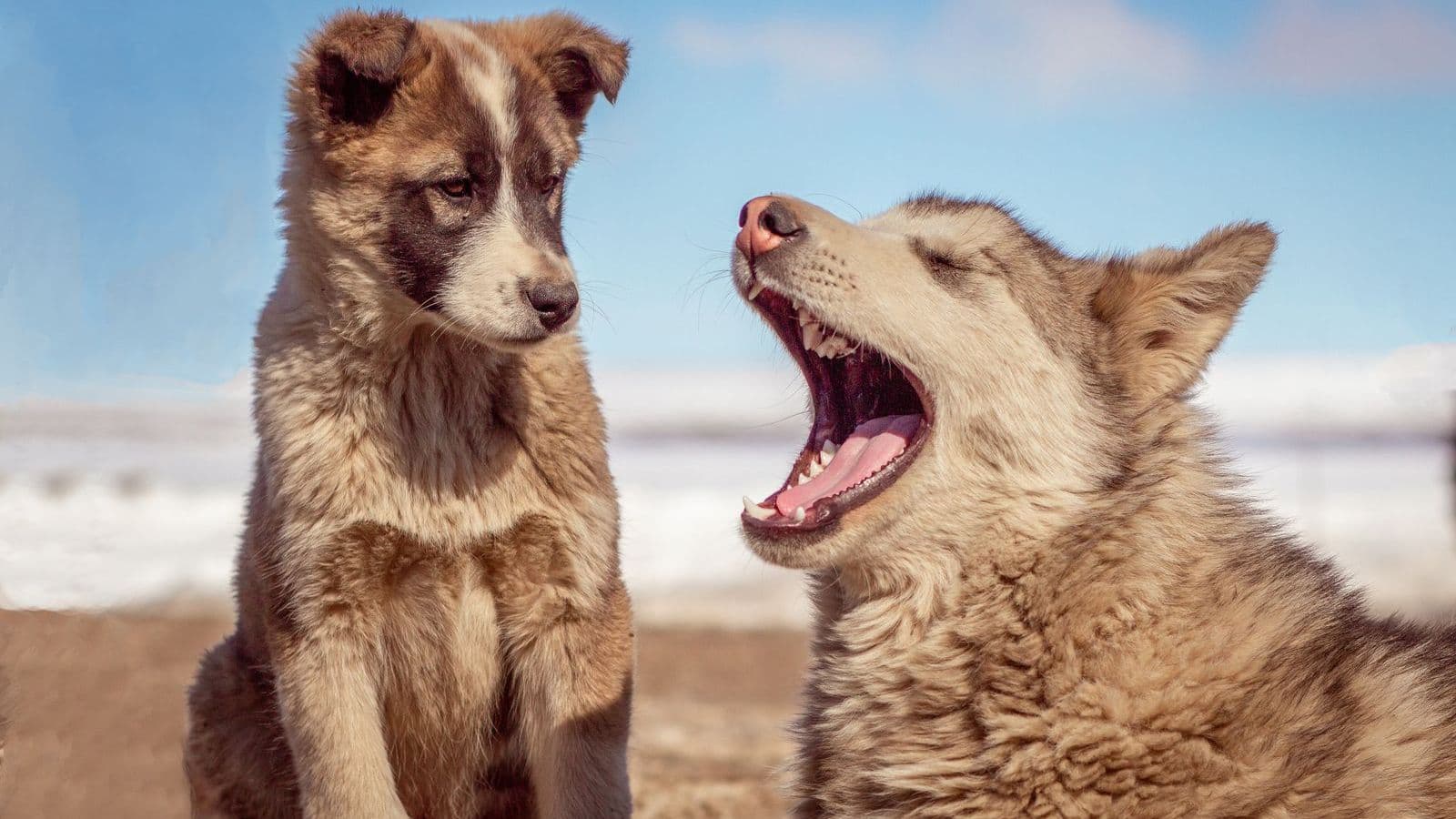
The Greenland Dog (Grønlandshund) is one of the oldest and most genetically primitive dog breeds in existence. DNA evidence places it in the Arctic alongside the Thule and pre-Inuit peoples for over four thousand years, and it remains, in body and mind, very close to the original Arctic working dog. It was the primary transport and hunting partner of Greenland's Inuit, pulling sleds across sea ice, hauling heavy loads over vast distances, and helping hunt seal and polar bear, and it served the great polar expeditions, including Amundsen's race to the South Pole. In Greenland it is still a working sled dog today, not a pet.
Weighing 30-47 kg, the Greenland Dog is powerful, robust, and built for endurance in the harshest environment on earth. It is not a companion breed by tradition or temperament, and that distinction matters enormously for anyone considering one. Four thousand years of pulling sleds in pack teams, surviving on minimal food, and making independent decisions in life-or-death conditions produced an animal whose social structure, motivation, and relationship with humans are fundamentally different from those of a modern companion dog.
For an owner, the Greenland Dog is among the most demanding breeds in the world. Its energy requirements are extraordinary, this is a dog built to run fifty kilometres a day; its prey drive is intense, shaped by hunting seal and polar bear; its primary loyalty is to its pack rather than to an individual human; and its independence makes conventional obedience a low priority.
It needs an experienced owner with an active, outdoor lifestyle, the space and facilities to contain and exercise a powerful sled dog, and realistic expectations. Given all that, the Greenland Dog is a magnificent, hardy, ancient working partner, but it is not a dog for most homes.
At a glance:
- Trainability: 4/10, low breed priority on conventional obedience, an ancient primitive working breed
- Biggest risk factor: very high prey drive from hunting seal and polar bear, unsafe near small animals
- Extraordinary energy needs: built to run fifty kilometres a day, becomes destructive without hours of vigorous outlet
- Example: A Greenland Dog left in a yard with a small dog nearby can treat it as prey, not a playmate.
- Not for: apartment dwellers, first-time owners, or anyone without an active outdoor sledding or mushing lifestyle
What Makes Training a Greenland Dog Different
1. A pack social structure, not a companion bond. The Greenland Dog's primary loyalty is to its pack rather than to an individual person. Human authority must be established clearly and calmly; it is not assumed as it is in many companion breeds, and the relationship is that of a working partner, not a devoted pet.
2. Extraordinary energy requirements. The breed was bred to run fifty kilometres or more a day pulling heavy loads, and its energy needs in a pet context are immense. Without hours of vigorous activity it becomes destructive and difficult, so a genuine working or sporting outlet is essential.
3. A very high prey drive. Used for hunting seal and polar bear, the Greenland Dog has intense prey drive, and small animals are at serious risk. Recall near prey is not reliable, and management is the only safe strategy.
4. Primitive independence. The breed makes its own decisions and places little value on conventional obedience, so it is unsuited to inexperienced owners and requires a handler who understands primitive, working sled dogs.
Week-by-Week Training Plan for Your Greenland Dog
Weeks 1 and 2 : Pack Leadership and Socialization
Establish calm, confident leadership and socialize broadly. Our puppy basics guide covers the mechanics.
- Establish clear, calm leadership through consistent rules from day one.
- Socialize intensively with people and controlled dog interactions.
- Pair short sessions with high-value food, finding the strongest motivator.
- Verify secure, robust containment before any yard time.
Weeks 3 and 4 : Core Commands, Value-Based
Sit, down, and stay are taught as worthwhile transactions.
- Lure the behaviors and reward generously with the highest-value motivator.
- Keep sessions short and upbeat, accepting that obedience is a low breed priority.
- Reward engagement with you over independent activity.
Weeks 5 and 6 : Containment and Prey Management
Secure the environment and manage the intense prey drive.
- Confirm secure, high fencing; the breed is powerful and determined.
- Keep the dog managed and separated from small animals at all times.
- Reward calm focus around stimulating distractions.
Weeks 7 and 8 : Leash Work and Physical Outlet
Install leash manners and channel the sled-pulling drive.
- Use a front-clip harness for walking and a proper pulling harness for sport.
- Introduce canicross, bikejoring, or scootering to channel the drive.
- Provide vigorous daily activity to meet the breed's enormous needs.
Weeks 9 and 10 : Recall, Managed Expectations
Build recall while respecting its limits.
- Train recall on a long line in a securely fenced area.
- Accept that recall near prey is not reliably achievable; manage instead.
- Reserve off-leash freedom for secure, fenced areas only.
Weeks 11 and 12 : Sport and Channeled Drive
Give the working drive its proper outlet.
- Pursue sledding, canicross, or bikejoring as a regular outlet.
- Provide the hours of activity the breed genuinely needs.
- Establish a sustainable rhythm of work, exercise, and management.
Common Greenland Dog Training Mistakes
Mistake 1 : Treating it as a companion dog. The Greenland Dog is a primitive working sled dog with fundamentally different needs from companion breeds.
Mistake 2 : Insufficient exercise. The energy requirements are extraordinary; an under-exercised Greenland Dog is destructive and unmanageable.
Mistake 3 : Keeping it near small animals. The prey drive is very high. Small animals are at serious risk.
Mistake 4 : Assuming human authority is automatic. The pack social structure means leadership must be clearly established, not assumed. Full breakdown : Greenland Dog training mistakes.
Frequently Asked Questions
Are Greenland Dogs good family dogs ? With very experienced owners and an active, outdoor lifestyle, they can be functional, loyal family dogs, but they are working sled dogs at heart, not affectionate companions. Their enormous energy needs, prey drive, and pack-first nature make them unsuitable for typical family homes.
How much exercise does a Greenland Dog need ? Ninety minutes to several hours of vigorous activity daily, the breed was bred to run fifty kilometres a day pulling loads. A simple walk barely registers; it needs sledding, canicross, bikejoring, or equivalent sustained work.
Are Greenland Dogs good apartment dogs ? Absolutely not. The breed needs space, robust containment, and an enormous amount of vigorous outdoor exercise that no apartment can accommodate.
Are Greenland Dogs good with cats ? No. The intense prey drive shaped by hunting seal and polar bear makes them generally unsafe with cats and small animals.
Are Greenland Dogs rare ? Outside Greenland and sled-dog communities, yes, uncommon. The breed is still primarily a working dog in its homeland, and pet ownership elsewhere is rare and best suited to experienced sledding or mushing households.
How do Greenland Dogs handle heat ? Poorly. The thick double coat is built for Arctic cold, so heat management, shade, water, avoiding exercise in warm weather, is a serious consideration in any temperate or warm climate.
How long do Greenland Dogs live ? Typically ten to thirteen years, a hardy, robust breed shaped by extreme natural selection. Responsible breeders screen for hip dysplasia, and a well-exercised, well-managed Greenland Dog stays powerful and sound well into old age.
Why TailorPup Was Built for Greenland Dogs
A generic plan treats the Greenland Dog as an ordinary companion and badly underestimates its energy, its prey drive, and its pack-first social structure. TailorPup's Greenland Dog plan addresses the realities of an ancient Arctic sled dog, establishing leadership, channeling the enormous drive into real work, and managing the prey instinct, for the experienced owner this breed requires.
Daily 12-minute training sessions plus weekly adjustments. Plans from $9.99/month, no trial; annual starts at $2 for 7 days. Cancel anytime.
Related: Greenland Dog Training Mistakes · Recall Training · Leash Pulling · Puppy Training Basics