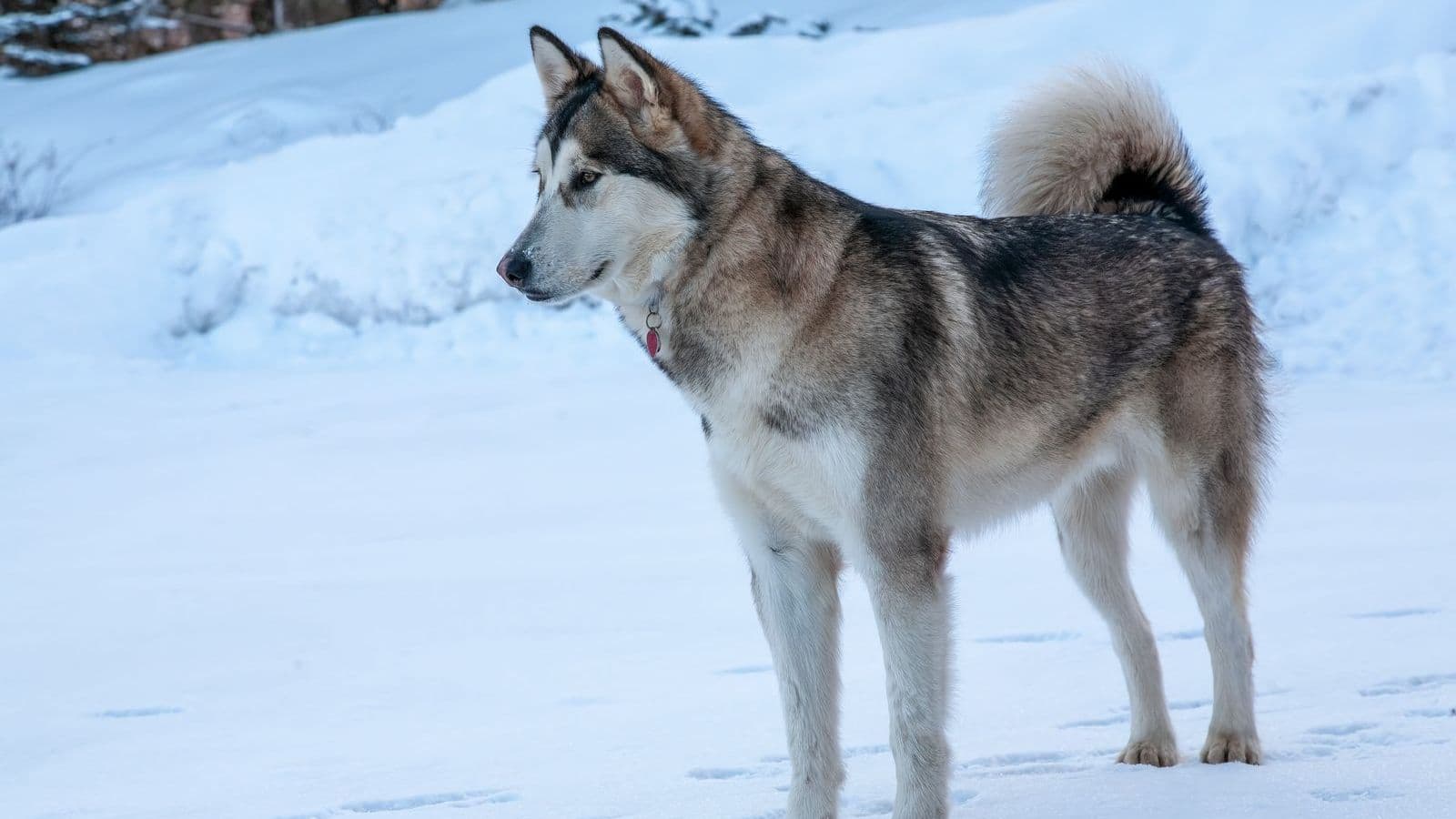
The Alaskan Malamute is the powerful freighting sled dog of the Arctic, the largest of the sled breeds, developed by the Mahlemut people to haul heavy loads over long distances in brutal conditions. Strong, hardy, and built for endurance, the Malamute is also affectionate, playful, and deeply social, a dog that loves its family and life lived outdoors. Behind the wolfish good looks and the famous howl is a serious working dog with the independence, strength, prey drive, and stamina its demanding heritage required, and a temperament that is wonderful for the right active owner and overwhelming for the wrong one.
That powerful, independent sled dog nature is the key to training one. The Malamute is intelligent but independent and strong-willed, bred to pull and to make decisions, so it is not a naturally obedient breed and recall is genuinely difficult. It has a strong prey drive, a love of digging and escaping, a vocal streak, and enormous exercise needs. Channel the energy and strength, manage the prey drive and escaping, keep training engaging and consistent, and you get a magnificent, affectionate, characterful companion. Under-exercise it or expect easy obedience, and you get a destructive, howling, escape-artist dog.
This guide covers what works with a Malamute, week by week, built around how a powerful, independent Arctic sled dog actually learns.
At a glance:
- Trainability: 6/10, intelligent but independent — it weighs your requests rather than obeying reflexively
- Biggest risk factor: strong prey drive that makes off-leash recall unreliable around movement
- Escape risk: a determined digger and escaper that needs escape-proof, secure fencing
- Example: an under-exercised Malamute left alone will dig, howl, and try to escape the yard
- Not for: sedentary households, hot climates, or owners wanting an easy off-leash dog
What Makes Training a Malamute Different
Four breed traits shape your approach.
1. Independent and strong-willed. Bred to pull and to make decisions in harsh conditions, the Malamute weighs your requests rather than obeying reflexively, and recall is one of the hardest skills to instill. It cooperates for engaging, genuinely rewarding training and an owner it respects, and it resists drilling and pressure.
2. A strong prey drive. The Malamute has a serious prey drive and can be unsafe with small animals. Recall around movement is unreliable, off-leash freedom in unfenced areas is risky, and management around small pets and wildlife is essential.
3. A digger, escaper, and vocal. Bred to dig dens in snow and to work in a noisy team, the Malamute loves to dig, is a determined escape artist, and is genuinely vocal, howling and "talking" freely. Secure, escape-proof containment, a digging outlet, and noise management all matter.
4. Enormous strength and energy, plus heavy coat. This is a powerful, high-energy dog that needs substantial daily exercise and ideally a pulling job, with manners and leash control taught early while it is manageable. Its thick double coat needs serious grooming, and the breed is very heat-sensitive.
Week-by-Week Training Plan for Your Malamute
Below is the framework we use at TailorPup for a Malamute-specific 12-week plan. Run it at home; the order and emphasis are the point.
Weeks 1 and 2 : Foundation, Socialization, and Exercise
Build engagement with high-value rewards and socialize broadly. Run three to four five-minute sessions a day: name, mark eye contact, reward. Establish a real exercise routine, because an under-exercised Malamute cannot focus, and begin grooming handling for the heavy coat. Our puppy basics guide covers the foundations.
Weeks 3 and 4 : Core Commands
Malamutes learn, but on their own terms. Lure sit and down, mark, reward, and add cues once reliable, expecting an independent learner who needs a real reason to comply. Keep sessions short, engaging, and rewarding, and avoid repetitive drilling, which the breed tunes out.
Weeks 5 and 6 : Leash Work (While It Is Manageable)
A Malamute is bred to pull, so loose-leash walking takes real work, taught early while the dog is manageable. Use stop-and-stand for pulling and a front-clip harness, and consider channeling the pulling instinct into a sanctioned activity like canicross or carting rather than only fighting it on walks.
Weeks 7 and 8 : Recall and Counter-Conditioning
Build recall on a long line, jackpot every success, and never call the dog for anything it dislikes, but be realistic that recall will lose to the prey drive; treat the long line and secure fencing as permanent tools. Begin counter-conditioning if your Malamute is reactive with other dogs. Our reactivity guide lays out the method.
Weeks 9 and 10 : Channeling Energy and Containment
Give the powerful dog real outlets: pulling sports, hiking, running in cool weather, a digging box, and scent games all suit it. At the same time, make your fencing genuinely escape-proof, since the Malamute is a determined digger and escaper. A well-exercised dog with a job is far more manageable.
Weeks 11 and 12 : Generalization
Prove the skills in the real world: loose-leash walking past distractions, recall in a fenced area with temptation present, calm responses around other dogs, and settled behavior. A Malamute that listens at home but not outside is normal for the breed, so these two weeks consolidate realistic, engaging progress.
Common Malamute Training Mistakes
Three mistakes show up repeatedly with this breed.
Mistake 1 : Underestimating the exercise need. A bored, under-exercised Malamute is a destructive, howling, escaping nightmare. The breed needs serious daily exercise and ideally a pulling job, especially in cool weather, and no obedience training compensates for the missing outlet.
Mistake 2 : Trusting off-leash recall and weak containment. The prey drive and independence make recall unreliable, and the breed is a determined escaper and digger. Treat open spaces as long-line or securely fenced only, make fencing escape-proof, and manage carefully around small animals.
Mistake 3 : Expecting easy obedience and using harshness. The independent Malamute resists drilling and harsh handling, which bring out stubbornness. Keep training engaging, consistent, and reward-based, with realistic expectations. The full list is in our Alaskan Malamute training mistakes guide.
Frequently Asked Questions
Are Alaskan Malamutes easy to train ? They are among the more challenging breeds, being independent and strong-willed sled dogs. They are intelligent, but recall and reliable obedience take real work, patience, and realistic expectations. Engaging, reward-based training and meeting the exercise need are essential.
How much exercise does a Malamute need ? A great deal: well over an hour of vigorous daily activity, ideally including a pulling job, in cool weather. Under-exercised Malamutes become destructive, vocal, and escape-prone. The breed is a poor fit for sedentary homes or hot climates.
Can I let my Malamute off-leash ? Realistically, rarely. The prey drive and independence make recall unreliable, and the breed roams. Treat open spaces as long-line or securely fenced only, with escape-proof fencing, and manage carefully around small animals.
Why does my Malamute dig and escape so much ? Because it was bred to dig dens and is a determined, athletic escaper, and boredom makes both far worse. Give a designated digging box, make fencing genuinely escape-proof, and above all meet the dog's enormous exercise needs.
Do Malamutes get along with other animals ? Often not with small ones. The strong prey drive means many Malamutes are unsafe with small pets, and some are assertive with other dogs. Careful management, socialization, and realistic expectations are essential.
Is positive reinforcement effective for Malamutes ? Yes, paired with engaging, consistent training and realistic expectations. The independent breed responds to reward-based methods and a job, and resists drilling and harsh handling, which only deepen the stubbornness.
Are Alaskan Malamutes good family dogs ? Yes, for active, committed families in cooler climates. They are affectionate, playful, and social, and good with their people, but their exercise needs, prey drive, escaping, vocalizing, and grooming make them a serious commitment.
Why TailorPup Was Built for Alaskan Malamutes
A generic plan ignores what defines this breed: the powerful independence, the prey drive, the digging and escaping, the vocal streak, and the enormous exercise needs. That mismatch is why standard advice leaves Malamute owners overwhelmed.
TailorPup builds a 12-week plan around your specific dog: its sled-dog nature, its age, and the behaviors you are seeing. For a Malamute that means an exercise-and-job-first structure, a realistic recall approach with long-line and fencing built in, a digging outlet, counter-conditioning, grooming handling, and engaging reward-based methods.
Daily 12-minute sessions plus weekly adjustments based on your dog's progress. Plans from $9.99/month, no trial; annual starts at $2 for 7 days. Cancel anytime.
Related: Alaskan Malamute Training Mistakes · Recall Training · Leash Pulling · Reactivity Training