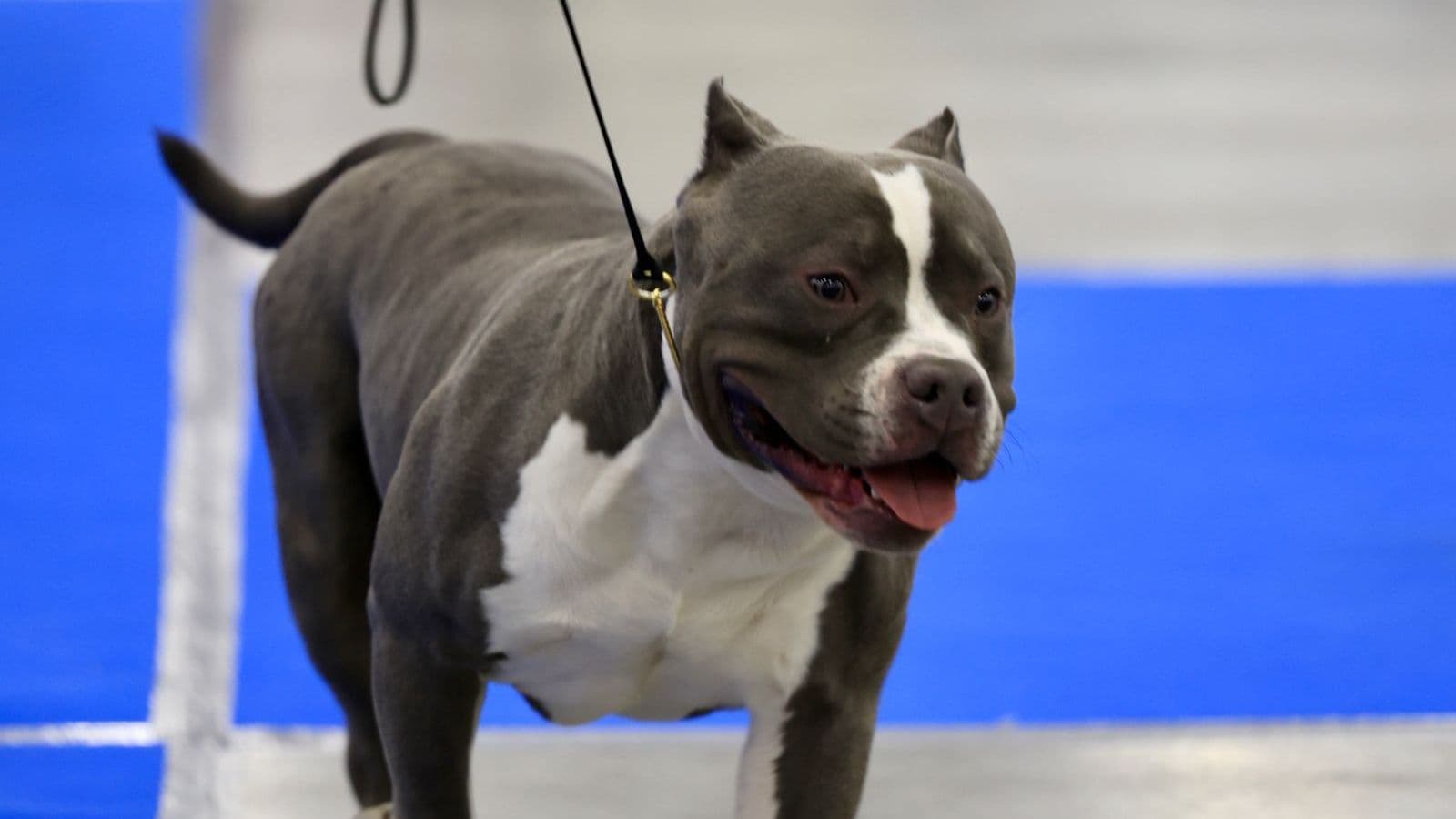
The American Bully is a modern breed, developed in the United States in the 1990s from the American Pit Bull Terrier and American Staffordshire Terrier, with infusions of bulldog stock to build a stockier, broader, more companion-oriented dog. It comes in several sizes, Pocket, Standard, Classic, and XL, but across all of them the defining temperament is the same: confident, affectionate, and almost comically devoted to its people. The breed was created to keep the loyalty and athleticism of its ancestors while dialing the temperament firmly toward family companionship.
That people-orientation is the great asset in training an American Bully, and it is also the trait most often wasted. This is a strong, muscular dog that genuinely wants to work with its owner, but strength without manners becomes a management problem fast. An untrained Bully that jumps, pulls, and rushes the door is not being dominant, it is an under-directed, over-enthusiastic dog with no outlet for its energy and no rules to lean on. Training channels all that devotion and power into a calm, polite, reliable companion, and the breed makes it easy when you give it structure.
Because the breed is young and often misunderstood, it is worth being clear about what an American Bully is and is not. It is not an American Pit Bull Terrier, though it shares ancestry; the entire point of the breed's development was to move the temperament away from the terrier's intensity and toward a stable, affectionate, companion-first disposition. Reputable breeding selects hard for that temperament, and a well-bred Bully is famously tolerant, soft with its family, and eager to be near its people. What it is not is a low-maintenance dog you can leave to its own devices.
The breed's strength, its enthusiasm, and its need for an outlet mean that an under-exercised, under-trained Bully becomes a nuisance, not a dangerous one, but a pushy, mouthy, door-rushing one that makes life harder than it needs to be. The good news is that the same people-focus that makes the breed so devoted also makes it genuinely easy to train, so the gap between a difficult Bully and a delightful one is usually just a few weeks of consistent structure.
At a glance:
- Trainability: 7/10, people-pleasing rather than stubborn — find the right reward and it works hard for you
- Biggest risk factor: dog-selectivity in some lines, needing early socialization and managed introductions
- Strength & safety: a muscular dog that can knock people over without meaning to if leash and greeting manners aren't taught
- Example: an untrained Bully left without an outlet will jump, pull, and rush the door
- Not for: owners unwilling to commit to structured exercise and leash training for a strong dog
What Makes Training an American Bully Different
1. The breed is people-pleasing, not stubborn. The American Bully wants your attention and approval, which makes it highly responsive to reward-based training. Owners who frame the dog as stubborn usually have a motivation or consistency problem, not a willful dog. Find the right reward and the Bully works hard for you.
2. Strength makes manners safety-relevant. A muscular dog that pulls or jumps can knock people over without any aggressive intent. Loose-leash walking and four-on-the-floor greetings are not just polite, they are how a powerful, friendly dog stays safe and welcome in public.
3. Energy needs a structured outlet. The Bully is not hyperactive, but it is athletic and needs daily exercise plus mental engagement. Without an outlet, the energy redirects into chewing, mouthing, or door-rushing. Structured activity and training games keep the dog settled at home.
4. Confidence around other dogs needs management. Depending on lineage, some Bullies are dog-selective. Early socialization and managed introductions build a stable, confident dog; chaotic dog-park free-for-alls do not. The goal is calm neutrality around other dogs, not forced play.
Week-by-Week Training Plan for Your American Bully
Weeks 1 and 2 : Foundation and Engagement
Build the working relationship and start socialization while installing the household rules the adult dog will live by. Our puppy basics guide covers the mechanics.
- Short, upbeat sessions with high-value food to build focus.
- Four paws on the floor for all greetings from day one.
- Begin broad socialization with people, dogs, surfaces, and sounds.
- Reward voluntary eye contact to build a strong attention default.
Weeks 3 and 4 : Core Commands
Sit, down, and stay come quickly with this responsive breed.
- Lure sit and down, then add verbal and hand signals together.
- Build stay from short durations, rewarding stillness.
- Keep sessions positive and end while the dog is keen.
Weeks 5 and 6 : Loose Leash, Safety-Critical
A strong dog that pulls is a hazard to itself and others. Install loose-leash mechanics now.
- Use a front-clip harness and the stop-and-stand method.
- Reward every step taken on a slack leash.
- Practice in gradually busier environments.
Weeks 7 and 8 : Polite Greetings and Impulse Control
Channel the Bully's enthusiasm into a calm greeting routine.
- Teach sit-to-greet so the dog earns attention by keeping its feet down.
- Reward calm at the door before any visitor enters.
- Build a "place" cue for arrivals and mealtimes.
Weeks 9 and 10 : Dog Socialization and Recall
Build calm neutrality around other dogs and a reliable recall.
- Practice structured on-leash passing of other dogs, rewarding focus on you.
- Build recall on a long line with high-value rewards.
- Avoid chaotic dog-park settings; favor controlled introductions.
Weeks 11 and 12 : Proofing and Outlets
Take the skills public and lock in a structured outlet for the breed's energy.
- Proof loose-leash walking and greetings in busy environments.
- Add a regular activity, flirt pole, fetch with rules, weight-pull, or trick training.
- Confirm the dog settles calmly at home after exercise.
Common American Bully Training Mistakes
Mistake 1 : Skipping leash work. The breed is muscular and strong. Loose-leash walking installed early keeps walks manageable as the dog matures.
Mistake 2 : Under-socializing. A confident, well-socialized Bully is a wonderful companion; an under-socialized one risks reactivity or anxiety.
Mistake 3 : Mistaking strength for stubbornness. The Bully is people-oriented and trainable. Channel the strength into structured, reward-based work.
Mistake 4 : No structured outlet. A strong, energetic dog without an outlet redirects its energy. Full breakdown : American Bully training mistakes.
Frequently Asked Questions
Are American Bullies easy to train ? Yes, generally. The breed's strong people-orientation makes it responsive to reward-based training. The main work is channeling strength and energy into manners, not overcoming any reluctance to learn.
Are American Bullies good family dogs ? Excellent. The breed was developed specifically for affectionate family companionship and is typically gentle, devoted, and tolerant with its people, including children, when properly raised and socialized.
How much exercise does an American Bully need ? Forty-five to sixty minutes of daily activity plus mental engagement. The breed is athletic but not frantic, and it thrives on structured exercise like fetch, flirt-pole work, or training games.
Are American Bullies aggressive ? Not toward people, the breed is bred for friendliness with humans. Some individuals are dog-selective depending on lineage, which is managed through socialization and controlled introductions rather than dog-park free play.
What sizes do American Bullies come in ? Pocket, Standard, Classic, and XL, ranging from compact dogs around 33 cm at the shoulder to large XL dogs over 50 cm. Temperament is consistent across sizes; the training approach is the same.
Are American Bullies good for first-time owners ? They can be, given the breed's trainability and affection, as long as the owner commits to early socialization, leash manners, and a structured outlet for the dog's strength and energy.
How long do American Bullies live ? Typically ten to thirteen years. Responsible breeding and weight management help avoid the joint and breathing issues that affect over-typed individuals.
Why TailorPup Was Built for American Bullies
A generic plan misreads a strong, friendly dog as stubborn and skips the leash and greeting work that keeps a powerful breed welcome in public. TailorPup's American Bully plan leans on the breed's people-orientation, front-loads loose-leash walking and polite greetings, and builds the structured outlet that keeps an athletic dog calm and content at home.
Daily 12-minute training sessions plus weekly adjustments. Plans from $9.99/month, no trial; annual starts at $2 for 7 days. Cancel anytime.
Related: American Bully Training Mistakes · Leash Pulling · Puppy Training Basics