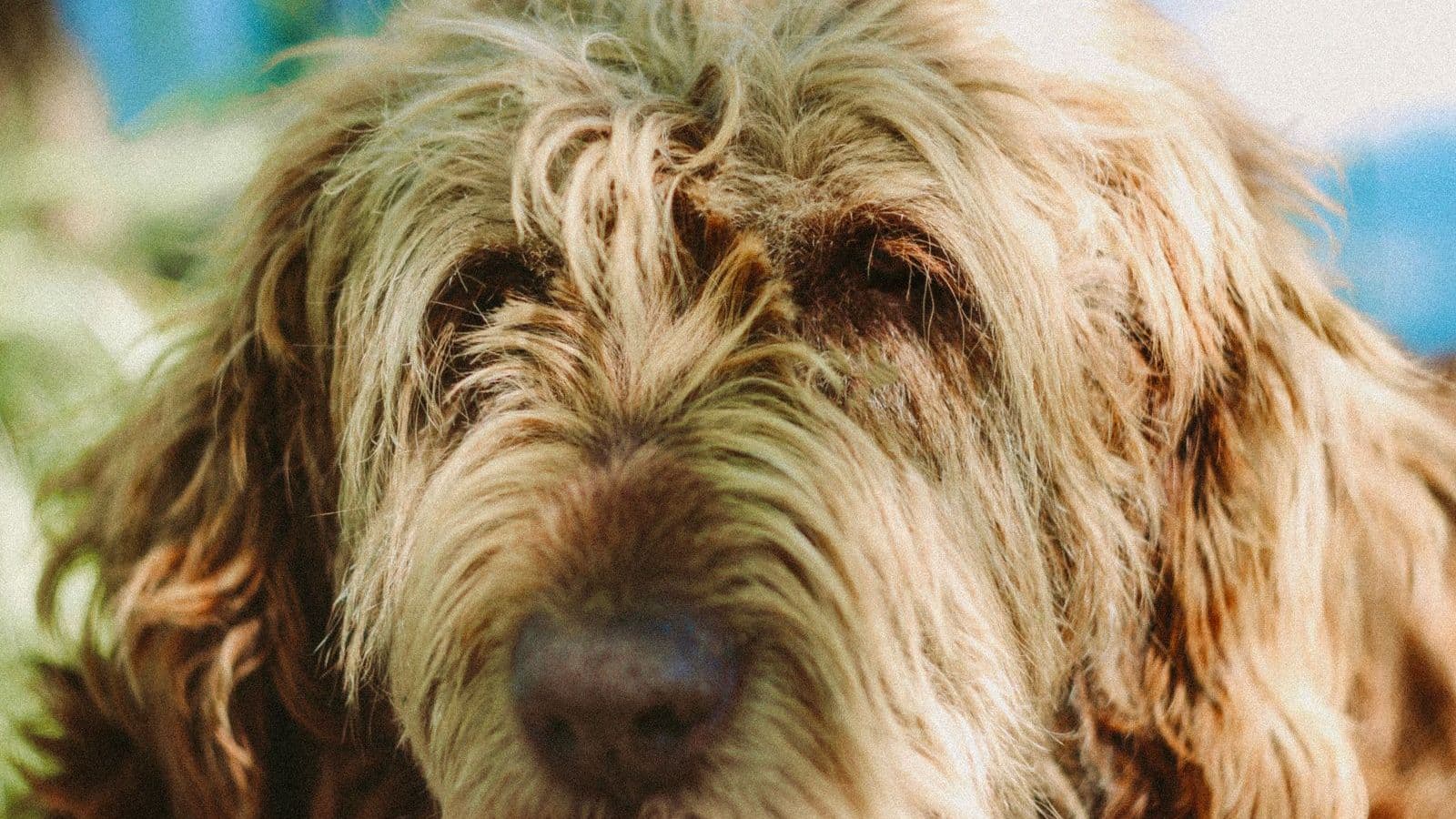
The Otterhound is one of the rarest recognized dog breeds in the world, there are estimated to be fewer than a thousand alive, with only a few hundred in the United Kingdom where it originated, making it rarer than the giant panda. Developed in medieval England to hunt otter in the rivers and streams that fed the country's fish stocks, it was bred for a uniquely demanding job: to swim and work in cold water for hours, following a scent trail both on land and submerged, in packs, across difficult terrain.
When otter hunting was banned in the late twentieth century to protect the declining otter population, the breed lost its purpose almost overnight, and its numbers have never recovered.
Weighing 36-55 kg, the Otterhound is a magnificent, shaggy, oversized scent hound with a rough, waterproof double coat, large webbed feet built for swimming, and a nose considered among the most sensitive of any breed. In temperament it is big, boisterous, clownish, and deeply affectionate, a perpetually cheerful, good-humored dog that approaches life with enthusiastic abandon. It is also, like all pack scent hounds, profoundly governed by its nose and famously challenging to train in conventional obedience.
For an owner, the Otterhound is a wonderful but demanding companion whose scent-hound nature shapes everything. Its nose dominates its world, making recall near water or interesting scent essentially impossible; its bay is one of the loudest and most sonorous of all hound voices, carrying enormous distances; its webbed feet and love of water make every body of water a destination; and its size and stamina demand real exercise.
None of this reflects a difficult temperament, the Otterhound is simply enthusiastic, nose-driven, and operating on hound logic. Given a real outlet for the nose, patient management of the bay and water love, and plenty of exercise, the Otterhound is an affectionate, joyful, and unforgettable family dog.
At a glance:
- Trainability: 5/10, enthusiastic and food-motivated but nose-driven and independent, so conventional obedience takes real patience.
- Biggest risk factor: an extraordinary nose that makes recall near water or interesting scent essentially impossible.
- Voice: one of the loudest, most sonorous hound bays, carrying enormous distances, so it must be managed from puppyhood.
- Example: in an unfenced area, a scent-triggered Otterhound will simply follow its nose and stop responding to its handler.
- Not for: apartment dwellers, or owners who want a reliable off-leash dog and can't commit to secure fencing.
What Makes Training an Otterhound Different
1. The nose governs everything. The Otterhound was bred to work independently on scent with a pack, and when its extraordinary nose engages, the handler effectively ceases to exist. Recall near water or interesting scent is essentially impossible, so management replaces trust in any unfenced environment.
2. A very loud, carrying voice. The Otterhound bay is one of the most sonorous of all hound voices and travels extremely far. In a residential setting, an Otterhound that bays will define the household's relationship with the neighbors, so the bay must be managed from puppyhood.
3. Affectionate, clownish, not difficult, just houndy. The Otterhound is not stubborn in an aggressive way; it is enthusiastic, nose-driven, and operating on hound logic. It responds to patient, good-humored, reward-based training rather than to any kind of pressure.
4. Webbed feet and a water obsession. The breed is built to swim, and every body of water is a destination. Water management is a significant consideration in daily life, best handled by channeling the love of water rather than fighting it.
Week-by-Week Training Plan for Your Otterhound
Weeks 1 and 2 : Foundation With Excellent Treats
Build engagement with rewards that compete with scent, and begin bay management. Our puppy basics guide covers the mechanics.
- Use treats valuable enough to genuinely compete with environmental scents.
- Begin a "quiet" cue and broad socialization.
- Pair short, upbeat sessions with high-value food.
- Begin gentle handling for the large, rough coat and webbed feet.
Weeks 3 and 4 : Core Commands, With Humor and Patience
Sit, down, and stay come at the breed's enthusiastic, nose-forward pace.
- Teach the core cues with luring, kept very short and very fun.
- Accept that the Otterhound learns at its own pace; stay patient and good-humored.
- Reward engagement despite environmental scent.
Weeks 5 and 6 : Leash Control and Nose Management
Install leash manners for a large, scent-pulling dog.
- Use a front-clip harness or head halter and consistent stop-and-stand.
- Reward focus on you when scent appears.
- Manage rather than fight the constant pull toward interesting smells.
Weeks 7 and 8 : Bay Management
Manage the enormous, carrying bay.
- Apply "quiet" at trigger points and use environmental management to reduce triggers.
- Reward calm, settled behavior over baying.
- Address the bay early, since the habit is very difficult to change once set.
Weeks 9 and 10 : Water Management and Nose Work
Channel the water love and give the nose an outlet.
- Introduce controlled water access on cue rather than spontaneously.
- Introduce nose work, the perfect outlet for the breed's extraordinary nose.
- Reward controlled, focused scenting work.
Weeks 11 and 12 : Proofing
Consolidate the foundations with ongoing challenge.
- Proof recall on a long line in secure, scent-rich environments.
- Proof "quiet" and other cues in distracting settings.
- Establish a sustainable rhythm of vigorous exercise, swimming, and nose work.
Common Otterhound Training Mistakes
Mistake 1 : Off-leash in unfenced areas. The scent-triggered departure will happen. Use fenced areas only.
Mistake 2 : Acquiring without understanding the bay. The enormous, carrying bay will be the defining management challenge of daily ownership. Prepare for it.
Mistake 3 : Repetitive obedience drilling. The Otterhound disengages from boredom fast. Keep training novel, brief, and rewarding.
Mistake 4 : Fighting the water obsession. Manage water access with a cue rather than battling the instinct everywhere. Full breakdown : Otterhound training mistakes.
Frequently Asked Questions
Are Otterhounds easy to train ? In nose-forward activities like scent work, they are very capable, but in conventional obedience they require patience and good humor, because the powerful nose and pack-hound independence govern their behavior. Off-leash recall near scent or water is essentially unachievable, so success is measured in management and patient progress rather than precise obedience.
How much exercise does an Otterhound need ? Sixty to ninety minutes of vigorous daily activity, ideally including swimming. As a large working water hound, it has real stamina and needs a genuine outlet to stay settled.
Are Otterhounds good family dogs ? Excellent, they are big, boisterous, affectionate, and gentle, with a famously good-humored, clownish temperament that suits family life. Their size, bay, and exercise needs mean a spacious, active home suits them best.
Are Otterhounds good apartment dogs ? The enormous bay alone makes apartments extremely challenging, quite apart from the breed's size and exercise needs. They are far better suited to a home with a securely fenced yard and ideally water access.
How rare are Otterhounds ? Extremely, fewer than a thousand are thought to exist worldwide, making the Otterhound one of the rarest recognized breeds. Finding a puppy usually requires research, patience, and often a long waiting list.
Are Otterhounds healthy ? The small gene pool makes attention to hereditary disease important, and the breed is prone to hip dysplasia, bleeding disorders, and epilepsy. A health-tested source is essential, and reputable breeders track these conditions carefully.
How long do Otterhounds live ? Typically ten to thirteen years. Responsible breeders screen for hip dysplasia and bleeding disorders, and a lean, well-exercised Otterhound from health-tested lines has the best chance of a long, comfortable life given the breed's narrow gene pool.
Why TailorPup Was Built for Otterhounds
A generic plan does not address the Otterhound's nose-governed independence, its enormous bay, or the specific approach a scent hound needs. TailorPup's Otterhound plan builds recall against an extraordinary nose, manages the bay from puppyhood, channels the love of water, and keeps training novel and good-humored for this rare, joyful pack hound.
Daily 12-minute training sessions plus weekly adjustments. Plans from $9.99/month, no trial; annual starts at $2 for 7 days. Cancel anytime.
Related: Otterhound Training Mistakes · Recall Training · Barking Solutions · Puppy Training Basics