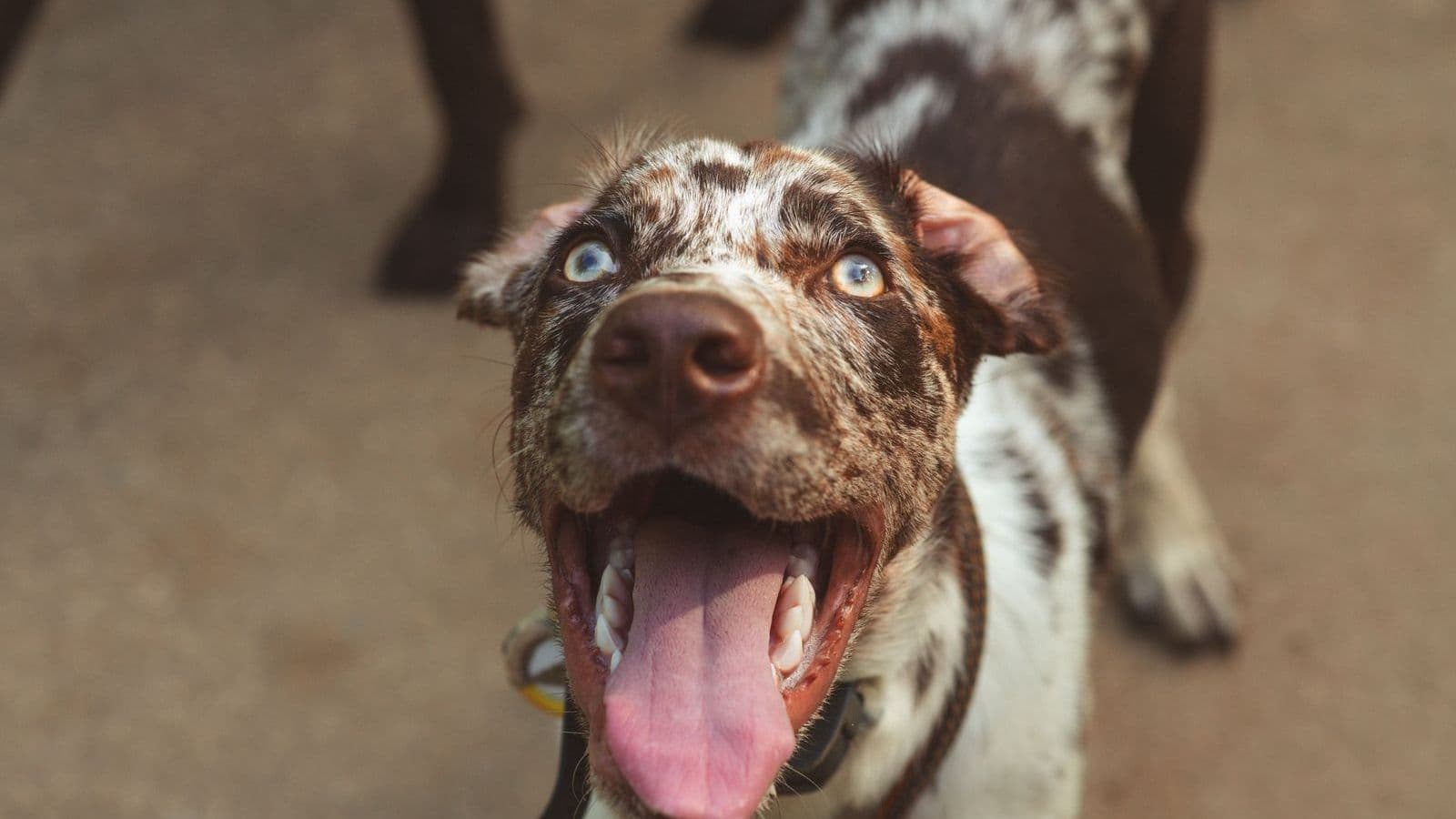
Deep in the swamps of Louisiana, this dog once worked half-wild cattle and feral hogs, gathering stock alone by circling and holding it, far from any handler barking orders. That job made the Catahoula Leopard Dog tough, intense, sharp, and fiercely independent. Today it's the official state dog of Louisiana, and it still looks the part: 16-43kg, marbled "leopard" coat, and often those striking blue or cracked-glass eyes.
This is a working animal first, a companion second. Bold, hardworking, devoted to its family. But it carries real stranger-wariness and generations of working alone, far from human direction, baked into its instincts.
This is a magnificent, demanding dog that needs an experienced, active home. Its working drive needs a real job and real daily exercise, skip that and it turns destructive. Its independence means it cooperates for a confident, reward-based relationship, not blind obedience. Its stranger-wariness needs early, thorough socialization. And its drive complicates off-leash recall. Give it a real outlet, broad socialization, and confident training, and the Catahoula becomes a capable, loyal partner.
At a glance:
- Trainability: 7/10, smart and capable, but needs a real job
- Biggest risk factor: under-stimulation, this working breed gets destructive without a real outlet
- Dog-to-dog: some are dog-selective, introductions should stay controlled
- Example: a Catahoula with no herding or sport outlet will often invent its own job, usually one the household doesn't love
- Not for: apartment living or owners without time for real daily exercise
What Makes Training a Catahoula Leopard Dog Different
1. A real working drive that needs a job. This breed was built for demanding stock work. Without a real outlet, herding, sport, structured activity, plus real daily exercise, it gets destructive and frustrated. Meeting that drive is the foundation of everything else.
2. Strong independence. Generations of working alone bred deep self-direction into this dog. It doesn't naturally defer to you. Confident, consistent, reward-based handling earns cooperation. Harshness just gets you resistance.
3. Stranger-wariness and a protective streak. This breed is naturally wary of strangers and protective of its family. Early, thorough socialization keeps that instinct from turning into reactivity.
4. Drive that complicates recall. This dog's intensity competes directly with recall. Off-leash freedom takes real investment and secure fenced areas, until recall is genuinely solid.
Week-by-Week Training Plan for Your Catahoula Leopard Dog
Weeks 1 and 2 : Foundation and Socialization
Front-load socialization to shape the natural wariness and build engagement. Our puppy basics guide covers the mechanics.
- Socialize intensively and positively with diverse people, dogs, and environments.
- Pair short, upbeat sessions with high-value food.
- Establish confident, consistent leadership and household rules.
- Verify secure containment before any yard time.
Weeks 3 and 4 : Core Commands
Sit, down, and stay come readily to this intelligent working breed.
- Teach the core cues with luring, fading to hand signals.
- Add a leave it cue for managing drive and distraction.
- Keep sessions varied and rewarding for an independent mind.
Weeks 5 and 6 : Recall and Leash Work
Build recall against the working drive and install leash manners.
- Train recall on a long line with high-value rewards before any off-leash freedom.
- Use a front-clip harness and the stop-and-stand method for loose-leash walking.
- Reward focus on you in stimulating environments.
Weeks 7 and 8 : Continued Socialization and Job Introduction
Deepen socialization and give the working drive an outlet.
- Continue structured, positive introductions to new people and dogs.
- Introduce herding, agility, or structured work to channel the drive.
- Reward calm, focused work over frantic activity.
Weeks 9 and 10 : Advanced Work and Mental Stimulation
Engage the intense mind with real challenge.
- Advance the chosen sport or working activity.
- Add nose work, puzzle feeders, and skill chains for mental fatigue.
- Reward controlled, deliberate work.
Weeks 11 and 12 : Proofing
Consolidate the foundations with ongoing challenge.
- Proof all cues, including recall, in distracting environments.
- Maintain socialization and a consistent working routine.
- Establish a sustainable rhythm of vigorous exercise, work, and mental challenge.
Common Catahoula Leopard Dog Training Mistakes
Mistake 1 : Under-stimulation. The Catahoula is a serious working breed; without daily physical and mental work it becomes destructive. Provide a real job.
Mistake 2 : Skipping socialization. The natural stranger-wariness needs early positive exposure or it becomes reactivity.
Mistake 3 : Weak recall foundation. The independence and working drive compete with recall. Build it thoroughly on a long line first.
Mistake 4 : Harsh handling. The independent breed responds to confident, reward-based handling, not pressure, which provokes resistance. Full breakdown : Catahoula training mistakes.
Frequently Asked Questions
Are Catahoula Leopard Dogs easy to train ? Smart and capable, but the independence and intensity make this tough for a new owner. With confident, reward-based handling and a real outlet for the working drive, they train well. Without that outlet, that same drive works against you.
How much exercise does a Catahoula need ? 60 to 90 minutes of real activity a day, plus mental work, ideally a real job. Walks alone won't cut it for this working breed. It needs running, herding, or dog sport to actually settle.
Are Catahoulas good family dogs ? With experienced, active owners and real socialization, yes, devoted and protective. The stranger-wariness and drive mean this fits committed homes that exercise and socialize properly, not casual ones.
Are Catahoulas good with other dogs ? With early socialization and management, many are, though some are dog-selective. This strong-personality breed needs controlled introductions, especially between same-sex pairs.
Are Catahoulas good apartment dogs ? Not really. The working drive and real exercise needs don't fit apartment life. This breed does far better with space and a job.
Are Catahoulas rare ? Outside the American South, moderately uncommon, though the fanbase is growing. Look for a breeder or rescue who actually understands the working temperament.
How long do Catahoula Leopard Dogs live ? 10 to 14 years typically. A good breeder screens for hip dysplasia and, importantly, deafness, which is linked to the merle coat and double-merle breeding. Avoiding a double-merle pairing is one of the most important choices a buyer makes.
Why TailorPup Was Built for Catahoula Leopard Dogs
A generic plan misses the Catahoula's serious working drive, its independence, and its stranger-wariness, leaving an owner with an under-worked, reactive dog. TailorPup's Catahoula plan channels the working drive into a real outlet, front-loads socialization, and uses the confident, reward-based handling this intense, independent working breed requires.
Daily 12-minute training sessions plus weekly adjustments. Plans from $9.99/month, no trial; annual starts at $2 for 7 days. Cancel anytime.
Related: Catahoula Training Mistakes · Recall Training · Leash Pulling · Puppy Training Basics