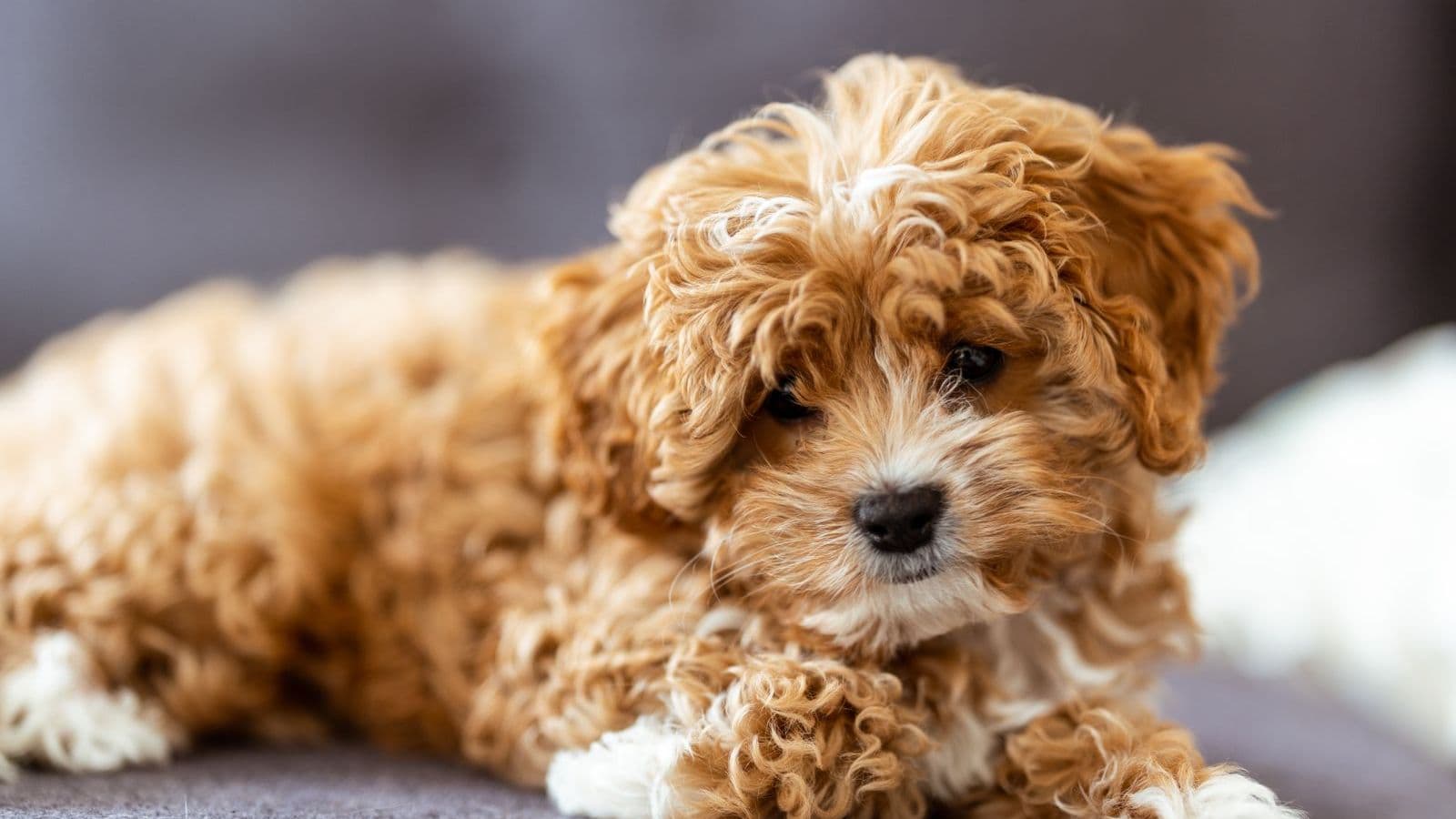
The Cavapoo is a cross between a Cavalier King Charles Spaniel and a Poodle, and it is one of the gentlest, most people-oriented of the popular doodle crosses. Both parent breeds were developed to be close companions, the Cavalier as a devoted lapdog and the Poodle as a clever, biddable partner, so the Cavapoo tends to be affectionate, soft-natured, and genuinely eager to please. For most families it is an easy, loving dog. The one thing that easiness hides is a real vulnerability: a Cavapoo bonds so closely that it can struggle badly when left alone.
That is the heart of training one. The Cavapoo's intelligence and willingness make obedience straightforward, and its sensitivity means it responds beautifully to gentle, reward-based methods. But the same closeness that makes it such a wonderful companion also makes separation anxiety the single biggest risk of the cross. Build independence from day one and you have a happy, confident, well-mannered dog. Let it become over-attached and you face one of the harder behavior problems to undo.
This guide covers what works with a Cavapoo, week by week, built around how a gentle, sensitive, people-loving cross actually learns.
At a glance:
- Trainability: 8/10, gentle and eager to please, learns quickly with encouragement
- Biggest risk factor: separation anxiety, the Cavalier side bonds so closely it can struggle badly alone
- Sensitivity note: wilts under harshness, needs encouragement rather than pressure
- Example: a Cavapoo left alone with no independence training can start showing distress within minutes of the door closing
- Not for: owners who won't commit to independence training from week one
What Makes Training a Cavapoo Different
Four traits shape your approach.
1. Gentle, soft, and eager to please. Both parent breeds are biddable and affectionate, so the Cavapoo learns quickly and loves working for praise and treats. This makes reward-based training fast and pleasant, and it means the breed needs encouragement, not pressure.
2. A high risk of separation anxiety. This is the defining training challenge. The Cavalier is famously velcro, and the Cavapoo inherits that deep attachment. Independence training from the first week is the most important thing you can do, because preventing separation anxiety is far easier than treating it.
3. A sensitive temperament. Cavapoos read your mood and wilt under harshness. Yelling, corrections, or heavy-handed methods produce a worried, shut-down dog rather than a trained one. Keep everything upbeat and reward-based.
4. Moderate energy with real enrichment needs. A Cavapoo is not hyperactive, but it is clever and needs daily walks plus mental work. An under-stimulated, under-exercised one can become barky and clingy, which feeds straight back into the attachment problem.
Week-by-Week Training Plan for Your Cavapoo
Below is the framework we use at TailorPup for a Cavapoo-specific 12-week plan. Run it at home; the order and emphasis are the point.
Weeks 1 and 2 : Foundation, Socialization, and Independence
Engagement comes easily with this eager cross, so use the head start. Run three to four five-minute sessions a day with high-value rewards, socialize broadly, and crucially begin independence training immediately: short, calm absences, a comfortable settle spot of the dog's own, and no fuss around comings and goings. Our puppy basics guide covers the foundations.
Weeks 3 and 4 : Core Commands and Tricks
Cavapoos learn fast. Lure sit, down, and stay, mark, and reward, adding cues once reliable. Because the breed is so willing, add trick training early; it is excellent mental exercise and channels the Poodle intelligence into something constructive.
Weeks 5 and 6 : Loose Leash and House Training
Use stop-and-stand for pulling and a comfortable harness. Keep house training on a strict schedule, since a small puppy bladder needs frequent, predictable trips out. Reward checking in on walks so the leash becomes a calm conversation.
Weeks 7 and 8 : Separation Anxiety Prevention
Now deepen the independence work, the most breed-critical phase for a Cavapoo. Practice graduated departures, build alone time slowly, keep arrivals and departures low-key, and leave the dog something good to do when you go. If you are already seeing distress, our separation anxiety guide lays out the protocol.
Weeks 9 and 10 : Recall and Mental Work
Build recall on a long line, starting in low-distraction areas and paying every success well. Lean into the breed's brains with scent games, puzzle feeders, and new tricks. A mentally satisfied Cavapoo is a calmer, more confident one.
Weeks 11 and 12 : Generalization
Prove the skills in the real world: calm loose-leash walking past distractions, commands in busier places, settling on cue, and continued alone-time practice so the independence work sticks. These two weeks are about consistency and proofing rather than new skills.
Common Cavapoo Training Mistakes
Three mistakes show up over and over with this cross.
Mistake 1 : Skipping independence training. This is the big one. Because the Cavalier side bonds so intensely, owners who keep a new Cavapoo constantly attached create separation anxiety they then struggle to undo. Build alone-time tolerance from the first week, before there is a problem.
Mistake 2 : Long daily isolation. The flip side of the same issue: a Cavapoo left alone for long stretches every day is a poor fit and is prone to distress. The breed does best in homes where someone is around much of the time or where absences are managed thoughtfully.
Mistake 3 : Using harsh handling. Both parent breeds are sensitive, and corrections create anxiety rather than obedience. Keep training gentle and reward-based. The full list is in our Cavapoo training mistakes guide.
Frequently Asked Questions
Are Cavapoos easy to train ? Yes. Both parent breeds are intelligent, gentle, and eager to please, so reward-based training is fast and pleasant. The real challenge is preventing separation anxiety rather than the obedience itself.
Do Cavapoos get separation anxiety ? They are among the most prone of the doodle crosses, because the Cavalier side bonds so closely. Early, consistent independence training prevents most cases, and the breed suits homes where it is not isolated for long.
How much exercise does a Cavapoo need ? Around 30 to 45 minutes of activity daily plus mental work. The breed is moderate-energy but clever, so games, training, and sniff walks matter as much as physical exercise.
Are Cavapoos hypoallergenic ? The Poodle influence can reduce shedding, and many allergy sufferers tolerate them, but it varies by coat type and no dog is truly hypoallergenic. The coat needs regular grooming to stay mat-free.
When should I start training my Cavapoo puppy ? Day one. Begin short formal sessions at 8 weeks, prioritize socialization, and most importantly start independence training immediately, since preventing separation anxiety is far easier than treating it.
Is positive reinforcement effective for Cavapoos ? It is ideal. Both parent breeds are sensitive and thrive on gentle, reward-based training, while harsh methods are genuinely counterproductive with this cross.
Do Cavapoos bark a lot ? Usually only moderately, but boredom, under-exercise, or separation distress can drive barking. Meet the dog's needs, shape quiet early, and address any attachment issues, and most Cavapoos are quiet companions. Our barking guide helps if it becomes a habit.
Why TailorPup Was Built for Cavapoos
A generic plan treats your Cavapoo like any small companion and overlooks the one thing that really matters: the separation-anxiety risk baked into its parentage. That is why standard advice can leave owners with an anxious, clingy dog.
TailorPup builds a 12-week plan around your specific dog: its parentage, its age, and the behaviors you are seeing. For a Cavapoo that means gentle reward-based methods, front-loaded independence training, plenty of mental work, and an early barking protocol.
Daily 12-minute sessions plus weekly adjustments based on your dog's progress. Plans from $9.99/month, no trial; annual starts at $2 for 7 days. Cancel anytime.
Related: Cavapoo Training Mistakes · Recall Training · Puppy Training Basics · Barking Solutions