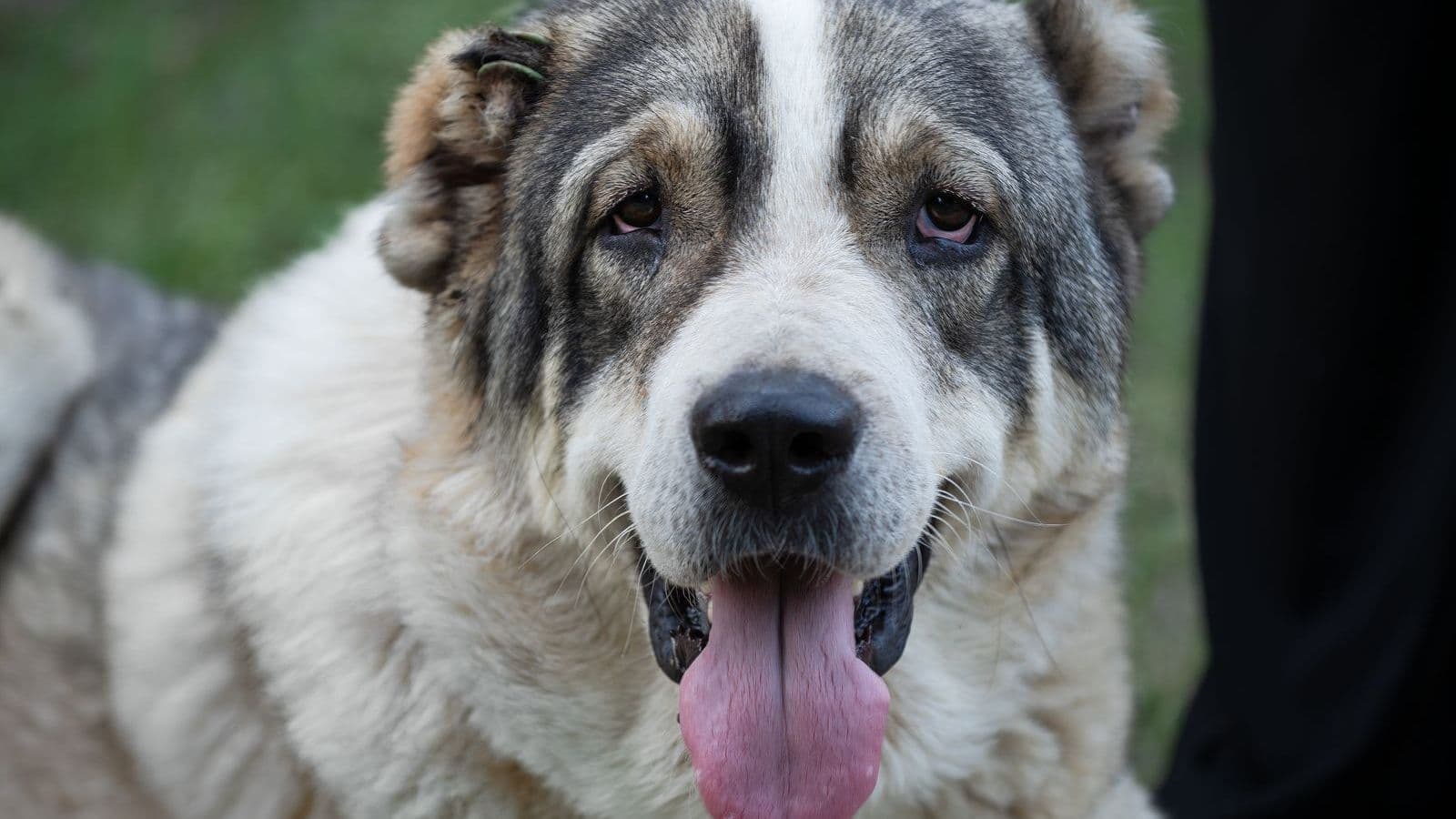
The Central Asian Shepherd Dog (Sredneaziatskaya Ovcharka), known across its homeland as the Alabai, may be the oldest livestock guardian breed in existence. Genetic evidence points to development over 4,000 years ago across the steppes, deserts, and mountains of Central Asia, from the Caspian Sea to China. It guarded the flocks of nomadic peoples against wolves, bears, and thieves, and it was shaped as much by natural selection as by human choice, only the hardiest, most capable, most independent dogs survived to pass on their genes. Males weigh 55-100 kg and beyond, standing 70-85 cm or more at the shoulder.
This heritage produces a dog that is not a herder, not a sport dog, and not a companion in the ordinary sense. It is a guardian, and every aspect of its behavior flows from that. The Alabai assesses its world, decides what belongs and what does not, and acts on its own authority. With an experienced owner and the right facilities, it is a calm, deeply loyal, and supremely capable protector. Training it is not about teaching tricks; it is about building manageable behavior and reliable management in an animal that will dwarf its owner and answer, ultimately, to its own judgment.
One thing distinguishes the Alabai from almost every other breed an owner is likely to have known: it was shaped far more by survival than by human preference. For most of its history there were no kennel clubs, no breed standards, and no selective breeding for appearance, there were flocks to protect, predators to face, and a harsh climate that culled anything weak, unsound, or unfit for the work. The dogs that lived and bred were the capable, hardy, independent ones, and four thousand years of that filter produced an animal of remarkable health, judgment, and self-reliance.
The upside for an owner is a robust, intelligent, deeply functional dog. The catch is that none of that selection rewarded biddability, so the Alabai brings ancient competence without any particular inclination to take orders. Training works with that reality rather than against it.
At a glance:
- Trainability: 5/10, ancient autonomy means compliance must be earned through relationship, not assumed
- Biggest risk factor: territorial instinct and stranger wariness, requiring a strict secured visitor protocol
- Physical care note: males reach 55-100 kg or more, so basic control must be installed while the puppy is still guidable
- Example: Secure the dog before an unfamiliar visitor enters the property, then reward calm behavior at a distance.
- Not for: first-time owners, or homes without secure high perimeter fencing and space for a giant guardian breed
What Makes Training a Central Asian Shepherd Different
1. Ancient autonomy is the core trait. The breed was selected to protect independently in the total absence of humans. Deference to human authority is simply not part of its default operating model. Compliance must be earned through consistent, calm relationship rather than assumed, and even a well-trained Alabai keeps its own counsel about genuine threats. This is the breed's purpose, not a defect to be fixed.
2. Size makes the puppy window decisive. A fully grown male is among the most physically powerful domestic dogs alive. The only time to install leash manners and basic control is while the puppy is still guidable, once that window closes, no amount of strength on your part will substitute for the training you skipped.
3. Territorial instinct and stranger wariness run deep. The Alabai is bred to identify and respond to intrusions on its territory. Socialization can shape this into discrimination, but stranger interactions on the dog's home ground will always require careful management and a practiced protocol.
4. It demands experienced, expert handling. The combination of ancient independence, enormous size, and guardian drive makes the Central Asian Shepherd suitable only for owners who understand guardian psychology, can manage a giant dog practically, and can provide secure containment and space. It is not a first dog, and may be regulated where you live.
Week-by-Week Training Plan for Your Central Asian Shepherd
Weeks 1 and 2 : Intensive Socialization and Size Awareness
The puppy is manageable now; the adult will not be without a foundation. Begin socialization and engagement immediately. Our puppy basics guide covers the mechanics.
- Pair short, calm sessions with high-value food.
- Socialize intensively and positively, people first, plus places, surfaces, sounds.
- Begin body handling for stress-free vet and grooming care.
- Set household rules now and enforce them identically across the family.
Weeks 3 and 4 : Core Commands Before Size
Sit, down, and stay establish that human direction governs the home, installed while the dog is still small. The goal is basic management safety, not a working dog's polish.
- Lure sit and down, then fade to hand signals.
- Build stay from seconds, rewarding stillness first.
- Ask once and wait; keep sessions calm and brief.
Weeks 5 and 6 : Loose Leash, Non-Optional
A 90 kg dog that pulls is physically dangerous to most handlers. Install loose-leash walking before it becomes impossible.
- Use a front-clip harness rather than a flat collar.
- Apply stop-and-stand the instant the leash tightens.
- Reward every step on a slack leash, every day.
Weeks 7 and 8 : Visitor and Stranger Protocol
At this size, no unsupervised stranger interaction is acceptable. Build a precise, secured routine.
- Secure the dog before anyone unfamiliar enters the property.
- Teach a default "place" for guests' arrivals.
- Reward calm at a distance; never force interaction.
Weeks 9 and 10 : Territory and Nighttime Management
The Alabai is a nighttime guardian and will patrol and alarm at perceived threats. Shape this rather than fight it.
- Arrange indoor sleeping so the dog is not patrolling all night.
- Verify secure, high perimeter fencing.
- Reinforce calm when people pass the property line.
Weeks 11 and 12 : Ongoing Foundation Work
Maturity is years away, so lock in the basics and keep them reliable as the dog grows.
- Proof loose-leash walking and "place" in mildly distracting settings.
- Rehearse the visitor protocol until it is automatic.
- Maintain consistent rules; full psychological maturity arrives around three years.
Common Central Asian Shepherd Training Mistakes
Mistake 1 : Acquiring without appropriate facilities. Secure perimeter fencing and space are not optional. Research local laws on giant breeds before acquiring.
Mistake 2 : Treating it as a companion dog. The guardian psychology and size require management protocols ordinary pet ownership does not involve.
Mistake 3 : Delaying training past puppyhood. The puppy is manageable; the 90 kg adult is not without a foundation. Install basics while it is still possible.
Mistake 4 : Expecting eager compliance. The Alabai does not defer by default. Build cooperation through relationship. Full breakdown : Central Asian Shepherd training mistakes.
Frequently Asked Questions
Is the Central Asian Shepherd good for first-time owners ? No. The breed's size, power, and ancient guardian independence require experienced handlers with large-breed guardian experience and the right facilities.
How big do Central Asian Shepherds get ? Males commonly reach 55-100 kg and beyond; females are usually 40-65 kg. They are among the largest dogs in the world.
How much exercise does a Central Asian Shepherd need ? Thirty to sixty minutes of moderate exercise daily. The breed patrols its territory continuously and conserves energy rather than needing vigorous activity.
Are Central Asian Shepherds legal everywhere ? Not always. The breed is regulated in some jurisdictions and may carry licensing or insurance requirements. Research your local laws before acquiring one.
Are Central Asian Shepherds healthy ? Generally robust for their size, thanks to centuries of natural selection, though hip dysplasia and bloat are concerns. Health-tested lines and bloat awareness matter.
Are Central Asian Shepherds good family dogs ? Within their own family, they are deeply loyal and patient. Around strangers and visitors, they require active, constant management. They suit experienced homes with appropriate facilities only.
How long do Central Asian Shepherds live ? Typically ten to twelve years, which is relatively long for a giant breed.
Why TailorPup Was Built for Central Asian Shepherds
A generic plan has no framework for an autonomous guardian, no protocol for bred-in stranger wariness, and no sense of the size-management urgency that responsible Alabai ownership demands. TailorPup's Central Asian Shepherd plan makes socialization and leash work the first priorities from day one, builds a secured visitor protocol, and works with the breed's ancient guardian psychology rather than against it.
Daily 12-minute training sessions plus weekly adjustments as your dog grows. Plans from $9.99/month, no trial; annual starts at $2 for 7 days. Cancel anytime.
Related: Central Asian Shepherd Training Mistakes · Leash Pulling · Puppy Training Basics