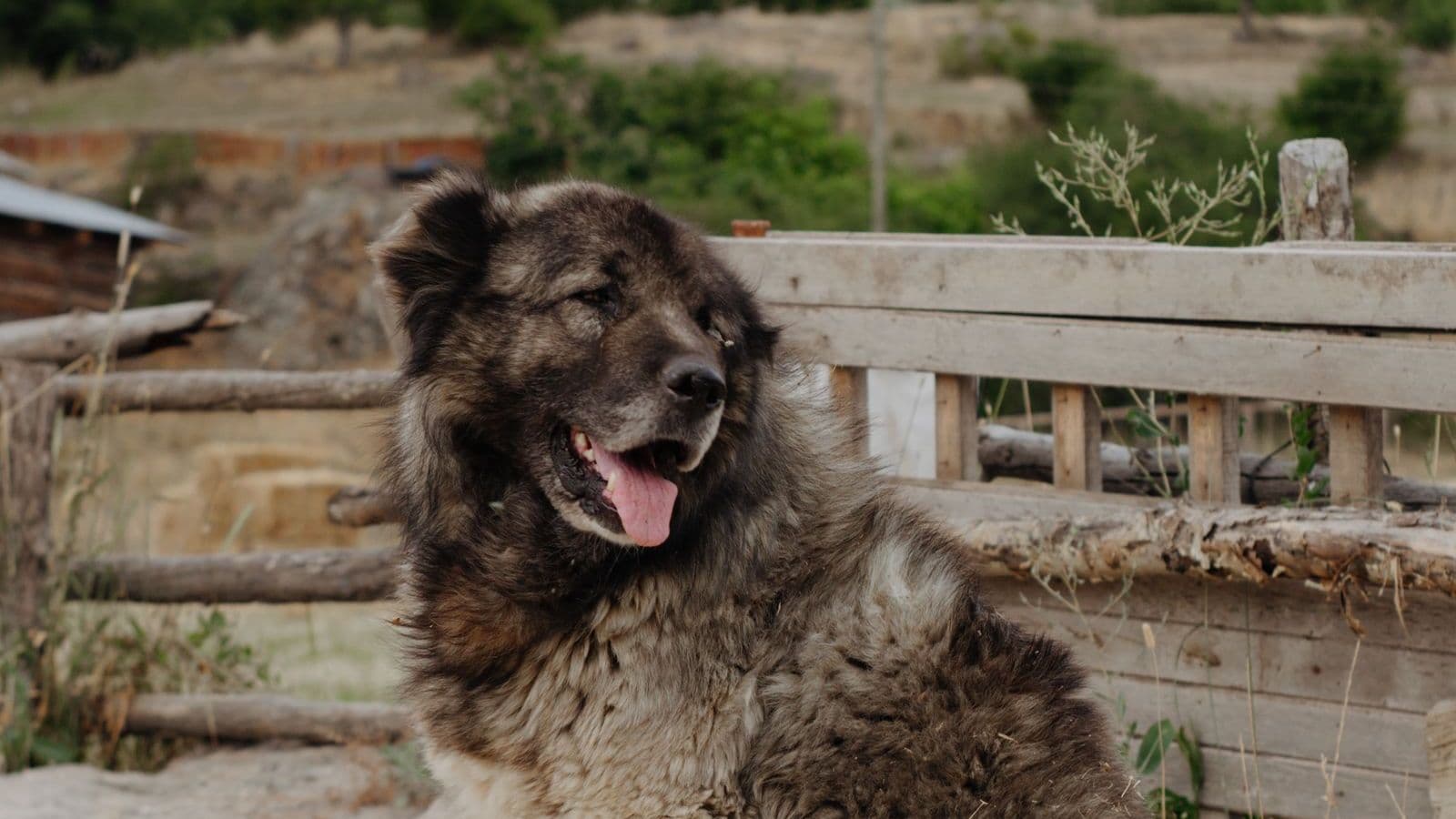
The Caucasian Shepherd Dog (Kavkazskaya Ovcharka) is one of the largest and oldest molosser breeds on earth, developed over centuries in the Caucasus Mountains spanning Georgia, Armenia, Azerbaijan, and the surrounding ranges. For millennia it guarded flocks against wolves and bears across some of the most punishing terrain in the world, and only the toughest, most decisive, most independent dogs survived to breed. Males weigh 50-100 kg and stand up to 75 cm at the shoulder. In the Soviet era the breed was selected further as a border and prison guard, sharpening its protective drive and its suspicion of strangers.
None of this produces a casual family pet. The Caucasian Shepherd is a fully autonomous guardian, bred to assess threats and respond to them without waiting for a human to decide. In experienced hands, with the right facilities and management, it is an extraordinarily loyal and devoted protector. In the wrong hands, it is a serious safety risk. Training it is not about obedience drills; it is about installing manageable behavior and rock-solid management in a dog that will soon outweigh its owner and trust its own judgment above all.
It is worth saying plainly: the Caucasian Shepherd is not a breed that suits most homes, and a responsible introduction to it includes the reasons it might not suit yours. The combination of enormous size, real strength, bred-in suspicion of strangers, and a mind that defaults to acting on its own authority is a great deal of dog to be accountable for. In the right hands, experienced, prepared, properly equipped, that combination produces an incomparable guardian and a steady, loyal family member.
In the wrong hands it produces an unmanageable liability. The training that follows assumes you have chosen this breed deliberately, with clear eyes about what it is, and that you are ready to provide the structure, socialization, and containment it requires from the first week.
At a glance:
- Trainability: 5/10, learns what you teach but slowly and on its own terms, cooperation not obedience
- Biggest risk factor: bred-in stranger aggression and autonomous guarding, needs a strict, secured visitor protocol
- Physical care note: males reach 50-100 kg, so leash manners and basic control must be installed while the puppy is still physically manageable
- Example: Secure the dog before an unfamiliar visitor arrives, then reward calm behavior from a distance.
- Not for: first-time or inexperienced owners, or homes with frequent unmanaged visitors and no secure high perimeter fencing
What Makes Training a Caucasian Shepherd Different
1. It guards on its own authority. The breed was developed to protect independently, deciding for itself when a threat is present. This is not stubbornness to be corrected, it is the dog's entire purpose. Compliance has to be built through consistent relationship, and even then the dog reserves the right to act on its own read of a situation. Owners who expect deference are unprepared for what the breed actually is.
2. Stranger wariness is a breed characteristic. The Caucasian Shepherd is bred to be suspicious of and, if needed, aggressive toward intruders. Socialization can shape this into discrimination, but it cannot and should not erase it. A home with frequent unfamiliar visitors is the wrong environment for the breed without a strict, practiced protocol.
3. The size makes early training the only window. A 100 kg dog with no foundations cannot be managed by most people. Everything depends on installing leash manners and basic control while the puppy is still physically guidable, because that window is brief and final.
4. It is not for first-time or inexperienced owners. This is explicit among breed experts. The Caucasian Shepherd requires handlers who understand guardian psychology, can physically and practically manage a giant dog, and can provide secure fencing, space, and structure. It is restricted in some jurisdictions.
Week-by-Week Training Plan for Your Caucasian Shepherd
Weeks 1 and 2 : Size Awareness and Intensive Socialization
The narrow socialization window matters more here than almost anywhere, and the consequence of missing it is severe. Begin foundation work and broad socialization at once. Our puppy basics guide covers the mechanics.
- Pair short, calm sessions with high-value food to build engagement.
- Socialize intensively and positively, people above all, plus places, surfaces, sounds.
- Begin body handling for stress-free vet and grooming care.
- Establish household rules now and enforce them identically across the family.
Weeks 3 and 4 : Core Commands, Calm and Non-Negotiable
Sit, down, and stay establish that human direction governs the household, installed while the dog is still small.
- Lure sit and down, then fade to hand signals.
- Build stay from seconds, rewarding stillness first.
- Ask once and wait; keep the energy calm and clear.
Weeks 5 and 6 : Loose Leash, the Critical Skill
A 70 kg dog that pulls is immovable and dangerous. Install loose-leash walking before the dog reaches a fraction of adult size.
- Use a front-clip harness rather than a flat collar.
- Apply stop-and-stand the instant the leash tightens.
- Reward every step on a slack leash, every single day.
Weeks 7 and 8 : Stranger and Visitor Protocol
The guardian instinct means no stranger contact can be left to chance. Build a clear, secured routine.
- Secure the dog before anyone unfamiliar enters the property.
- Teach a default "place" for the dog when guests arrive.
- Reward calm at a distance; never force interaction with strangers.
Weeks 9 and 10 : Containment and Territory Management
The breed will claim and defend territory, so secure boundaries and calm boundary behavior are essential.
- Verify secure, high perimeter fencing the dog cannot breach.
- Discourage persistent fence-patrol and alarm-barking at passers-by.
- Reinforce calm when people move past the property line.
Weeks 11 and 12 : Ongoing Foundation Work
Maturity is years away, so the goal is to lock in basics and keep them reliable as the dog grows into its size.
- Proof loose-leash walking and "place" in mildly distracting settings.
- Rehearse the visitor protocol until it is automatic.
- Maintain consistent rules; the breed reaches full psychological maturity around three years.
Common Caucasian Shepherd Training Mistakes
Mistake 1 : Acquiring without appropriate facilities. Secure, high perimeter fencing is non-negotiable. Without it, this breed cannot be managed safely.
Mistake 2 : Skipping the socialization window. The narrow puppyhood window is the most important training investment, and missing it lets the guardian instinct generalize into broad aggression.
Mistake 3 : Underestimating the adult. The puppy is adorable; the adult is 80-100 kg of guardian instinct. Plan for the dog it becomes.
Mistake 4 : Frequent unmanaged visitors. A home full of unfamiliar people is the wrong environment without a strict protocol. Full breakdown : Caucasian Shepherd training mistakes.
Frequently Asked Questions
How do you train a Caucasian Shepherd puppy ? Start the day it comes home at 8 weeks, because the window closes fast on a dog that will reach 50 or more kilograms. Priorities in order : massive, careful socialization (people of every kind, calm dogs, places, sounds, handling), basic manners while the puppy is still physically manageable, name response and recall on a long line, and calm acceptance of grooming and vet handling. Keep sessions short and reward-based, harshness backfires badly with guardian breeds, and never encourage the guarding instinct, it arrives on its own and needs channeling, not amplification.
Are Caucasian Shepherds easy to train ? No, and honesty matters here : this is an independent livestock guardian bred to make its own decisions without human direction, not to follow cues. It learns what you teach, but slowly, on its own terms, and with little interest in repetition. Expect solid manners and reliability around its family with consistent reward-based work; do not expect obedience-competition precision. The real training work is socialization and management, done early and thoroughly.
Is the Caucasian Shepherd legal everywhere ? No. The breed is restricted or banned in some jurisdictions and may carry licensing or insurance requirements in others. Research your local laws before acquiring one.
Are Caucasian Shepherds good family dogs ? With their own family, they are deeply devoted and patient. With strangers and visitors, they require careful, constant management. They are suitable only for experienced owners with the right facilities.
How much exercise does a Caucasian Shepherd need ? Less than the size suggests, about thirty to sixty minutes of moderate activity daily. The breed conserves energy and patrols its territory rather than needing vigorous exercise.
Do Caucasian Shepherds get along with other animals ? Generally they tolerate animals they were raised with. Introducing new animals requires careful, supervised management given the guardian temperament.
How big do Caucasian Shepherds get ? Males commonly reach 50-100 kg; females are usually 35-60 kg. They are among the most massive dogs in the world, with a heavy double coat that adds to their apparent size.
Are Caucasian Shepherds healthy ? Generally robust for their size, though hip and elbow dysplasia, heart issues, and obesity are concerns. Health-tested lines and careful weight management matter.
How long do Caucasian Shepherds live ? Typically ten to twelve years, which is relatively long for a giant breed.
Why TailorPup Was Built for Caucasian Shepherds
A generic plan has no concept of an autonomous guardian, no protocol for managing bred-in stranger aggression, and no sense of the size-management urgency that defines responsible ownership. TailorPup's Caucasian Shepherd plan makes socialization and leash work the first priorities from day one, builds a secured visitor protocol, and works with the breed's independent guardian psychology rather than pretending it isn't there.
Daily 12-minute training sessions plus weekly adjustments as your dog grows. Plans from $9.99/month, no trial; annual starts at $2 for 7 days. Cancel anytime.
Related: Caucasian Shepherd Training Mistakes · Leash Pulling · Puppy Training Basics