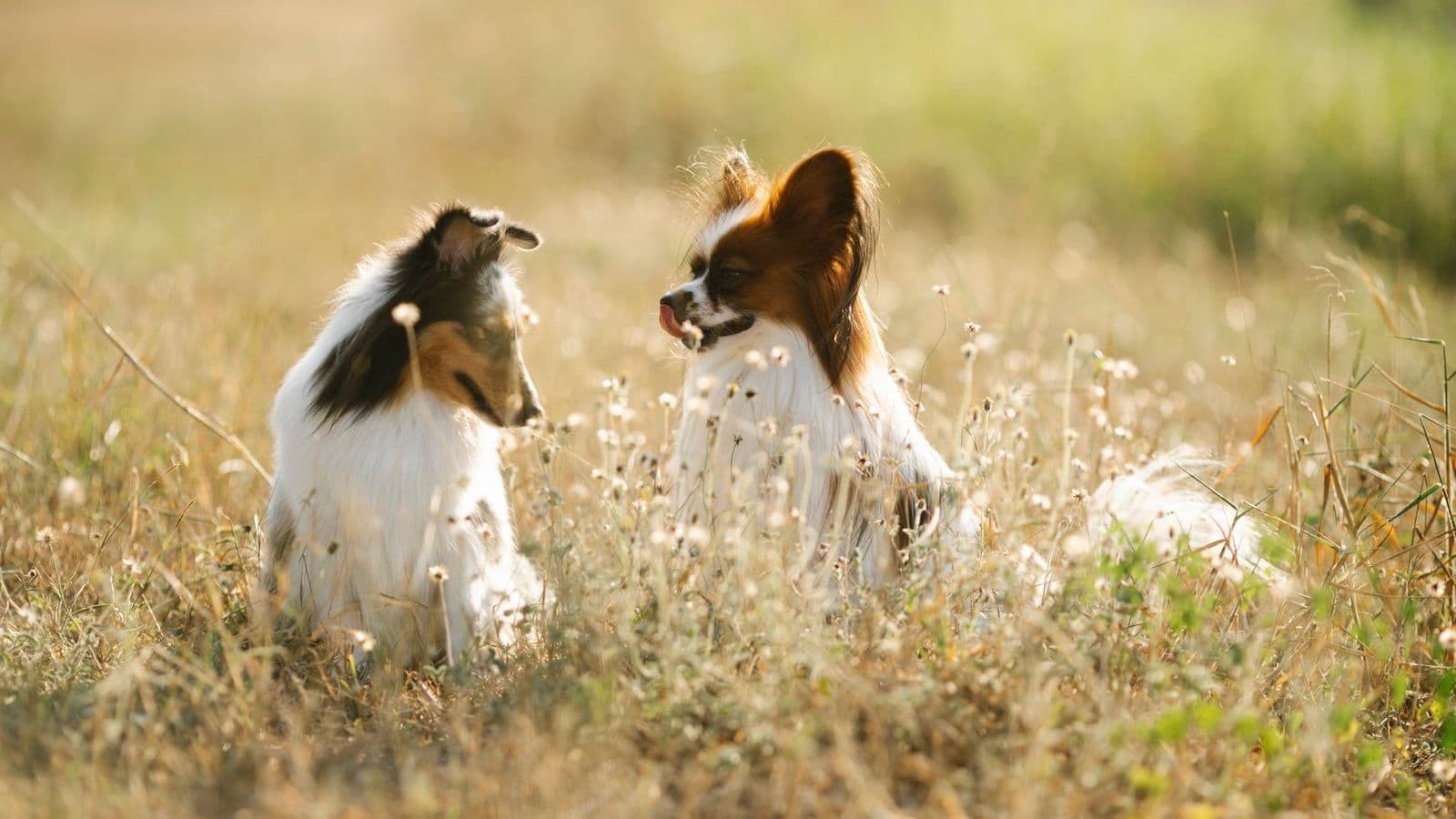
The Papillon is a tiny, elegant toy breed named for its butterfly-shaped ears. Its history goes back centuries as the pampered companion of European nobility, seen in countless Renaissance paintings. But under the dainty looks is one of the smartest dogs in the world, no matter the size. Papillons rank among the smartest of all breeds and often outperform far bigger dogs in obedience and agility contests. This is a brilliant, busy, athletic little dog in a toy package. Training it is mostly about keeping up.
That sharp mind is the key to training one. The Papillon learns fast and truly loves to work. Reward-based training, especially tricks and agility, is a joy, and the breed soaks it up. Plan around its surprising energy, its habit of barking at everything, and its fragile body. This is a very small dog, and it can get hurt by rough handling or falls from height. Give that big brain daily mental work, manage the barking, and protect the little body, and you get a dazzling, devoted companion. Treat the breed as a passive lapdog instead, and that clever mind turns to barking and mischief.
This guide covers what works with a Papillon, week by week. It's built around how this brilliant, athletic toy dog actually learns.
At a glance:
- Trainability: 9/10, ranks among the smartest breeds of any size
- Biggest risk factor: boredom, an under-stimulated Papillon turns to barking and mischief
- Fragility: genuinely delicate, injuries from falls or rough handling are real
- Example: a Papillon treated as a passive lapdog often becomes the loudest, most demanding dog in the house, its brain needs a real job
- Not for: owners who won't provide daily mental work or protect it from rough handling
What Makes Training a Papillon Different
Four breed traits shape your approach.
1. Very intelligent. The Papillon is one of the smartest breeds around and learns new behaviors fast. Reward-based training and tricks are a real joy, but this big brain needs daily mental work. A bored Papillon will invent its own fun.
2. Surprisingly energetic and athletic. Despite its size, the Papillon is a real little athlete. It's great at agility and needs proper daily exercise and play. It is not a couch lapdog, and one that gets too little exercise turns restless and barky.
3. A quick alert-bark. The Papillon is watchful and quick to bark at sights and sounds. Without early training to reward quiet, this becomes a hard habit. Reward calm behavior and manage triggers from the start.
4. Small and fragile. This is a delicate dog that can get hurt by rough handling, falls, or jumps off furniture. Use a harness, watch it closely around kids and big dogs, and protect it from heights. Still treat it as the smart, capable dog it is.
Week-by-Week Training Plan for Your Papillon
Below is the framework we use at TailorPup for a Papillon-specific 12-week plan. Run it at home; the order and emphasis are the point.
Weeks 1 and 2 : Foundation and Socialization
Engagement is effortless with this brilliant breed. Run three to four short sessions a day with high-value rewards, socialize broadly, and begin barking awareness immediately, rewarding quiet. The Papillon's speed of learning means you can build a strong attention foundation fast. Our puppy basics guide covers the foundations.
Weeks 3 and 4 : Core Commands and Tricks
Papillons learn almost as fast as you can teach. Lure sit, down, and stay, mark, and reward, adding cues once reliable, then pile on tricks and name games. This breed thrives on mental challenge, and the more you teach it, the happier and calmer it is.
Weeks 5 and 6 : Leash Work and Handling
Use a light harness, never a collar, and stop-and-stand for any pulling. Build gentle handling tolerance for grooming, and teach the dog to wait to be picked up and set down rather than leaping from height, to protect its small frame.
Weeks 7 and 8 : Recall and Barking
Build recall indoors and in fenced areas, then on a long line outdoors, paying every success generously. In parallel, formalize quiet: reward calm at windows and doors, manage triggers, and teach an "enough" cue. See our barking guide for the full protocol.
Weeks 9 and 10 : Channeling Energy
Give the brilliant, athletic dog real outlets: agility, advanced tricks, food puzzles, and fetch all suit it perfectly. A Papillon with daily mental and physical work is a calm, satisfied dog. This is where the breed's intelligence becomes its greatest asset.
Weeks 11 and 12 : Generalization
Prove the skills in the real world: calm leash walking past distractions, recall in a fenced area with mild temptation, quiet on cue, and settled behavior in busier places. A Papillon that performs at home but not outside is only partly trained, and these last two weeks finish the job.
Common Papillon Training Mistakes
Three mistakes show up repeatedly with this breed.
Mistake 1 : Under-stimulating a brilliant dog. Boredom is the biggest issue. A Papillon that does not get daily mental work becomes barky and mischievous despite its sweet looks. Give this exceptionally smart breed jobs, tricks, and games every day.
Mistake 2 : Treating it as a fragile ornament. The Papillon is delicate and needs protecting from rough handling and falls, but it is also a capable, trainable athlete. Coddling it without training wastes its brilliance and can encourage barking and demanding behavior.
Mistake 3 : Ignoring the alert-barking. The watchful Papillon becomes a nuisance barker if the habit is allowed to form. Shape and reward quiet early. The full list is in our Papillon training mistakes guide.
Frequently Asked Questions
Are Papillons easy to train ? Exceptionally. They are among the most intelligent breeds and learn very fast, so reward-based training and tricks are a delight. The challenges are channeling the breed's energy and brains and managing the alert-barking, not the learning itself.
How much exercise does a Papillon need ? More than people expect: around 45 minutes to an hour of activity daily plus mental work. The breed is a genuine little athlete, and under-exercised Papillons become restless and barky.
Why does my Papillon bark so much ? Because it is alert and watchful, and boredom makes it worse. Shape and reward quiet early, manage triggers, and meet the dog's exercise and mental needs, and most Papillons settle into moderate, manageable barking.
Are Papillons good at agility ? Outstanding. The breed's intelligence, speed, and athleticism make it a top performer in agility and obedience, which are also ideal outlets for its considerable energy and brains.
Are Papillons fragile ? Yes, they are very small and can be injured by rough handling, falls, or jumps from furniture. Use a harness, supervise around young children and large dogs, and protect them from heights.
Is positive reinforcement effective for Papillons ? Yes, ideally. The brilliant, sensitive breed thrives on reward-based training and trick work, while harsh handling is both unnecessary and counterproductive.
Are Papillons good family dogs ? Yes, for families with gentle, respectful children. They are devoted, lively, and endlessly trainable, but their small size means supervision around young kids and big dogs is important.
Why TailorPup Was Built for Papillons
A generic plan treats your Papillon like a passive lapdog and ignores the brilliant mind, the real energy, and the alert bark that define the breed. That mismatch is why standard advice underuses this dog and leaves it barky.
TailorPup builds a 12-week plan around your specific dog: its toy-but-athletic nature, its age, and the behaviors you are seeing. For a Papillon that means heavy trick work and mental stimulation, an early barking protocol, gentle handling that protects its small frame, and reward-based methods worthy of its intelligence.
Daily 12-minute sessions plus weekly adjustments based on your dog's progress. Plans from $9.99/month, no trial; annual starts at $2 for 7 days. Cancel anytime.
Related: Papillon Training Mistakes · Recall Training · Puppy Training Basics · Barking Solutions