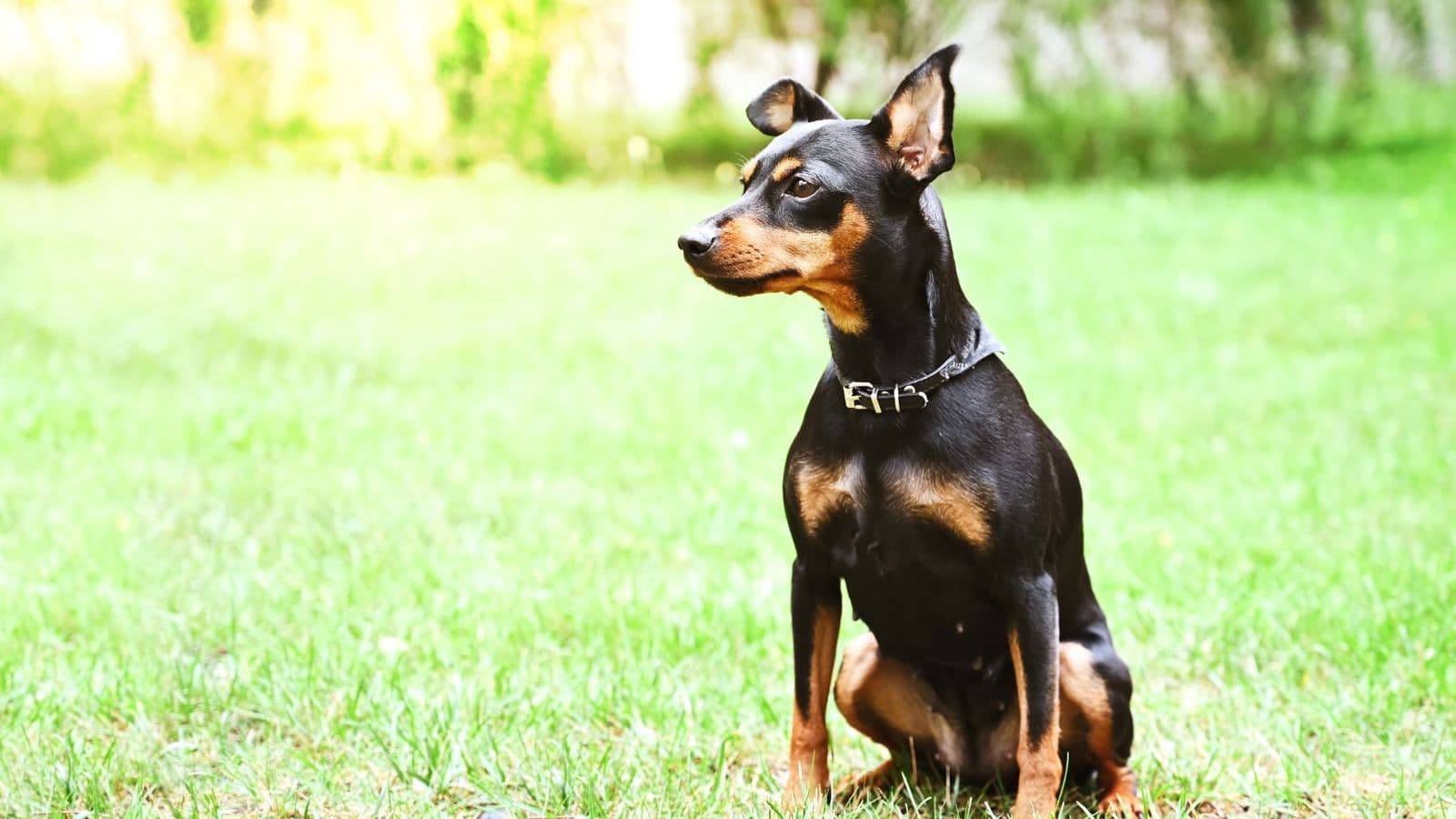
The Miniature Pinscher, or Min Pin, is a bold, fearless little firecracker that struts through life with the swagger of a dog ten times its size, which is exactly why it is nicknamed the "King of Toys." Despite a striking resemblance to a miniature Doberman, the Min Pin is actually older and unrelated, a German breed developed to hunt rats in stables and homes. That ratting heritage gave it a real prey drive, boundless energy, fierce confidence, and a famous talent for escaping any enclosure, all packed into a tiny, athletic body that never seems to run out of fuel.
That bold, high-drive ratter temperament is the key to training one. The Min Pin is intelligent and capable, but it is also independent, confident, and easily bored, with a prey drive that challenges recall and an escape-artist streak that demands secure containment. Treated like a fragile lapdog, it quickly develops "small dog syndrome," becoming bossy, barky, and reactive. Treated like the real dog it believes itself to be, with structure, exercise, mental work, and socialization, it is a hilarious, spirited, devoted companion. The Min Pin does not lack ability; it lacks patience for boredom and being coddled.
This guide covers what works with a Min Pin, week by week, built around how a bold, high-drive toy ratter actually learns.
At a glance:
- Trainability: 6/10, intelligent and capable but independent and easily bored, so it needs consistent, engaging handling rather than drilling.
- Biggest risk factor: a strong prey drive that overrides recall around small, fast animals.
- Escape risk: a famously determined escape artist from crates, yards, and gates, especially when bored.
- Example: left unsecured, a bored Min Pin will treat finding a way out of the yard as its personal mission.
- Not for: owners who want a fragile lapdog they can coddle, or homes without secure fencing and containment.
What Makes Training a Min Pin Different
Four breed traits shape your approach.
1. Bold and confident, with small-dog-syndrome risk. The Min Pin has no idea it is small and carries itself with total self-assurance. That confidence is delightful, but without training and socialization it tips into bossy, barky, reactive behavior. Treat it like a real dog with real rules.
2. A strong prey drive. The ratting heritage means a hardwired urge to chase small, fast animals. Recall around movement is challenging, and off-leash freedom near wildlife or roads is risky for such a small, fast dog. Manage the drive rather than wishing it away.
3. A genuine escape artist. Min Pins are famously determined and athletic at escaping yards, crates, and gates. Secure, escape-proof containment is essential, and a bored Min Pin will make finding a way out its personal mission.
4. Energetic and easily bored. This is a high-energy dog that needs real exercise and mental work despite its size. Under-stimulated, it becomes barky, mischievous, and destructive. Daily activity and engagement keep it happy and manageable.
Week-by-Week Training Plan for Your Min Pin
Below is the framework we use at TailorPup for a Min Pin-specific 12-week plan. Run it at home; the order and emphasis are the point.
Weeks 1 and 2 : Foundation and Socialization
Build engagement with high-value treats and socialize broadly, with confidence-building to head off small dog syndrome. Run three to four short sessions a day: name, mark eye contact, reward. Begin barking awareness, rewarding quiet, and treat the Min Pin like a capable dog from day one. Our puppy basics guide is worth pairing with this.
Weeks 3 and 4 : Core Commands
Lure sit and down, mark, reward, and add cues once reliable. Keep sessions short, lively, and varied to hold the interest of a bold, easily bored dog, and add tricks, which this clever breed enjoys and which build focus.
Weeks 5 and 6 : Leash Work and Prey Drive
Use a Y-shaped harness for the small frame, never a collar that a Min Pin can slip, and stop-and-stand for pulling. Practice redirecting your dog before it locks onto prey, rewarding a glance back at you, so you build an "ignore it and check in" habit rather than a chase.
Weeks 7 and 8 : Recall and Barking
Build recall indoors, then in fenced areas, then on a long line outdoors where the prey drive lives. Pay every success generously and never call the dog for anything unpleasant. In parallel, shape quiet: reward calm, manage triggers, and teach an "enough" cue. See our barking guide for the full protocol.
Weeks 9 and 10 : Channeling Energy and Containment
Give the bold, busy dog real outlets: flirt-pole play, fetch, trick training, agility, and scent games all suit it. At the same time, audit your fencing, gates, and crate, because a Min Pin is a determined escape artist. A well-exercised, mentally satisfied dog is far less interested in breaking out.
Weeks 11 and 12 : Generalization
Prove the skills in the real world: calm leash walking past distractions, recall in a fenced area with mild temptation, quiet on cue, and confident, settled responses to dogs and people. A Min Pin that performs at home but unravels outside is only partly trained, and these last two weeks finish the job.
Common Min Pin Training Mistakes
Three mistakes show up repeatedly with this breed.
Mistake 1 : Coddling instead of training. Treating the Min Pin as a fragile accessory produces small dog syndrome: bossy, barky, and reactive. Socialize it, give it rules and structure, and treat it like the capable dog it believes itself to be.
Mistake 2 : Weak containment. The Min Pin is a famous escape artist, and weak fencing or an unsecured gate is an open invitation. Secure, escape-proof containment plus plenty of stimulation are essential to keep one safe.
Mistake 3 : Trusting off-leash recall around prey. The prey drive overrides recall in a flash, and the dog is small, fast, and vulnerable. Use a long line near wildlife and roads until recall is heavily proofed. The full list is in our Miniature Pinscher training mistakes guide.
Frequently Asked Questions
Are Miniature Pinschers easy to train ? Moderately. They are intelligent and capable but bold, independent, and easily bored, so they need short, lively, rewarding sessions rather than drilling. Recall, quiet, and preventing small dog syndrome take the most work.
Are Min Pins related to Dobermans ? No, despite the strong resemblance. The Miniature Pinscher is actually the older breed, a German ratter developed independently. Train it as the bold little ratter it is, not as a scaled-down Doberman.
How much exercise does a Min Pin need ? More than people expect: around 45 minutes to an hour of activity daily plus mental work. The breed is high-energy and easily bored, and under-exercised Min Pins become barky, mischievous, and destructive.
Why does my Min Pin keep escaping ? Because it is a determined, athletic escape artist by nature, and boredom makes it worse. Secure your fencing, gates, and crate thoroughly, and meet the dog's exercise and mental needs, and the escaping eases.
Can I let my Min Pin off-leash ? In a securely fenced area, yes, with care given its escape talent. In open spaces it is risky, because the prey drive challenges recall and the dog is small and fast. Use a long line until recall is reliable.
Is positive reinforcement effective for Min Pins ? Yes. The bold, clever breed responds well to engaging reward-based training and resists harsh handling, which only fuels reactivity. Keep sessions short, fun, and rewarding.
Are Miniature Pinschers good family dogs ? Yes, for families with respectful, gentle children. They are devoted, lively, and entertaining, but they are small and bold, so supervision around young kids and larger dogs, plus consistent training, matters.
Why TailorPup Was Built for Miniature Pinschers
A generic plan treats your Min Pin like a fragile lapdog and ignores the prey drive, the energy, the bold confidence, and the escape artistry that define the King of Toys. That mismatch is why standard advice produces bossy, barky little dogs.
TailorPup builds a 12-week plan around your specific dog: its ratter instincts, its age, and the behaviors you are seeing. For a Min Pin that means front-loaded socialization and confidence-building, real exercise and mental work, careful recall around the prey drive, a barking protocol, and a focus on secure containment.
Daily 12-minute sessions plus weekly adjustments based on your dog's progress. Plans from $9.99/month, no trial; annual starts at $2 for 7 days. Cancel anytime.
Related: Miniature Pinscher Training Mistakes · Recall Training · Barking Solutions · Leash Pulling