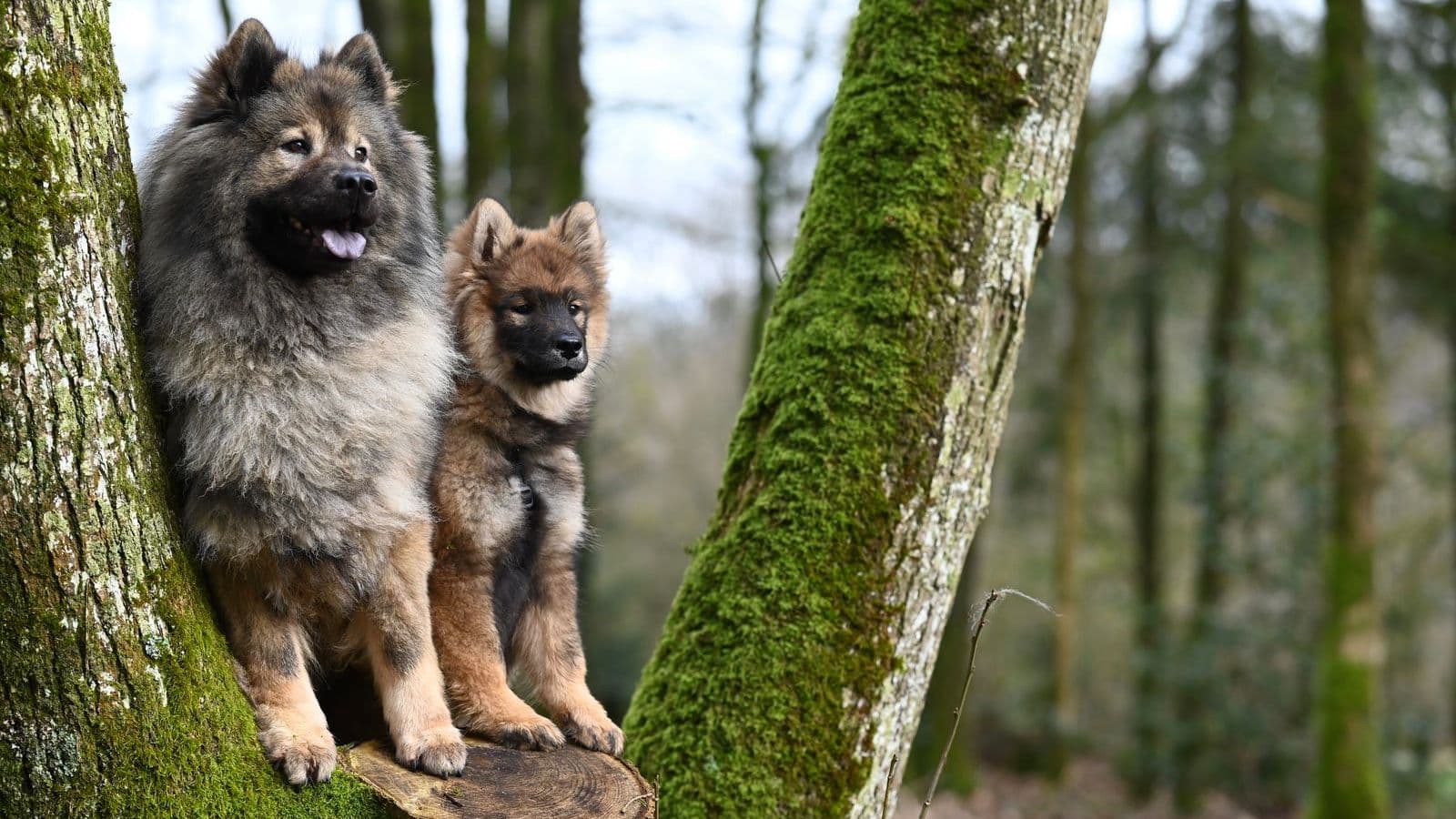
The Eurasier is one of the youngest breeds in the spitz family, and one of the most deliberately designed. It was created in Germany in the 1960s by Julius Wipfel, who set out to build the ideal family companion by combining the Chow Chow, the Wolfspitz (Keeshond), and later the Samoyed. His aim was a dog with the Chow's dignity and family loyalty but without its aloofness, the intelligence and watchfulness of the spitz, and an overall temperament that was calm, balanced, and free of nervousness. The breed was recognized by the FCI in 1973.
The project largely succeeded. The Eurasier weighs 18-32 kg, wears a thick medium-length coat in many colors, and carries a temperament that is genuinely unusual among spitz breeds: quiet rather than vocal, settled rather than hyperactive, and profoundly oriented toward its own family. The Chow ancestry gives it a self-possessed reserve with strangers that distinguishes it from the gregarious Nordic spitz, while the rest of its makeup keeps it warm and devoted at home.
For training, the consequences flow directly from that design. The Eurasier is not a high-drive working dog looking for a job, nor an eager-to-please retriever; it is a moderate, dignified, family-first companion with a streak of spitz independence. It performs best for the people it loves, warms to outsiders only on its own schedule, and shuts down under pressure. Trained with patience, warmth, and realistic expectations, it becomes exactly the calm, balanced companion Wipfel envisioned.
At a glance:
- Trainability: 7/10, willing within the family but not a snap-to-attention working breed
- Biggest quirk: reserve with strangers, a Chow-inherited trait, not aggression or a socialization gap
- Bonding style: family-first, may simply not perform for unfamiliar handlers
- Example: a Eurasier that ignores a stranger's cue in obedience class is being a Eurasier, not being difficult
- Not for: owners expecting a working-dog level of eagerness or an effusive greeter
What Makes Training a Eurasier Different
1. Family-first orientation. The Eurasier bonds deeply to its own people and may simply not perform for strangers or in classes run by unfamiliar handlers. Primary training should happen within the family relationship, where the dog is most willing, and only later be generalized to other people and contexts.
2. Reserve with strangers, aloofness, not aggression. The Chow influence produces genuine reserve toward unfamiliar people. This is a breed trait, not a fault or a socialization failure, and while early exposure keeps it appropriate, no amount of socialization will turn a Eurasier into an effusive greeter.
3. Calm and moderate energy. The Eurasier is neither high-drive nor passive; it is an engaged, moderate companion that enjoys activity but is happy to settle. Training should match that energy, with reasonable expectations rather than working-dog intensity.
4. Spitz independence. Beneath the family devotion lies real spitz independence. The Eurasier is willing but not servile, and it responds to patient, positive reinforcement far better than to repetitive drilling or any kind of pressure.
Week-by-Week Training Plan for Your Eurasier
Weeks 1 and 2 : Foundation and Family Integration
Build the training relationship within the family and socialize broadly to shape the natural reserve. Our puppy basics guide covers the mechanics.
- Pair short, warm sessions with high-value food.
- Socialize positively with people, dogs, surfaces, and sounds.
- Let the puppy warm to new people at its own pace.
- Establish gentle, consistent household rules.
Weeks 3 and 4 : Core Commands, Patient and Positive
Sit, down, and stay come readily with reward-based work.
- Lure sit and down, then fade to hand signals.
- Build stay from short durations, rewarding stillness.
- End sessions while the dog is still engaged.
Weeks 5 and 6 : Loose Leash and Public Confidence
Install leash manners and build calm in new places.
- Use a Y-harness and the stop-and-stand method.
- Reward every step on a slack leash.
- Take calm outings where the dog can observe at its own pace.
Weeks 7 and 8 : Stranger Socialization Protocol
Shape the reserve into relaxed discrimination.
- Introduce new people calmly, without pressure or flooding.
- Reward any offered, relaxed social interaction.
- Let the Eurasier choose when to approach.
Weeks 9 and 10 : Advanced Commands and Enrichment
Engage the intelligence with gentle challenge.
- Add trick training and simple nose work.
- Keep sessions varied and rewarding.
- Build a calm "place" or settle cue.
Weeks 11 and 12 : Proofing and Generalization
Generalize the family-trained skills to the wider world.
- Proof cues in mildly distracting environments.
- Practice with unfamiliar handlers deliberately, since the breed favors family.
- Establish a sustainable rhythm of moderate exercise and enrichment.
Common Eurasier Training Mistakes
Mistake 1 : Expecting high-drive eagerness. The Eurasier is responsive but not a Border Collie. Realistic expectations produce success.
Mistake 2 : Forcing interaction with strangers. The reserve is a breed trait. Forcing it produces withdrawal; let the dog warm up at its own pace.
Mistake 3 : Training only with strangers. The family orientation means primary training should happen with family members first.
Mistake 4 : Pressured training. The Eurasier shuts down under pressure. Keep sessions positive and end while engaged. Full breakdown : Eurasier training mistakes.
Frequently Asked Questions
Are Eurasiers easy to train ? With positive methods and realistic expectations, yes. They are intelligent and willing within the family relationship, though their spitz independence and reserve mean they are not the snap-to-attention performers some working breeds are. The most reliable approach is short, warm, reward-based sessions with the people the dog loves, building a foundation at home before asking the Eurasier to perform for strangers or in busy classes where its reserve can make it appear unwilling.
How much exercise does a Eurasier need ? Forty-five to sixty minutes of moderate activity daily, plus some mental enrichment. The breed enjoys activity but is content to settle, making its needs very manageable for most households. A daily walk or two, a play session, and a little training or scent work comfortably meet the Eurasier's needs, and the breed is just as happy curled up with the family afterward, one of the reasons it adapts so well to ordinary home life.
Are Eurasiers good apartment dogs ? Yes. Their calm temperament, moderate energy, and quiet nature suit apartment living well, provided they get daily walks and time with their family. Unlike many spitz breeds, the Eurasier is not a habitual barker, which makes it a considerate neighbor, and its strong preference for being near its people means it is perfectly content in a smaller home as long as the family is present and it is not left alone for long stretches.
Are Eurasiers good family dogs ? Excellent, the breed was purpose-built for family life. They are devoted, gentle, and calm with their own people, including children, while remaining politely reserved with outsiders.
Are Eurasiers hypoallergenic ? No. The thick double coat sheds moderately year-round and blows seasonally, requiring regular brushing.
Are Eurasiers rare ? Outside Germany and parts of Europe, moderately uncommon. Responsible breeders are careful about placements, reflecting the breed's family-companion purpose.
How long do Eurasiers live ? Typically twelve to fourteen years, with good general health for a medium-sized spitz.
Why TailorPup Was Built for Eurasiers
A generic plan built for eager-to-please working breeds misreads the Eurasier's family-first orientation and spitz independence, pushing an intensity the breed neither has nor wants. TailorPup's Eurasier plan is reward-based and patient, builds training within the family relationship first, and respects the calm, reserved temperament Wipfel deliberately created.
Daily 12-minute training sessions plus weekly adjustments. Plans from $9.99/month, no trial; annual starts at $2 for 7 days. Cancel anytime.
Related: Eurasier Training Mistakes · Barking Solutions · Puppy Training Basics