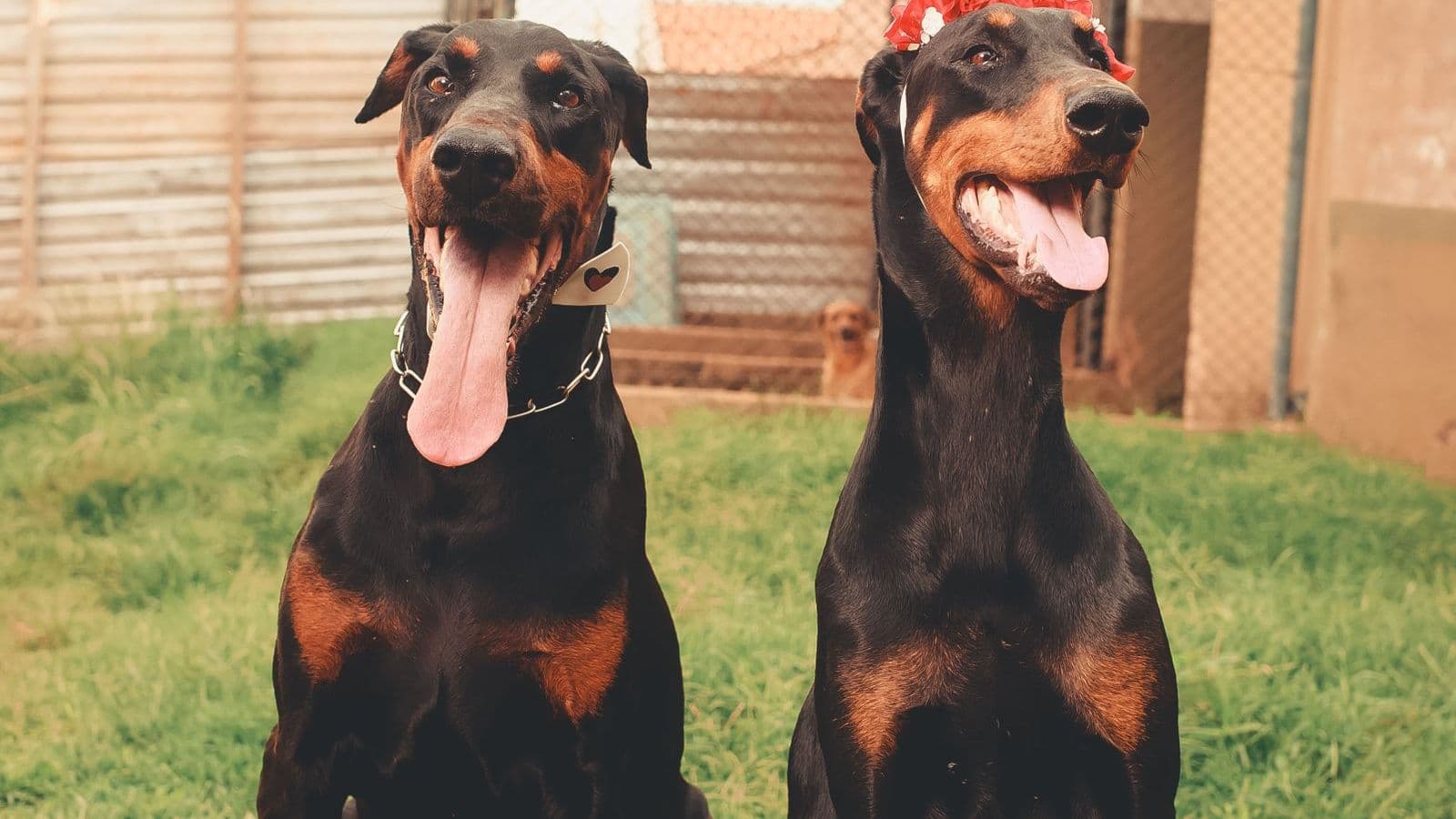
The Doberman was created in the 1890s by Karl Friedrich Louis Dobermann, a German tax collector who wanted a loyal, alert, capable guardian to accompany him on his rounds. He built the breed from a deliberate mix, Rottweiler, German Pinscher, Greyhound, and others, and the result was one of the most intelligent and trainable dogs ever developed. Stanley Coren's rankings place the Doberman among the top five breeds for working intelligence, and in practice it learns quickly, retains reliably, and reads its handler with unsettling accuracy.
That sensitivity is the heart of training a Doberman well. This is not a thick-skinned dog that shrugs off mistakes; it is an emotionally tuned animal that bonds intensely to its person and feels the household's stress as its own. Handled with reward-based clarity, the Doberman becomes a focused, devoted, almost telepathic partner. Handled with harshness or neglect, the same intelligence and sensitivity turn inward and surface as anxiety, reactivity, or compulsive behavior. The breed gives back exactly what it is given, amplified.
At a glance:
- Trainability: 9/10, among the top breeds for working intelligence, learns quickly and retains reliably
- Biggest risk factor: separation anxiety from the intense "Velcro dog" bond, requires alone-time conditioning from puppyhood
- Bonding style: deeply sensitive, reads tone and mood with precision, harsh corrections produce fear and shutdown
- Example: Leave a Doberman alone without conditioning, and it paces, destroys, and vocalizes in distress within minutes.
- Not for: owners who use corrections, or anyone unable to provide daily mental work and real physical exercise
What Makes Training a Doberman Different
1. Sensitivity is the defining trait. The Doberman reads tone, body language, and mood with remarkable precision. Harsh corrections do not toughen it up, they produce fear, shutdown, and a damaged relationship. Reward-based training is not a philosophical choice here; it is the only method that fits the breed's wiring, and it produces faster, more reliable results than pressure ever could.
2. The bond runs deep, and risks separation anxiety. The Doberman attaches to its person with an intensity that earns it the "Velcro dog" label. Without deliberate alone-time conditioning, that attachment curdles into genuine separation anxiety: pacing, destruction, vocalizing, and distress when left. Independence has to be built on purpose, from puppyhood, before the dog decides that being alone is an emergency.
3. A working brain demands a job. This is a high-drive working breed that needs both physical exercise and real mental work every day. A Doberman without an outlet invents one, and the invented job is rarely something you want. Training, problem-solving, and structured activity are not enrichment extras, they are maintenance.
4. Protective instinct needs socialization to stay appropriate. The Doberman is naturally watchful and will guard its family. Without broad early socialization, that instinct tips into suspicion and reactivity toward strangers and novelty. The goal is a confident, discriminating dog, calm with the ordinary, alert only to the genuinely unusual.
Week-by-Week Training Plan for Your Doberman
Weeks 1 and 2 : Engagement, Socialization, and Alone-Time
The Doberman's first two weeks set both the working relationship and the emotional foundation. Build engagement, socialize broadly, and start independence conditioning immediately. Our puppy basics guide covers the mechanics.
- Short, upbeat 5-minute sessions, several times a day, with high-value food.
- Reward voluntary eye contact to build a strong "look at me" default.
- Begin broad socialization: people, friendly dogs, surfaces, sounds, places.
- Start micro-absences now, seconds at a time, to normalize being alone.
Weeks 3 and 4 : Core Commands
The breed installs sit, down, and stay in just a few repetitions. The work is precision and reliability, not initial learning.
- Sit and down in two or three reps; add verbal and hand signals together.
- Build stay from short durations, rewarding stillness before distance.
- Keep sessions positive and end while the dog is still keen.
Weeks 5 and 6 : Loose Leash and Heel
Dobermans are strong and purposeful on the leash. Loose-leash mechanics installed now prevent a powerful adult from towing you later.
- Use a front-clip harness and the stop-and-stand method.
- Reward every step taken on a slack leash.
- Add a formal heel position as a check-in cue; the breed installs it fast.
Weeks 7 and 8 : Recall and Separation Work
Recall is taught alongside continued absence conditioning, because both depend on the dog trusting that good things come from cooperating with you.
- Build recall on a long line with high-value rewards; never poison the cue.
- Extend alone-time gradually toward real absences, always below the panic threshold.
- Keep departures and arrivals calm and low-drama.
Weeks 9 and 10 : Mental Work and Advanced Skills
This is where the breed thrives. Channel the intelligence into structured challenge.
- Teach new tricks and chains; the Doberman can learn several a week.
- Introduce nose work or scent games for daily mental fatigue.
- Train a solid "place" and settle to install a reliable off-switch.
Weeks 11 and 12 : Proofing and Generalization
Take the skills into the real world and confirm the emotional foundation is holding.
- Proof recall, heel, and "place" in progressively distracting environments.
- Continue structured socialization with new people and dogs.
- Confirm the dog rests calmly when left for normal periods.
Common Doberman Training Mistakes
Mistake 1 : Harsh, correction-based training. The Doberman's sensitivity means pressure produces fear and shutdown, not compliance. Reward-based methods are essential.
Mistake 2 : Skipping separation conditioning. The intense bond makes separation anxiety a real and common outcome. Build alone-time tolerance from day one.
Mistake 3 : Insufficient mental work. A Doberman without a job becomes anxious, destructive, or compulsive. Daily training and problem-solving are non-negotiable.
Mistake 4 : Under-socializing. Without broad exposure, the protective instinct tips into reactivity. Full breakdown : Doberman training mistakes.
Frequently Asked Questions
Are Dobermans hard to train ? No, they are among the easiest breeds to teach, given their intelligence and biddability. The challenge is emotional management: meeting the dog's need for connection, mental work, and gentle handling, not getting it to learn cues.
Are Dobermans good family dogs ? Yes, with committed owners. They are devoted, affectionate, and protective of their families, and they generally do well with children they are raised with. They are not a hands-off breed and need to be included in family life.
How much exercise does a Doberman need ? Sixty to ninety minutes of vigorous activity daily, plus dedicated mental work. Walks alone are not enough for this athletic working breed; it needs running, training, and problem-solving.
Do Dobermans really get separation anxiety ? Frequently, if not prevented. The breed's intense attachment makes it one of the more separation-prone dogs, which is why alone-time conditioning from puppyhood is part of the core plan.
Are Dobermans aggressive ? Not inherently. A well-bred, well-socialized Doberman is confident and stable, alert without being reactive. Aggression in the breed almost always traces to poor breeding, missed socialization, or harsh handling.
Are Dobermans good for first-time owners ? They can be, for committed first-timers who will meet the exercise, mental-work, and training needs. They are forgiving of inexperience as long as the handling is kind and consistent, but they are not a low-effort breed.
How long do Dobermans live ? Typically ten to thirteen years. The breed is prone to dilated cardiomyopathy and von Willebrand disease, so health-tested lines and regular cardiac screening matter.
Why TailorPup Was Built for Dobermans
A generic plan ignores the two things that actually make or break a Doberman: the breed's sensitivity and its need for connection. It applies one-size-fits-all corrections that damage a soft dog and treats alone-time as an afterthought rather than a core skill. TailorPup's Doberman plan is reward-based throughout, front-loads separation conditioning and mental work, and advances the dog's skills at the pace its intelligence allows.
Daily 12-minute training sessions plus weekly adjustments. Plans from $9.99/month, no trial; annual starts at $2 for 7 days. Cancel anytime.
Related: Doberman Training Mistakes · Recall Training · Leash Pulling · Puppy Training Basics