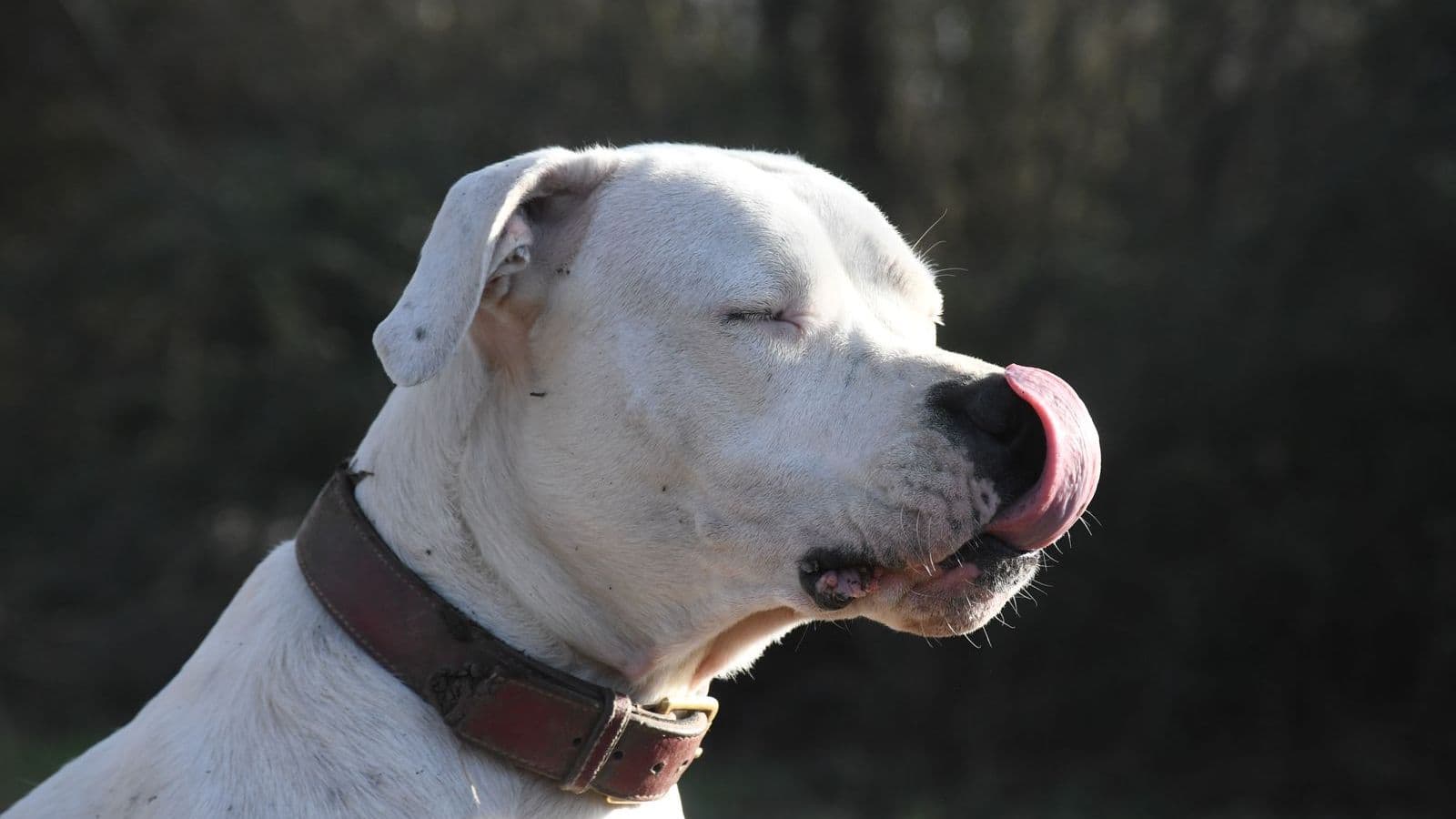
The Dogo Argentino is a powerful white Argentine breed developed in the 1920s to hunt big game like wild boar and puma in packs, and to serve as a loyal guardian of the home. It was deliberately bred for strength, stamina, courage, and a stable, human-friendly temperament, but make no mistake: this is a large, athletic, high-drive working dog with a serious prey drive and real guarding instincts. Devoted and affectionate with its family, the Dogo is also dominant, territorial, and powerful enough that it demands an experienced, committed owner who understands what the breed is.
Training a Dogo is about channeling that strength and drive into a stable, well-socialized, controllable adult. The breed is intelligent and more trainable than many guardian mastiffs, and it bonds closely, which makes reward-based training effective. But it has a strong prey drive, a potential for dog aggression, and the size and power to make poor training genuinely dangerous. Heavy socialization, calm and consistent leadership, early manners, careful management of the prey drive, and realistic expectations are the foundation. This is not a first dog, and in some places the breed faces legal restrictions worth checking.
This guide covers what works with a Dogo Argentino, week by week, written for a committed, experienced owner.
At a glance:
- Trainability: 7/10, more biddable than many guardian mastiffs
- Biggest risk factor: prey drive, recall around movement and small animals is genuinely unreliable
- Dog-to-dog: real potential for same-sex aggression, manage introductions for life
- Example: a Dogo puppy that chases a squirrel in the yard is showing instinct that needs lifelong management, not a phase it grows out of
- Not for: first-time owners or homes without room for a large, powerful guardian
What Makes Training a Dogo Different
Four breed traits shape your approach.
1. Powerful with a strong prey drive. Bred as a pack big-game hunter, the Dogo has a serious prey drive and the athleticism to act on it. Recall around movement and small animals takes real work, off-leash near wildlife is risky, and management is essential, not optional.
2. Intelligent and bonded, but dominant. The Dogo is smart and devoted to its family, which makes reward-based training effective, but it is also confident and dominant and will test an inconsistent owner. It respects calm, fair, consistent leadership and a person it trusts.
3. Guarding instinct and dog-aggression potential. The breed is naturally protective and can be assertive or intolerant with strange dogs, especially same-sex. Early, thorough socialization is critical, and owners should be realistic that some Dogos are best managed as the only dog.
4. Size and power raise the stakes. Manners, leash control, and impulse control must be solid and installed early, while the dog is still developing, because there is little margin for error with a strong, driven guardian this size.
Week-by-Week Training Plan for Your Dogo
Below is the framework we use at TailorPup for a Dogo-specific 12-week plan, written for an experienced owner. The order and emphasis matter more than speed.
Weeks 1 and 2 : Foundation and Intensive Socialization
Socialization leads with this powerful breed. Expose the puppy calmly and positively to many people, places, sounds, and well-controlled dogs. Build engagement with high-value rewards in three to four short daily sessions, and begin establishing yourself as a calm, reliable source of structure.
Weeks 3 and 4 : Core Commands and Impulse Control
Lure sit and down, mark, reward, and add cues once reliable, and start serious impulse-control work: wait at doors, leave it, and calm settling. For a strong, high-drive dog, impulse control is as important as obedience. Keep sessions consistent and fair.
Weeks 5 and 6 : Leash Work and Counter-Conditioning
A dog this strong must walk politely while it is manageable. Use stop-and-stand for pulling and a front-clip harness for control. Begin counter-conditioning to strangers and dogs so the guarding instinct stays discerning rather than reactive. Our reactivity guide lays out the method.
Weeks 7 and 8 : Recall and Prey-Drive Management
Build recall with jackpot rewards on a long line, and proof it around the prey drive, which is the breed's biggest recall challenge. Treat reliable control rather than public off-leash freedom as the goal, and keep the dog leashed or securely fenced around wildlife and small animals.
Weeks 9 and 10 : Channeling Energy and Settling
Give the breed real outlets: vigorous exercise, structured games, and a job suit this athletic working dog. Teach a solid settle behavior for calm at home and around visitors. A well-exercised, mentally engaged Dogo is far more controllable. Keep socializing throughout.
Weeks 11 and 12 : Generalization
Work on manners and calm in more distracting settings, controlled responses to strangers and dogs, and reliable leash behavior. The goal is a stable, well-mannered, controllable working dog that is safe and predictable in real life.
Common Dogo Training Mistakes
Three mistakes show up repeatedly with this breed.
Mistake 1 : Under-socializing. This is the critical one. Without heavy, early, ongoing socialization, the Dogo's guarding instinct and dog-intolerance become serious problems in a powerful dog. Socialization is not optional.
Mistake 2 : Weak or harsh leadership. The Dogo needs calm, fair, consistent leadership; inconsistency invites boundary-testing, and harsh, confrontational handling damages trust and can provoke a strong dog. Steady, reward-based structure is what works.
Mistake 3 : Underestimating the prey drive. A pack big-game hunter will chase, and an unproofed recall fails around prey. Manage the environment, build recall carefully, and keep the dog secure around small animals. The full list is in our Dogo Argentino training mistakes guide.
Frequently Asked Questions
Are Dogo Argentinos good for first-time owners ? No. The size, power, prey drive, guarding instinct, and dog-aggression potential require an experienced owner who can provide heavy socialization, consistent leadership, and management. The breed is unsuitable for novices.
Are Dogo Argentinos trainable ? Yes, and more so than many guardian breeds. They are intelligent and bonded to their families, so reward-based training works well, but they are dominant and high-drive, so they need calm leadership, early socialization, and realistic expectations.
How much exercise does a Dogo need ? A lot: an hour or more of vigorous daily activity plus mental work and ideally a job. This is an athletic working breed, and under-exercised Dogos become frustrated and difficult.
Can I let my Dogo Argentino off-leash ? Reliable control on leash and long line is the realistic goal; public off-leash freedom is rarely appropriate given the prey drive and guarding instinct. Use secure containment and keep the dog leashed around wildlife and other animals.
Are Dogo Argentinos aggressive ? They are protective guardians and pack hunters, not indiscriminately aggressive toward people, but they have a strong prey drive and dog-aggression potential. With heavy socialization, leadership, and management, a well-raised Dogo is stable. Check local laws, as the breed is restricted in some places.
Is positive reinforcement effective for Dogos ? Yes, paired with calm, consistent leadership. The intelligent, bonded breed responds well to reward-based training and resents harsh handling, which damages trust in a powerful dog.
Do Dogo Argentinos get along with other dogs ? Often selectively, and many are assertive with same-sex dogs. Early socialization helps, but owners should be realistic that some Dogos are best as the only dog and need careful management around others.
Why TailorPup Was Built for the Dogo Argentino
A generic plan assumes a biddable pet and ignores what defines this breed: the prey drive, the guarding instinct, the dominance, and the power. That mismatch is genuinely risky with a dog this strong.
TailorPup builds a 12-week plan around your specific dog: its working-guardian nature, its age, and the realities of living with it. For a Dogo that means front-loaded intensive socialization, early manners and leash work, calm consistent reward-based leadership, counter-conditioning, and careful prey-drive management.
Daily 12-minute sessions plus weekly adjustments based on your dog's progress. Plans from $9.99/month, no trial; annual starts at $2 for 7 days. Cancel anytime.
Related: Dogo Argentino Training Mistakes · Reactivity Training · Recall Training · Leash Pulling