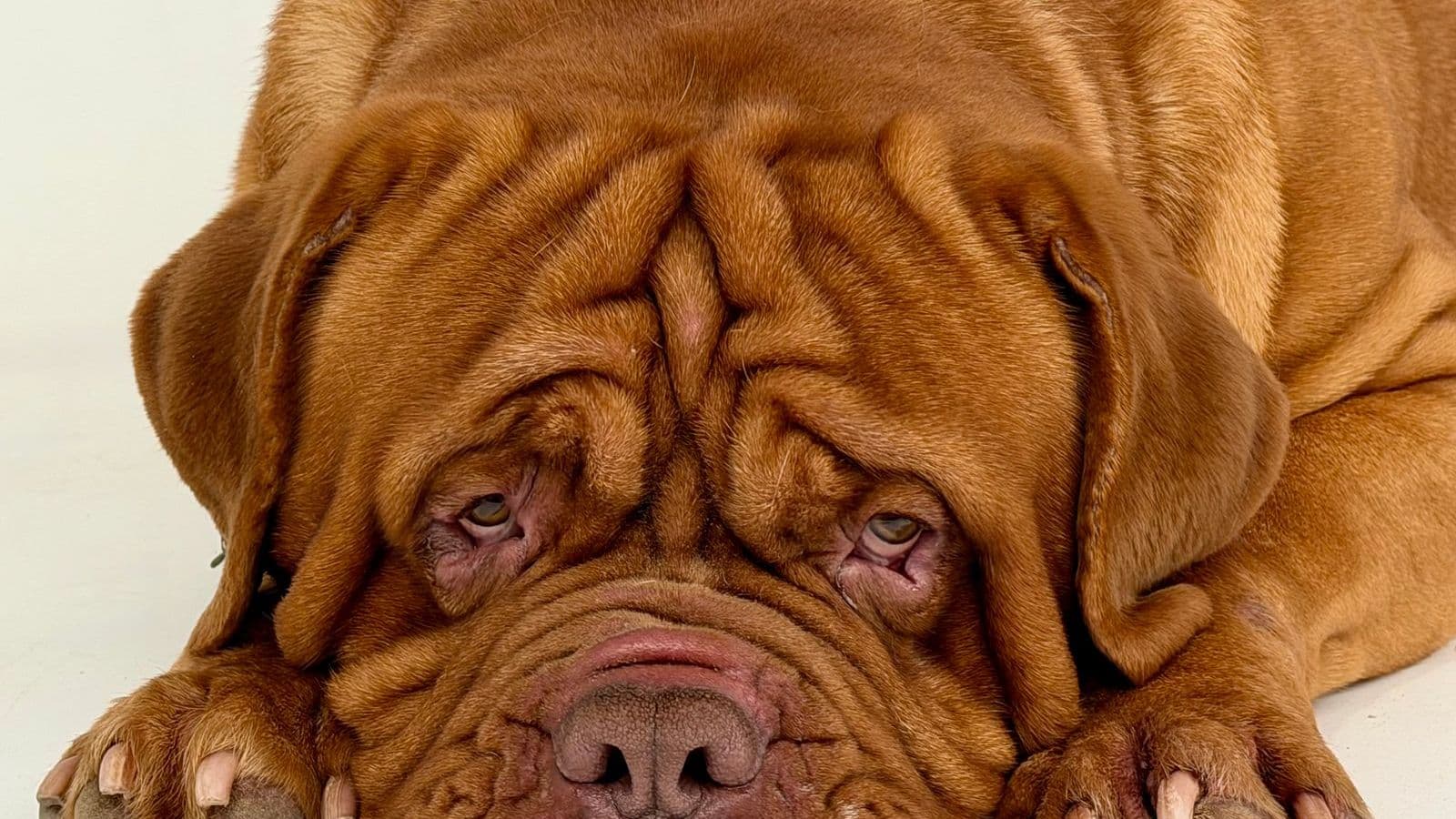
The Dogue de Bordeaux, or French Mastiff, is an ancient and powerful guardian breed instantly recognizable by its massive, wrinkled head, the largest in proportion to the body of any breed, and its soulful, brooding expression. Made famous to many by the film Turner and Hooch, the Dogue is a dog of contradictions: enormously strong and historically used for guarding, hauling, and even fighting, yet deeply affectionate, loyal, and gentle with its own family.
It is calm and low-energy at home, devoted to the point of leaning its considerable weight against you, and protective without being frantic. It is also stubborn, sensitive, and, sadly, one of the shorter-lived breeds, which makes the time you invest early all the more important.
Training a Dogue is about producing a stable, well-socialized, controllable adult, and doing it early, because this dog grows huge fast. The breed is intelligent but stubborn and independent, and it is sensitive enough that harsh handling backfires badly. It needs early, thorough socialization to keep its guarding instinct sound, manners installed while it is still liftable, calm and patient leadership, and an owner who understands mastiff stubbornness. Get those right and the Dogue is a magnificent, gentle, devoted guardian. Get them wrong, and you have an enormous, immovable, suspicious dog. This is not a first dog.
This guide covers what works with a Dogue de Bordeaux, week by week, built around how a powerful, stubborn, sensitive mastiff actually learns.
At a glance:
- Trainability: 6/10, intelligent but mastiff-stubborn, weighs every request
- Biggest risk factor: size, whatever a puppy gets away with becomes serious past 100 pounds
- Health note: brachycephalic face means heat sensitivity, plus heavy drooling and wrinkle care
- Example: a Dogue puppy allowed to lean on guests can knock an adult off balance once it hits full size
- Not for: first-time owners or homes without room for a very large guardian
What Makes Training a Dogue Different
Four breed traits shape your approach.
1. Size makes manners urgent. A Dogue puppy becomes a dog that can weigh well over 100 pounds with a massive head and immense strength. Leash manners, polite greetings, and impulse control must be installed early, while the dog is still manageable, because there is no out-muscling an adult.
2. Stubborn and independent. The Dogue is intelligent but mastiff-stubborn, weighing requests rather than obeying reflexively. It cooperates for calm, patient, genuinely rewarding training and an owner it respects, and it shuts down or digs in under repetition and pressure.
3. Sensitive beneath the bulk. For all its imposing presence, the Dogue is a sensitive, people-focused dog that takes harshness hard. Corrections and confrontation damage trust and make the stubbornness worse. Warm, calm, reward-based training is what works.
4. Protective, low-energy, and brachycephalic. The Dogue is naturally watchful of strangers, so socialization is essential to keep that sound. It is calm and low-exercise, but its flat-leaning face means heat sensitivity, and it drools heavily and needs wrinkle care, so handling tolerance matters.
Week-by-Week Training Plan for Your Dogue
Below is the framework we use at TailorPup for a Dogue-specific 12-week plan, written for a committed owner. The order and emphasis matter more than speed.
Weeks 1 and 2 : Foundation and Intensive Socialization
Socialization leads with this guardian breed. Expose the puppy calmly and positively to many people, places, sounds, and well-controlled dogs while it is still small. Build engagement with high-value rewards in three to four short daily sessions, and begin gentle handling and wrinkle-care desensitization.
Weeks 3 and 4 : Core Commands and Impulse Control
Lure sit and down, mark, reward, and add cues once reliable, expecting a stubborn learner who needs a real reason to comply. Start impulse-control work, wait at doors and calm settling, which matters enormously in a future giant. Keep sessions short, patient, and end on a win.
Weeks 5 and 6 : Leash Work (While It Is Possible)
This is critical with a future 100-plus-pound dog. Teach loose-leash walking now, while you can still physically manage the puppy. Use stop-and-stand for pulling and a front-clip harness, and practice daily so the behavior is solid well before the dog reaches full size, keeping exercise low-impact to protect growing joints.
Weeks 7 and 8 : Recall, Greetings, and Counter-Conditioning
Build recall with rewards on a long line, aiming for reliable control. Work hard on calm greetings, since a leaning or jumping Dogue is genuinely overwhelming at full size, and begin counter-conditioning to strangers so the guarding instinct stays discerning. Our reactivity guide lays out the method.
Weeks 9 and 10 : Settling, Management, and Care
Teach a solid settle behavior so the dog has a calm default around visitors, and establish clear household rules for guests. Keep up wrinkle care and handling, manage the breed carefully in heat, and keep socializing throughout, since guarding breeds need it lifelong.
Weeks 11 and 12 : Generalization
Work on manners and calm in more distracting settings, controlled responses to strangers, and reliable leash behavior. The goal is a stable, well-mannered, controllable guardian that is safe and predictable in real life, not a precision obedience dog.
Common Dogue Training Mistakes
Three mistakes show up repeatedly with this breed.
Mistake 1 : Delaying manners because the puppy is sweet and calm. The window to teach leash and greeting manners while the dog is small closes fast. Owners who wait end up with an immovable giant that never learned the rules. Start early and stay consistent.
Mistake 2 : Trying to force a stubborn, sensitive dog. Confrontation and repetition make a Dogue dig in and erode trust. The breed responds to calm patience, motivation, and short rewarding sessions, never to force.
Mistake 3 : Under-socializing the guardian instinct. Without thorough socialization, the Dogue's natural protectiveness becomes indiscriminate suspicion, a serious matter in a dog this size. The full list is in our Dogue de Bordeaux training mistakes guide.
Frequently Asked Questions
Are Dogue de Bordeaux easy to train ? Moderately, with patience. They are intelligent but stubborn and sensitive, so they need calm, motivating, reward-based training and an owner they respect. Early manners are essential given the size, and force never works.
Are Dogue de Bordeaux good for first-time owners ? Generally not. The size, strength, stubbornness, protectiveness, and care needs suit owners with some experience who can commit to early socialization, manners, and calm leadership.
How much exercise does a Dogue need ? Relatively little: moderate daily walks, kept low-impact while growing to protect the joints and gentle overall given the flat-leaning face and heat sensitivity. The breed is calm and low-energy but still needs daily engagement.
Why is my Dogue so stubborn ? Because mastiff independence is in its nature, not defiance. The Dogue weighs whether a request is worth its while and shuts down under pressure. Use calm, patient, rewarding training to motivate rather than command, and it cooperates.
Do Dogue de Bordeaux drool a lot ? Yes, heavily, and they need their facial wrinkles cleaned to prevent skin problems. These care needs are part of owning the breed, and building handling tolerance early makes them manageable.
Is positive reinforcement effective for Dogues ? Yes, and it is the right approach. The sensitive, stubborn breed responds to calm, patient, reward-based training and resents harsh handling, which damages trust and deepens the stubbornness.
Are Dogue de Bordeaux good family dogs ? Yes, for committed families. They are devoted, gentle, and affectionate with their people, including children, but their size and protectiveness mean early socialization, manners, and supervision are essential.
Why TailorPup Was Built for the Dogue de Bordeaux
A generic plan ignores what defines this breed: the size that makes early manners non-negotiable, the mastiff stubbornness, the sensitivity, and the guarding instinct. That mismatch is genuinely risky with a dog this powerful.
TailorPup builds a 12-week plan around your specific dog: its guardian nature, its age, and the realities of living with it. For a Dogue that means front-loaded intensive socialization, early manners and leash work while the dog is small, calm patient reward-based leadership, counter-conditioning, and a heavy emphasis on management.
Daily 12-minute sessions plus weekly adjustments based on your dog's progress. Plans from $9.99/month, no trial; annual starts at $2 for 7 days. Cancel anytime.
Related: Dogue de Bordeaux Training Mistakes · Recall Training · Reactivity Training · Leash Pulling