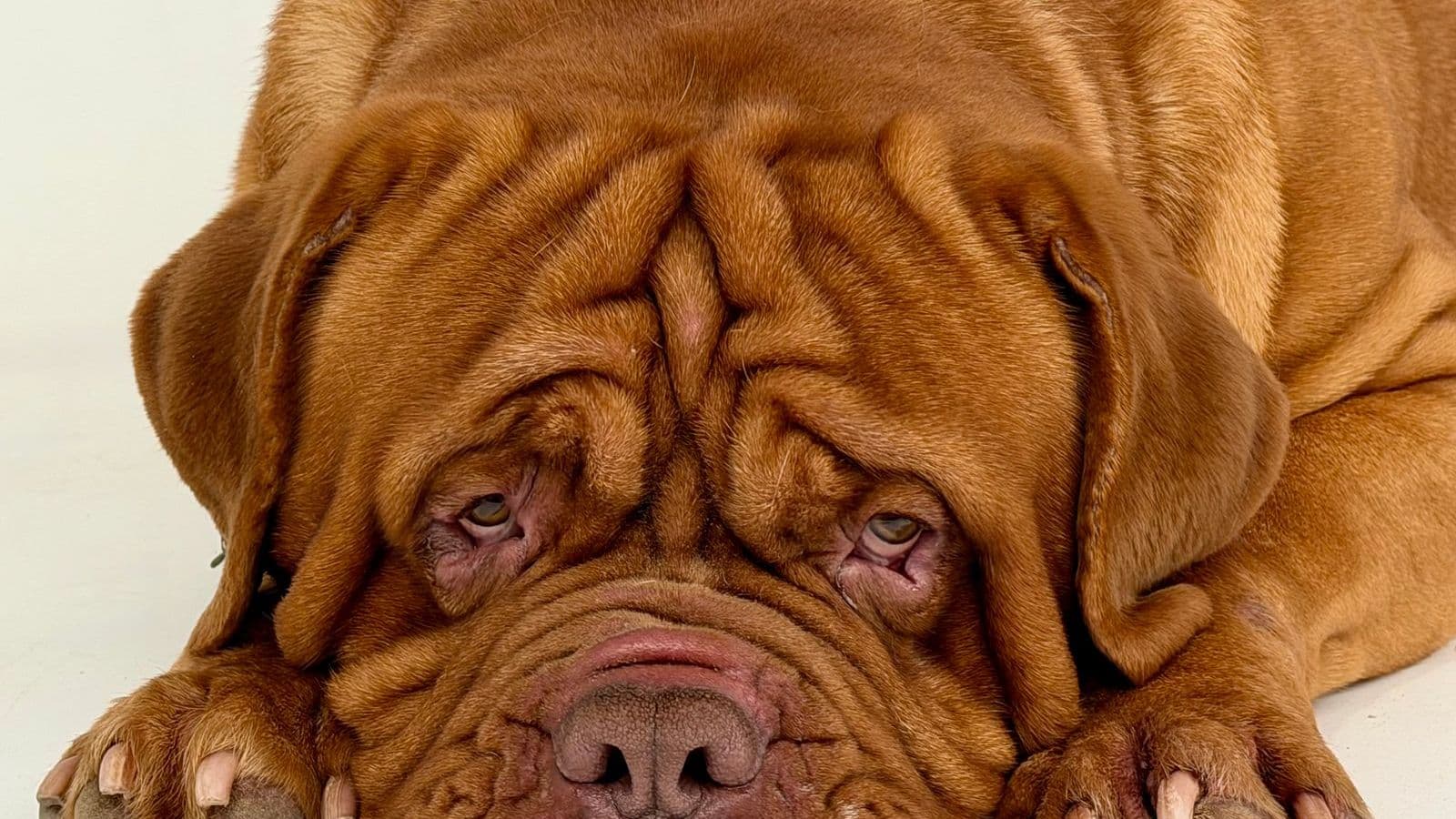
The Dogue de Bordeaux (French Mastiff) is a massive, powerful guardian with a deceptively soft heart, stubborn and self-assured, yet genuinely sensitive underneath. Combine 45 to 70 kg of dog with a guardian instinct and a flat-ish face, and the cost of every training mistake rises sharply. Most problems come from managing the size and shaping the temperament too late or too harshly. Here are the five mistakes that cause the most trouble, and what to do instead.
1. Waiting to train
A behavior that is harmless in a Dogue puppy becomes genuinely hard to manage in a 65 kg adult, and owners who "wait until he's older" miss the window when the dog is still physically guidable. Start manners, leash work, and handling at 8 weeks, so the powerful adult already lives by the rules you set while you could still enforce them.
2. Under-socializing
The Dogue is a natural guardian, and without heavy, ongoing socialization that instinct tips into suspicion and reactivity, which is a serious matter in a dog this strong. Owners who isolate the puppy create a liability rather than a stable protector. Socialize broadly and positively from puppyhood and keep it up, counter-conditioning as needed. Our reactivity guide covers the protocol.
3. Harsh handling
Despite its power and stubborn streak, the Dogue is sensitive and shuts down or grows defensive under harsh corrections. Owners who try to dominate it get the opposite of cooperation. Calm, consistent, reward-based handling earns this stubborn breed's genuine cooperation; force only damages the trust a stable guardian depends on.
4. Exercising in the heat
The Dogue's heavy, flat-ish-faced build means it overheats fast, and owners who exercise it hard or leave it in warm conditions risk a real emergency. Keep activity moderate and confined to cool parts of the day, provide shade and water, and stop at the first sign of labored breathing. Heat tolerance is genuinely low in this breed.
5. Under-training because they seem calm
The Dogue is famously placid and low-energy indoors, and owners read that calm as "he doesn't need much training." But a poorly-trained 65 kg dog is a problem regardless of temperament, around guests, at the vet, and on a leash. Train thoroughly anyway: solid manners, leash skills, and handling tolerance matter more in a dog this size, not less.
What works with Dogues
Start training early while the dog is manageable, socialize heavily and continuously, use calm reward-based methods, respect the breed's heat sensitivity, and train thoroughly despite the placid temperament. The throughline is taking the size and the sensitivity seriously at once, and the reward is a calm, devoted, stable French Mastiff.
TailorPup's Dogue plan front-loads socialization and counter-conditioning, builds manners while the dog is manageable, and uses calm, reward-based methods.
Start your Dogue de Bordeaux's plan at tailorpup.com →
Related: How to Train a Dogue de Bordeaux · Reactivity Training · Recall Training