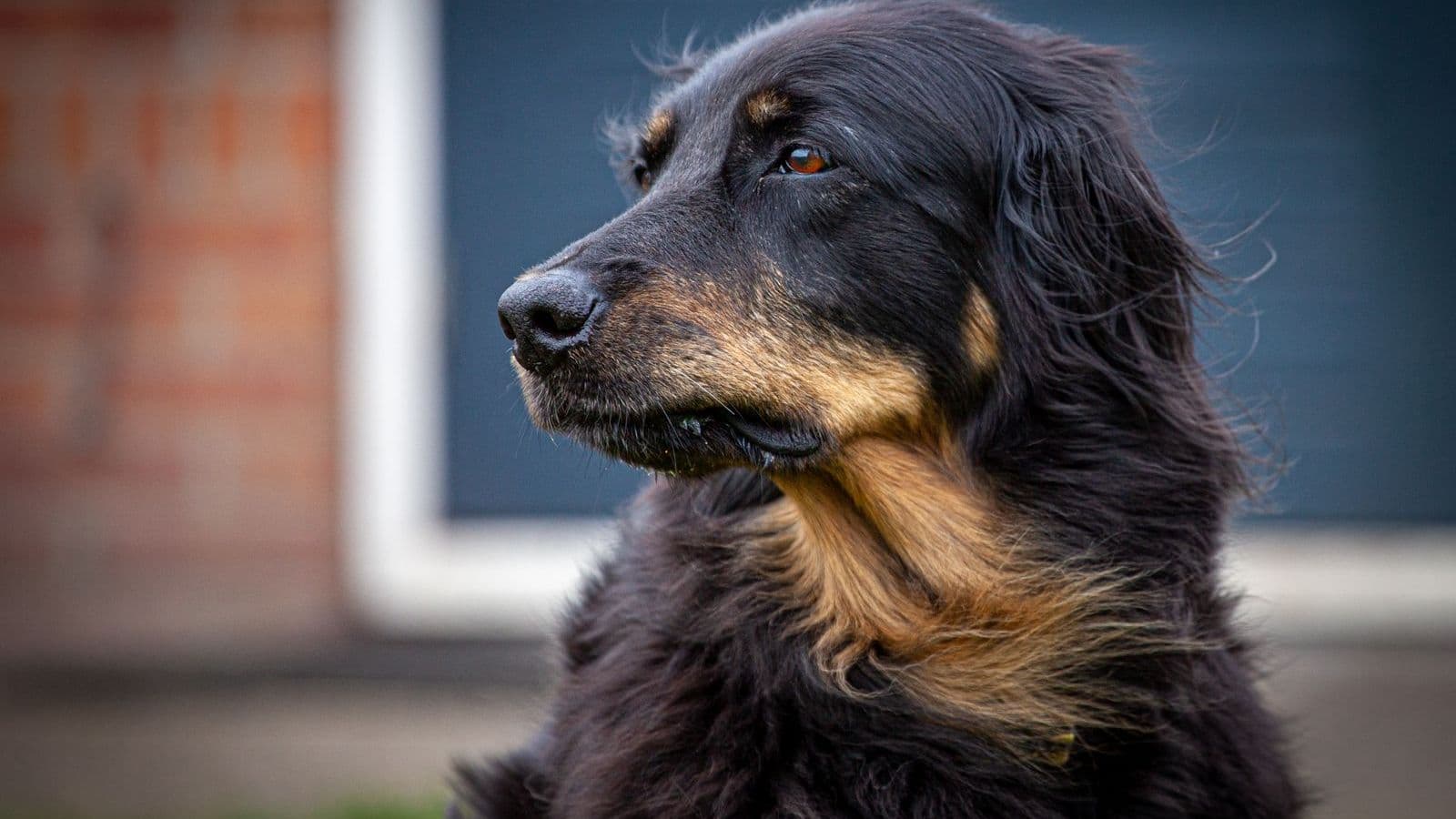
The name Hovawart comes from Middle High German: hova (estate) and wart (watcher). That's the whole job description. This breed has guarded German farms since at least the thirteenth century. It nearly vanished by 1900, then got rebuilt starting in 1915 from Black Forest dogs crossed with Newfoundland, Leonberger, German Shepherd, Bernese Mountain Dog, and Kuvasz. The result is a large, athletic, handsome working dog, 25-45kg, with a long black, blonde, or black-and-tan coat.
This is a real guardian, not a sport dog, and not just a big soft companion. It was bred to make its own calls about family and territory, and that shapes everything about training it. In skilled hands, it's very loyal and versatile. It can do search-and-rescue, tracking, and protection work. In the wrong hands, that same independence becomes a real problem to manage. What works: calm leadership, staying consistent through a long teenage phase, and enough socializing to turn watchfulness into good judgment.
Here's why the rebuild history matters. German breeders in the 1900s weren't making a show dog. They were rebuilding a working farm guardian, and they bred for nerve, smarts, and trainability right alongside the guarding instinct. That's why a modern Hovawart listens well when handled right, unlike more standoffish guardian breeds. It can compete in obedience, track, do search-and-rescue, and learn protection work, all while keeping the independent judgment that makes it a solid protector.
That's the breed's gift, and its price: more trainability than most guardians offer, but only if you actually use it. Leave a Hovawart with nothing to do, no work, no mental challenge, and it finds its own projects. Those projects rarely please the household.
At a glance:
- Trainability: 7/10, more biddable than most guardian breeds when handled well
- Biggest quirk: slow maturity, not mentally full-grown until two to three years old
- Adolescent phase: tests every rule between roughly 6 and 18 months
- Example: a Hovawart with no real job often starts guarding things that were never meant to be guarded, like the couch
- Not for: owners who won't stay consistent through a long adolescence
What Makes Training a Hovawart Different
1. Independent judgment, by design. The Hovawart was built to protect an estate without waiting for orders. In a house, that means it weighs your requests instead of obeying on reflex. Calm, steady leadership earns cooperation. Repeating commands and pushing harder do not.
2. It grows up slowly. A Hovawart isn't mentally mature until two or three years old. The teenage phase, roughly 6 to 18 months, brings real testing of the rules. Expect adult steadiness too early, and you'll get frustrated. Stay consistent through it, and you get a great adult dog.
3. Deep, territorial loyalty. This dog bonds hard with its family and stays naturally wary of outsiders. Socializing builds a dog that can tell friend from stranger, instead of reacting to everyone. That has to happen in puppyhood.
4. Size rewards early work. A 45kg guardian with poor leash manners is a problem anywhere in public. Teach loose-leash walking and basic control before the dog reaches full size and strength.
Week-by-Week Training Plan for Your Hovawart
Weeks 1 and 2 : Foundation and Hierarchy Clarity
Establish calm leadership and begin broad socialization at once; the Hovawart needs to trust that its handler makes decisions. Our puppy basics guide covers the mechanics.
- Pair short, upbeat sessions with high-value food to build engagement.
- Socialize intensively with people, dogs, urban environments, and vehicles.
- Set clear household rules and enforce them consistently and calmly.
- Reward voluntary attention to build a strong check-in habit.
Weeks 3 and 4 : Core Commands, Asked Once
Sit, down, and stay are installed with patience and meaningful rewards.
- Lure sit and down, then fade to hand signals.
- Build stay from short durations, rewarding stillness.
- Ask once and follow through; repetition teaches the cue is optional.
Weeks 5 and 6 : Loose Leash Before Growth
Install loose-leash walking while the dog is still physically manageable.
- Use a front-clip harness and the stop-and-stand method.
- Reward every step on a slack leash.
- Practice in gradually busier environments.
Weeks 7 and 8 : Structured Stranger Socialization
Shape the natural wariness into discrimination, not fear-based reactivity.
- Introduce new people calmly, rewarding neutral or positive responses.
- Never flood the dog or force interaction.
- Reinforce calm behavior at the door and property boundary.
Weeks 9 and 10 : Recall and Territorial Management
Build a solid recall and keep boundary behavior measured.
- Train recall on a long line with high-value rewards before any off-leash work.
- Discourage persistent fence-patrol and alarm-barking.
- Reinforce calm when people pass the property.
Weeks 11 and 12 : Advanced Work and Independence Proofing
Channel the breed's versatility and proof the foundations through adolescence.
- Introduce tracking, search work, or protection sport as appropriate.
- Proof commands in diverse, mildly distracting environments.
- Stay consistent through the long adolescent phase.
Common Hovawart Training Mistakes
Mistake 1 : Underestimating the adolescent phase. Between six and eighteen months the Hovawart tests every rule. Consistent, calm enforcement through this period is essential.
Mistake 2 : Insufficient socialization. Without broad exposure, the natural wariness becomes blanket suspicion. Shape discrimination, not fear.
Mistake 3 : Treating it like a companion dog. The working guardian needs structured work and mental challenge, not just affection.
Mistake 4 : Repeating commands. The independent breed reads repetition as optional. Ask once, wait, reward. Full breakdown : Hovawart training mistakes.
Frequently Asked Questions
Are Hovawarts hard to train ? Moderately. This breed is smart and capable, but its independence and slow maturity call for patient, experienced, consistent handling, not repetitive drilling.
How much exercise does a Hovawart need ? 60 to 90 minutes of real activity a day, plus mental work. This athletic, versatile breed needs both a body outlet and a brain outlet.
Are Hovawarts good family dogs ? Exceptional with their own family, deeply loyal and protective, typically great with kids they're raised alongside. The guardian instincts do need socialization and management around strangers.
Are Hovawarts good with strangers ? With real socialization, appropriately reserved, not aggressive. Without it, that natural wariness can turn into reactivity, which is exactly why early exposure matters so much.
Are Hovawarts good with other animals ? With socialization and proper introductions, generally yes. Like most guardians, early positive exposure shapes how well it lives with other pets.
Are Hovawarts rare ? Outside Germany, yes, uncommon globally. Finding a good breeder usually takes real research and patience.
How long do Hovawarts live ? 10 to 14 years typically, solid longevity for a large working breed.
Why TailorPup Was Built for Hovawarts
A generic plan designed for eager-to-please retrievers cannot account for a guardian's independent judgment, a two-to-three-year maturation, or the socialization required to keep protectiveness appropriate. TailorPup's Hovawart plan front-loads socialization, builds calm leadership, and stays consistent through the long adolescence, so the brilliant adult the breed can become actually emerges.
Daily 12-minute training sessions plus weekly adjustments as your dog grows. Plans from $9.99/month, no trial; annual starts at $2 for 7 days. Cancel anytime.
Related: Hovawart Training Mistakes · Leash Pulling · Recall Training · Puppy Training Basics