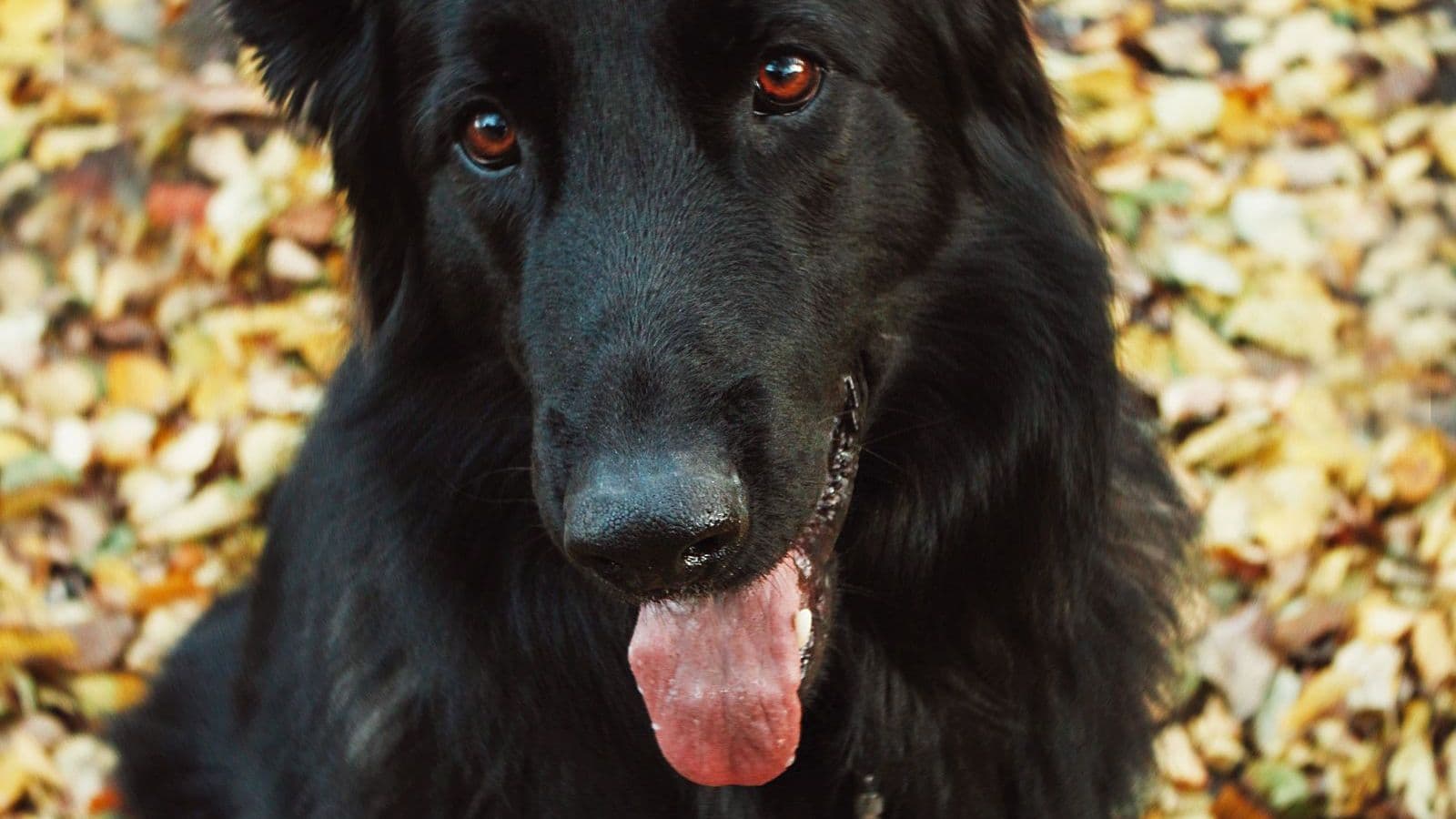
Near a village outside Brussels called Groenendael, a breeder named Nicolas Rose fixed a solid-black, long-coated shepherd from local working stock in the 1890s. That's how the Groenendael got its name, and it's the most striking of the four Belgian Shepherd varieties, the same family that gave us the Malinois and Tervuren. Bred to herd and guard Belgian farms, it's now just as at home in the show ring, in dog sports, and doing search-and-rescue work.
At 20-30kg, with a flowing black coat and an almost wolf-like alertness, the Groenendael is intense, sensitive, and sharp. Like the rest of the Belgian Shepherd family, it works hard, attaches deeply to its handler, stays alert (sometimes too alert), and feels things intensely. This is a dog of strong reactions, thrilling to work with in the right hands, and easily overwhelmed in the wrong ones.
This is a brilliant, demanding partner that needs an experienced, engaged home. Its sensitivity means it cannot handle harsh treatment, it shuts down under pressure. Its intense attachment makes separation anxiety a real risk without early work on being alone. Its working drive needs a genuine outlet, both physical and mental. And its alertness needs broad socialization to stay balanced instead of tipping into reactivity. Get all of that right, gentle training, early independence work, a real job, thorough socialization, and the Groenendael becomes a devoted, dazzlingly responsive companion.
At a glance:
- Trainability: 9/10, exceptionally sharp and eager to work
- Biggest risk factor: sensitivity, harsh handling causes real shutdown, not compliance
- Separation note: bonds intensely, real risk of separation anxiety without early independence work
- Example: raise your voice at a Groenendael mid-session and it often stops working entirely, not out of defiance, but genuine hurt
- Not for: owners who can't provide a real daily job, physical and mental
What Makes Training a Belgian Groenendael Different
1. Real sensitivity. The Groenendael reads your mood and tone closely. Harsh handling doesn't just fail, it causes fear and shutdown. Reward-based training isn't just more effective here, it's the only approach that actually works.
2. Intense attachment, real separation-anxiety risk. This breed bonds hard with its handler, and that bond can turn into genuine separation anxiety without early preparation. Alone-time conditioning matters from day one.
3. A working drive that needs a real job. This is a serious working breed. Without daily mental and physical work, it gets anxious and destructive. Herding, agility, obedience, nose work, something real is the foundation of a balanced dog.
4. Sharp and reactive. This breed's alertness and quick reactions need broad early socialization to stay confident rather than turning into reactivity toward new things and strangers.
Week-by-Week Training Plan for Your Belgian Groenendael
Weeks 1 and 2 : Gentle Foundation and Alone-Time
Build engagement gently, socialize broadly, and start independence work. Our puppy basics guide covers the mechanics.
- Pair short, upbeat sessions with high-value food or toy rewards.
- Socialize broadly with people, dogs, surfaces, and sounds.
- Begin alone-time conditioning with very short absences from day one.
- Reward voluntary attention to build engagement.
Weeks 3 and 4 : Core Commands, Gentle and Positive
Sit, down, and stay come fast to this brilliant breed.
- Teach the core cues with reward-based methods, never pressure.
- Add complexity quickly to hold the sharp mind.
- End sessions while the dog is still keen.
Weeks 5 and 6 : Loose Leash and Recall
Install leash manners and build recall.
- Use a front-clip harness and the stop-and-stand method for loose-leash walking.
- Train recall on a long line with high-value rewards before off-leash freedom.
- Reward focus on you in stimulating environments.
Weeks 7 and 8 : Separation Work and Socialization
Deepen independence and continue socialization.
- Extend alone-time gradually toward real absences, always below distress.
- Continue structured, positive socialization with people and dogs.
- Keep departures and arrivals calm and low-key.
Weeks 9 and 10 : A Real Job
Give the working drive an outlet.
- Introduce herding, agility, obedience, or nose work.
- Build structured drive-channeling exercises.
- Reward controlled, focused work over frantic activity.
Weeks 11 and 12 : Advanced Work and Proofing
Consolidate the foundations with ongoing challenge.
- Advance the chosen sport and add skill chains.
- Proof all cues, including recall, in distracting environments.
- Establish a sustainable rhythm of exercise, work, and mental challenge.
Common Belgian Groenendael Training Mistakes
Mistake 1 : Harsh or pressured training. The Groenendael is highly sensitive; pressure and correction cause shutdown. Reward-based work is the only effective approach.
Mistake 2 : Skipping alone-time conditioning. The strong attachment makes separation anxiety a genuine risk. Build independence from puppyhood.
Mistake 3 : Under-stimulation. A working breed without daily mental and physical work becomes anxious and destructive. Provide a real job.
Mistake 4 : Insufficient socialization. The alert, sensitive temperament needs broad positive exposure to stay confident. Full breakdown : Belgian Groenendael training mistakes.
Frequently Asked Questions
Are Belgian Groenendaels easy to train ? For an experienced owner using reward-based methods, yes. They're exceptionally sharp and eager to work, and they learn fast. The real challenge is respecting the sensitivity, harsh handling shuts this dog down. Kindness matters as much as skill here.
How much exercise does a Belgian Groenendael need ? 60 to 90 minutes of real activity a day, plus mental work, ideally a real job. This working herder needs both a body outlet and a brain outlet. Skip either and you get an anxious, destructive dog.
Are Belgian Groenendaels good family dogs ? With experienced, active owners, yes, devoted, gentle, and protective. The sensitivity and attachment mean this breed fits engaged homes that train kindly, exercise a lot, and don't leave the dog alone for long stretches.
Do Belgian Groenendaels get separation anxiety ? They can, if you don't prevent it. This breed's intense attachment makes it one of the more separation-prone shepherds, which is exactly why early alone-time training matters so much.
Are Belgian Groenendaels good with other dogs ? With early socialization, generally yes, though the alert, quick-reacting nature means introductions should stay calm and controlled. Broad puppy socialization builds a confident adult.
Are Belgian Groenendaels rare ? Outside Belgium, France, and the working/sport world, moderately uncommon, though more common than some other Belgian varieties. Finding a good breeder usually takes some research.
How long do Belgian Groenendaels live ? 12 to 14 years typically, a hardy working breed. A good breeder screens for hip and elbow dysplasia, eye conditions, and epilepsy. Well-exercised and well-socialized, this dog stays sharp well into old age.
Why TailorPup Was Built for Belgian Groenendaels
A generic plan built for tougher or more independent breeds applies pressure that a sensitive Groenendael cannot absorb, and it treats alone-time and mental work as afterthoughts. TailorPup's Belgian Groenendael plan is reward-based throughout, front-loads separation conditioning and socialization, and channels the working drive into a real outlet for this brilliant, sensitive Belgian herder.
Daily 12-minute training sessions plus weekly adjustments. Plans from $9.99/month, no trial; annual starts at $2 for 7 days. Cancel anytime.
Related: Belgian Groenendael Training Mistakes · Recall Training · Leash Pulling · Puppy Training Basics