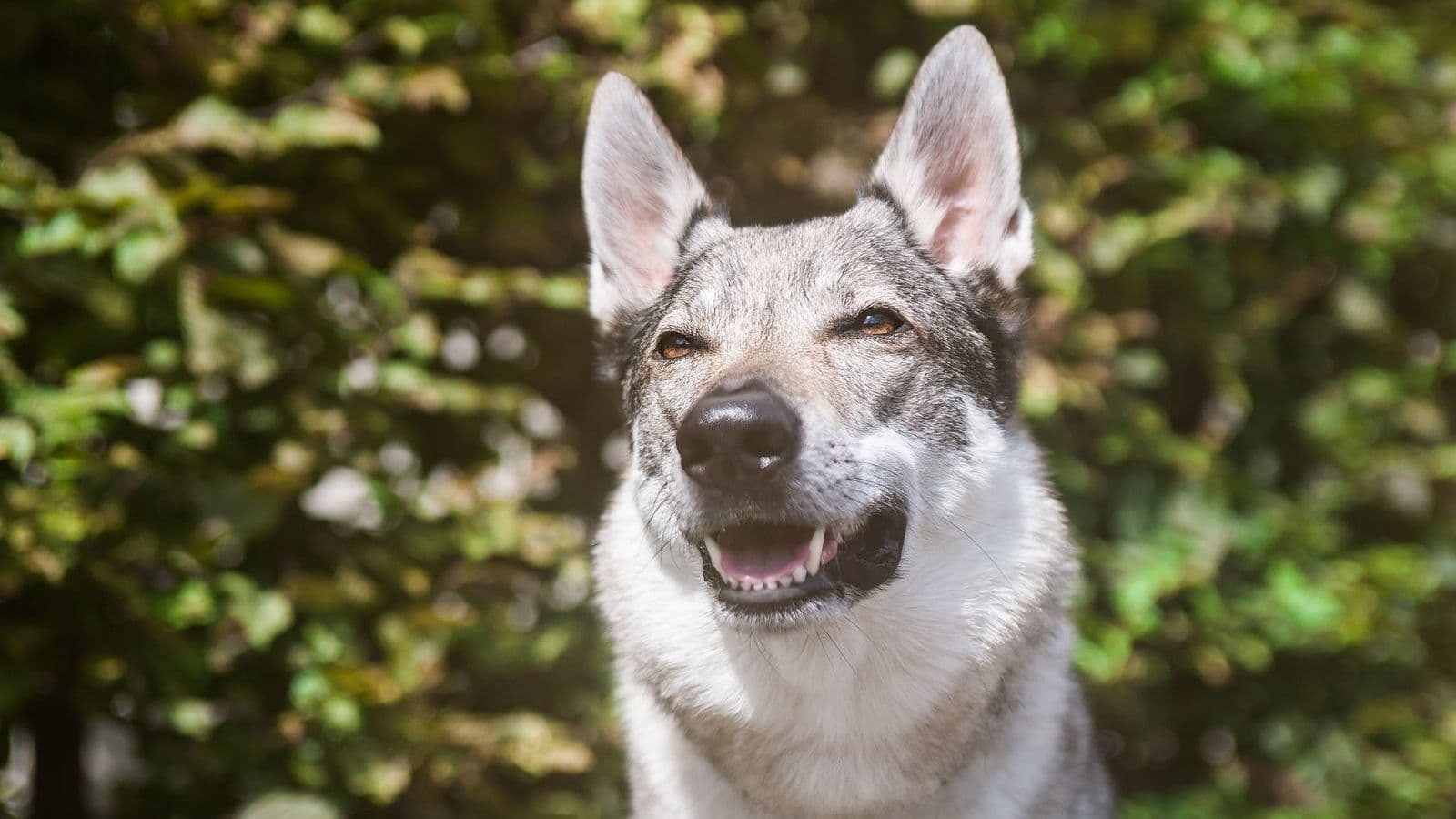
In 1955, the Czechoslovak army started a strange experiment: cross German Shepherds with actual Carpathian wolves, hoping to combine wolf stamina and senses with Shepherd trainability. The program ran for decades. In 1982 the result became an official breed, and every Czechoslovakian Wolfdog alive today traces back to just four wolves and a handful of working Shepherds.
It looks almost exactly like a wolf: yellow-gray to silver coat, amber eyes, upright ears, the light, tireless build of a trotting predator. Males start around 26kg. Here's what new owners miss: the wolf ancestry isn't just skin deep. It shapes how this dog thinks, what motivates it, how it bonds, in ways that make it behave nothing like a standard breed, no matter how smart that breed is.
The plain truth: this is not a German Shepherd that happens to look like a wolf. Its wolf inheritance shapes how it learns and what it wants, and training it means working with that, not expecting ordinary obedience. This is a magnificent animal for the right, experienced owner, and a real problem for the wrong one.
At a glance:
- Trainability: 6/10, does what's rewarding, not what pleases you
- Biggest risk factor: extreme prey drive, small animals are genuinely at risk
- Legal note: some places restrict wolf-content dogs, check local laws first
- Example: call a CSV back mid-chase and it will often keep running, the reward it's chasing simply outbids you
- Not for: first-time owners or anyone wanting a warm, eager-to-please companion
What Makes Training a Czechoslovakian Wolfdog Different
1. A wolf-like motivation. This dog doesn't crave your approval the way most breeds do. It does what's rewarding, not what pleases you. Training has to build real value, make cooperating with you the clearly better option, rather than relying on a desire to please that just isn't there.
2. Extreme prey drive. The wolf genes bring a powerful, hardwired prey drive. Small animals are genuinely at risk. Off-leash recall near moving prey is unreliable, full stop, no matter how much you train. In any unfenced space, manage the dog. Don't trust it.
3. Constant social testing. This dog keeps assessing its place in the household, testing relationships. That's not defiance to crush, it's normal wolf-influenced behavior. Meet it with calm, confident, steady handling.
4. A short socialization window with permanent consequences. Early socialization matters more here than almost any other breed, and missing it is close to permanent. What the puppy meets calmly in the first months shapes the adult for life.
Week-by-Week Training Plan for Your Czechoslovakian Wolfdog
Weeks 1 and 2 : Socialization, the Most Critical Window
Front-load broad, positive exposure; this is the single most important investment you will make. Our puppy basics guide covers the mechanics.
- Expose the puppy calmly to diverse people, animals, surfaces, and sounds.
- Pair every new experience with high-value food.
- Verify secure containment before any yard time.
- Establish calm, consistent household rules from day one.
Weeks 3 and 4 : Value-Based Command Installation
Teach cues as transactions in which cooperation reliably pays.
- Lure sit, down, and stay, rewarding with genuinely high-value treats.
- Establish that engaging with you earns the best outcomes.
- Keep sessions short, upbeat, and frequent.
Weeks 5 and 6 : Containment and Leash Control
Secure the environment and install leash manners for a high-drive dog.
- Confirm fencing of at least 1.8 m; the CSV is a problem-solver and climber.
- Use a front-clip harness and the stop-and-stand method.
- Reward every step on a slack leash.
Weeks 7 and 8 : Recall Within Its Limits
Build the best recall you can while respecting that prey overrides it.
- Train recall on a long line with extravagant rewards.
- Use only securely fenced areas for any off-leash work.
- Never rely on recall near prey stimulus.
Weeks 9 and 10 : Pack-Relationship Management
Respond to social testing with calm, confident consistency.
- Hold rules steadily without anger or uncertainty.
- Reward calm, cooperative choices.
- Avoid confrontational "dominance" methods, which backfire.
Weeks 11 and 12 : Channeled Drive and Proofing
Give the predatory energy safe, satisfying outlets.
- Introduce tracking, nose work, or protection sport.
- Proof cues in varied, mildly distracting environments.
- Maintain socialization and containment habits as the dog matures.
Common Czechoslovakian Wolfdog Training Mistakes
Mistake 1 : Acquiring the breed for its appearance. The wolf-like look comes with wolf-like behavior. This is not a German Shepherd with a different coat.
Mistake 2 : Missing the socialization window. The narrow window means delays are permanent. Prioritize broad, positive exposure above everything else.
Mistake 3 : Expecting domestic-dog compliance. The CSV does things because they are rewarding, not because you asked. Build the value system.
Mistake 4 : Relying on recall near prey. The prey drive overrides training. Use fenced areas and manage. Full breakdown : Czechoslovakian Wolfdog training mistakes.
Frequently Asked Questions
Is the Czechoslovakian Wolfdog a wolf hybrid ? Officially it's a recognized breed with wolf ancestry, not a current wolf hybrid. Every CSV descends from the original mid-century wolf-and-Shepherd crosses, bred as a closed population ever since.
Are Czechoslovakian Wolfdogs legal everywhere ? No. Some places restrict wolf-content dogs, and you may need special licensing or insurance. Check your local laws before getting one.
How much exercise does a CSV need ? 90 minutes or more of real activity a day, plus mental work. This high-stamina animal won't settle without a real outlet. Tracking, canicross, bikejoring, or long structured hikes satisfy it far more than a simple walk ever will.
Are Czechoslovakian Wolfdogs good family dogs ? With very experienced owners and thorough socialization, they can be loyal, functional family dogs. They're not warm and eager-to-please, though, and they're a poor fit for a first-time owner or a family wanting a typical pet.
Are Czechoslovakian Wolfdogs healthy ? Generally robust, thanks to a strong working foundation and genetic diversity from the wolf input, though hip dysplasia and a few hereditary conditions do show up. Health-tested lines matter.
Are Czechoslovakian Wolfdogs rare ? Outside Central Europe and specialist circles, yes, fairly uncommon. Good breeders screen buyers carefully given how demanding this breed is.
How long do Czechoslovakian Wolfdogs live ? 13 to 16 years typically, long for a dog this size, a sign of the breed's hardy genetics.
Why TailorPup Was Built for Czechoslovakian Wolfdogs
A generic plan assumes a dog that wants to please and contains itself in an ordinary yard, both untrue of a wolf-cross. TailorPup's Czechoslovakian Wolfdog plan front-loads the socialization the breed's narrow window demands, builds a genuine value-based relationship instead of expecting deference, and centers the containment and prey-drive management this extraordinary animal actually requires.
Daily 12-minute training sessions plus weekly adjustments. Plans from $9.99/month, no trial; annual starts at $2 for 7 days. Cancel anytime.
Related: Czechoslovakian Wolfdog Training Mistakes · Recall Training · Leash Pulling · Puppy Training Basics