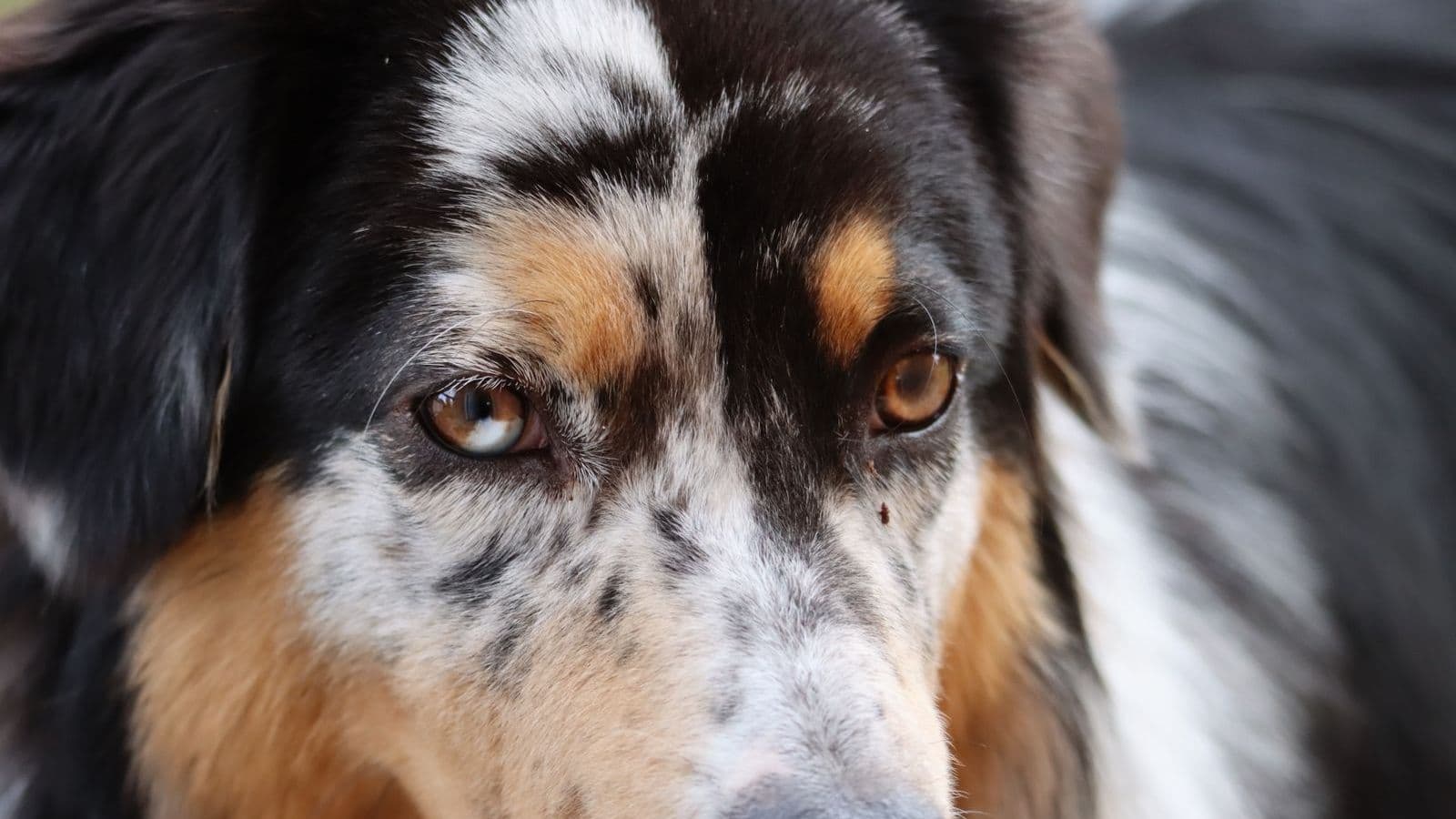
The Miniature American Shepherd was developed in the late 1960s by selectively breeding small Australian Shepherds, creating a compact herding dog that could work small stock and travel easily to rodeos and shows. The AKC recognized it as a distinct breed in 2011. Despite the "miniature" label, it weighs only down to a smaller frame, 9-18 kg, while carrying the full genetic inheritance of the Australian Shepherd: the drive, the intelligence, the work ethic, and the herding instinct, none of which were shrunk along with the body.
That is the single most important thing for a prospective owner to understand, and the one most often missed. People choose the Miniature American Shepherd expecting a herding dog's looks and brains with a lapdog's demands, and they are quickly overwhelmed. This is a working dog that needs a job, daily physical and mental exercise, and an owner prepared to direct a fast, busy, opinionated mind. Give it those things and it is one of the most trainable, versatile, and rewarding companions in any size class; withhold them and it invents its own work, usually at the household's expense.
It is worth being honest about why this breed ends up in rescue more often than its temperament alone would predict. The Miniature American Shepherd is bought on looks and size, the merle coats, the expressive eyes, the convenient frame, by people picturing a low-key companion that happens to be photogenic. What arrives instead is a compact stock dog with the same operating system as a full Australian Shepherd, and the mismatch between expectation and reality is where things go wrong.
None of that is the dog's fault, and none of it is hard to fix in advance: the breed only needs an owner who plans for a working dog's day. A few structured training sessions, a real physical outlet, a puzzle or a job to occupy the mind, and consistent household rules will turn the same animal that overwhelms an unprepared home into a standout companion. The intelligence that makes the breed demanding is exactly what makes it so rewarding once it has somewhere to go.
At a glance:
- Trainability: 9/10, an extremely high learning ceiling with full Australian Shepherd drive.
- Biggest risk factor: separation anxiety from its intense Velcro bond to its person.
- Herding instinct: targets children, pets, and joggers with eye, stalk, and nipping behavior.
- Example: without a job, this breed may invent one, herding kids around the yard or nipping at heels.
- Not for: owners picturing a low-key lapdog rather than a full working stock dog in a smaller frame.
What Makes Training a Miniature American Shepherd Different
1. Full Aussie drive in a compact frame. The trainability ceiling is extremely high, this breed can learn almost anything, but the exercise and stimulation requirements are full-size too. Treating it as a low-energy small dog is the root of nearly every behavior problem owners report.
2. Herding instinct targets the household. Without an appropriate outlet, the Miniature American Shepherd will herd children, other pets, joggers, and moving objects, complete with eye, stalk, and nipping. The instinct is genetic and needs consistent redirection rather than punishment.
3. The bond is intense, and risks separation anxiety. This is a Velcro breed that fixes on its person and can struggle badly when left without preparation. Independence conditioning from puppyhood is part of the core plan, not an afterthought.
4. Alert barking comes standard. The breed is watchful and vocal, and it will announce arrivals, movement, and novelty. Left unmanaged, alarm barking becomes a fixed habit, so a "quiet" cue belongs in the earliest weeks.
Week-by-Week Training Plan for Your Miniature American Shepherd
Weeks 1 and 2 : Drive Assessment and Foundation
Note the puppy's herding tendencies, install household rules, and start independence work immediately. Our puppy basics guide covers the mechanics.
- Run short, upbeat sessions with high-value food or a toy reward.
- Begin broad socialization with people, dogs, surfaces, and sounds.
- Start micro-absences to normalize alone-time from day one.
- Reward voluntary eye contact to build engagement.
Weeks 3 and 4 : Core Commands With Mental Challenge
The breed masters basics in days, so add complexity fast.
- Teach sit, down, stay, and leave it, then layer in distance and duration.
- Introduce a "quiet" cue before alert barking becomes habitual.
- Keep sessions short, varied, and twice daily.
Weeks 5 and 6 : Herding Redirect and Loose Leash
Channel the herding instinct and install leash manners.
- Redirect any herding of children or pets immediately to a toy or task.
- Use a front-clip harness and the stop-and-stand method.
- Reward focus and check-ins on walks.
Weeks 7 and 8 : Recall and Sport Introduction
Build a reliable recall and give the working drive a job.
- Train recall on a long line, paying extravagantly.
- Introduce agility foundations, disc, or treibball.
- Reinforce recall around movement, the breed's biggest distraction.
Weeks 9 and 10 : Alert-Barking Management and Independence
Lock in bark management and extend alone-time.
- Proof "quiet" at windows, doors, and visitor arrivals.
- Build alone-time toward real absences, always below the distress threshold.
- Provide a settle spot and a long-lasting chew for downtime.
Weeks 11 and 12 : Advanced Work and Ongoing Challenge
Keep advancing; this breed thrives on lifelong learning.
- Add new tricks, skill chains, and sport progressions.
- Proof all cues in busy, distracting environments.
- Establish a sustainable weekly rhythm of exercise plus mental work.
Common Miniature American Shepherd Training Mistakes
Mistake 1 : Expecting it to need less than an Aussie. Same drive, same intelligence, smaller package. The needs are not miniaturized.
Mistake 2 : Allowing herding of children and pets. The instinct escalates. Redirect it immediately and consistently from the first occurrence.
Mistake 3 : No sport or structured work. A herding breed without a job generates its own, usually destructive. Provide agility, disc, or treibball.
Mistake 4 : Allowing alert barking. The habit forms fast. Manage it from puppyhood. Full breakdown : Miniature American Shepherd training mistakes.
Frequently Asked Questions
How much exercise does a Miniature American Shepherd need ? Sixty to ninety minutes of vigorous activity daily, plus dedicated mental work. Walks alone are not enough for a full-drive herding breed in a compact body.
Are Miniature American Shepherds good apartment dogs ? With very committed exercise and mental stimulation, manageable, though they do best with a house and yard. The limiting factor is meeting the breed's substantial needs, not the size.
What is the difference between a Miniature American Shepherd and a Mini Aussie ? They are genetically equivalent; "Miniature American Shepherd" is the AKC-recognized name, while "Miniature Australian Shepherd" is used outside that registry. The training approach is identical.
Are Miniature American Shepherds good with children ? Yes, with socialization and herding redirection, the instinct to herd small children needs consistent management. Once that is handled, they are devoted, playful family dogs.
Do Miniature American Shepherds bark a lot ? They have a strong alert-barking tendency that requires active management from puppyhood. With a reliable "quiet" cue and adequate stimulation, barking stays reasonable.
Are Miniature American Shepherds hypoallergenic ? No. The double coat sheds moderately year-round and blows seasonally, requiring regular brushing.
How long do Miniature American Shepherds live ? Typically thirteen to fifteen years, with the longevity common to small, well-bred herding dogs.
Why TailorPup Was Built for Miniature American Shepherds
A generic small-dog plan treats this breed as a low-energy companion and skips the herding redirection, structured work, and bark management it actually needs. TailorPup's Miniature American Shepherd plan matches the dog's full working intensity from day one, front-loads independence and "quiet," and keeps advancing the skills a brilliant herding mind craves.
Daily 12-minute training sessions plus weekly adjustments. Plans from $9.99/month, no trial; annual starts at $2 for 7 days. Cancel anytime.
Related: Miniature American Shepherd Training Mistakes · Barking Solutions · Recall Training · Puppy Training Basics