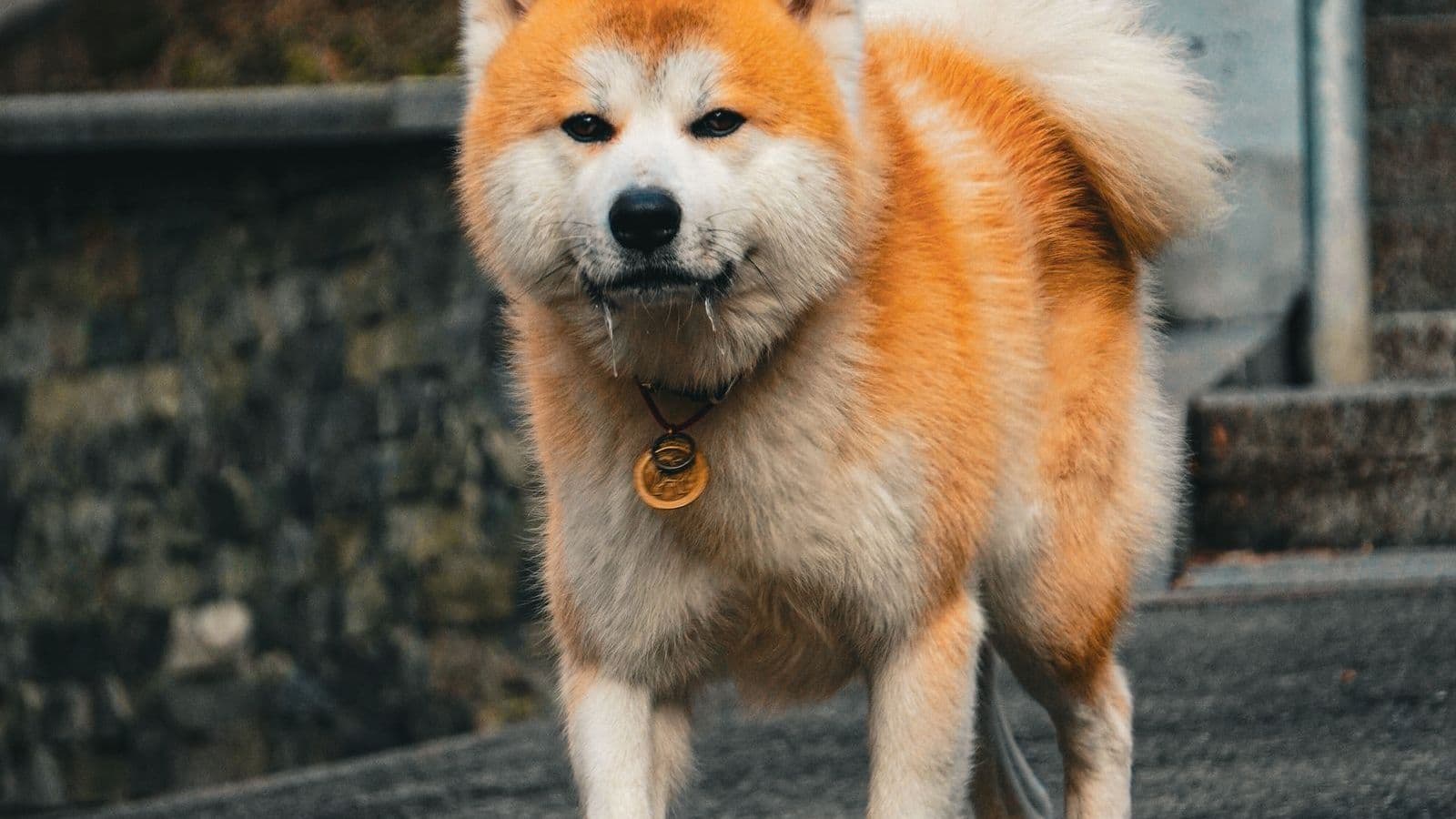
Every day for nine years after his owner died, an Akita named Hachikō showed up at Shibuya Station at the exact time the train used to arrive. His statue still stands there. That's the emotional core of the Akita Inu, the largest of Japan's six native breeds, a dignified spitz from the mountains of Akita Prefecture, originally bred to hunt bear and boar. It's a legally protected national treasure in Japan. The Japanese Akita is the smaller, more fox-like branch of the breed, distinct from the bigger American Akita that developed overseas.
At 32-45kg, the Akita Inu carries real composure and dignity. It's not a demonstrative dog, it's quiet, watchful, and profoundly loyal to its family, reserved with everyone else. Under that calm exterior runs the same independence and dog-selectivity common to every Akita type, rooted in its hunting and fighting past. An owner has to understand that, not try to train it away.
This is a magnificent, demanding dog that needs experienced, respectful handling. Its dog-aggression, especially toward same-sex dogs, rules out dog parks. Its independence means it cooperates for a respectful relationship, not eager obedience. Its size makes early leash work essential. Its reserve with strangers needs early socialization. And above all, this breed resents harshness, it only responds to calm, reward-based training. Get all of that right and the Akita Inu becomes a deeply loyal, dignified companion.
At a glance:
- Trainability: 6/10, cooperates for respect, not eager obedience
- Biggest risk factor: dog-aggression, especially toward same-sex dogs, dog parks are a bad idea
- Cultural note: a legally protected Japanese national treasure, symbol of loyalty
- Example: an Akita Inu asked to "come" mid-play will often pause and visibly weigh whether it's worth it, that's normal, not disobedience
- Not for: first-time owners or multi-dog households without experienced management
What Makes Training an Akita Inu Different
1. A real dog-aggression streak. The Akita type carries genuine dog-aggression, especially toward same-sex dogs, from its hunting and fighting past. Dog parks don't work for this breed. Plan on managed, controlled introductions for life.
2. Dignified independence. An Akita doesn't crave your approval, it weighs your request first. It cooperates through a respectful, reward-based relationship. Harshness just provokes its considerable stubbornness.
3. Reserve with strangers. This breed stays naturally aloof with unfamiliar people. Early, thorough socialization keeps that reserve healthy instead of letting it turn into reactivity.
4. Size demands early foundations. A powerful dog this size that pulls or lacks control is a real problem. Teach loose-leash walking and basic cues while the puppy is still manageable.
Week-by-Week Training Plan for Your Akita Inu
Weeks 1 and 2 : Foundation and Social Handling
Begin foundation work and socialization while the dog is still small. Our puppy basics guide covers the mechanics.
- Pair short, calm sessions with high-value food to build engagement.
- Socialize broadly and positively with people, dogs, surfaces, and sounds.
- Introduce handling of mouth, feet, and ears for stress-free care.
- Establish calm, consistent household rules from day one.
Weeks 3 and 4 : Core Commands
Sit, down, and stay are installed with calm consistency.
- Lure the behaviors and reward the instant they happen.
- Ask once and wait; the breed is deliberate and dignified, not slow.
- Keep sessions calm, brief, and rewarding.
Weeks 5 and 6 : Loose Leash Before Full Size
Install leash manners while the dog is still physically manageable.
- Use a front-clip harness and the stop-and-stand method for loose-leash walking.
- Reward every step on a slack leash.
- Practice in gradually busier environments.
Weeks 7 and 8 : Dog-Management Protocol
Establish lifelong habits for safe behavior around other dogs.
- Practice structured on-leash passing of other dogs at a comfortable distance.
- Reward calm focus on you when another dog appears.
- Never permit tense on-leash greetings, and avoid dog parks.
Weeks 9 and 10 : Stranger Protocol and Recall
Shape the reserve and build recall.
- Introduce new people calmly, rewarding neutral, relaxed behavior.
- Train recall on a long line with high-value rewards.
- Reserve off-leash freedom for secure areas, given the prey drive.
Weeks 11 and 12 : Proofing and Management
Consolidate the foundations and the management habits.
- Proof loose-leash walking and "place" in mildly distracting settings.
- Rehearse the dog-passing protocol until it is automatic.
- Maintain consistent rules and respectful handling as the dog matures.
Common Akita Inu Training Mistakes
Mistake 1 : Off-leash dog parks. The same-sex and dog aggression is real. Dog parks are inappropriate for most Akitas; use controlled settings.
Mistake 2 : Harsh handling. The dignified Akita resents and resists harshness. Respectful, reward-based training builds cooperation.
Mistake 3 : Skipping the socialization window. The reserve and dog-selectivity need early shaping; the puppy window is critical.
Mistake 4 : Treating it like an eager working breed. The Akita is independent and self-possessed. Build cooperation; do not expect deference. Full breakdown : Akita Inu training mistakes.
Frequently Asked Questions
Are Akita Inus hard to train ? Moderately. They are intelligent but independent and dignified, so they cooperate through a respectful, reward-based relationship rather than eager obedience. The harder parts are lifelong dog management and early size-management training, not teaching cues, and the breed is not an ideal first dog.
Are Akita Inus good family dogs ? With experienced owners, yes, they are deeply loyal, calm, and devoted to their own family, and protective of the children they are raised with. Their dog-selectivity, reserve, and independence mean careful management and a committed home are essential.
Can Akita Inus live with other dogs ? With careful management and early socialization, sometimes, but same-sex aggression is significant, and many do best as the only dog. Multi-dog households require experienced handling and supervision.
How is the Akita Inu different from the American Akita ? The Akita Inu (Japanese Akita) is smaller, more fox-like, and more refined, with a limited range of colors, while the American Akita is larger, heavier, and more bear-like, with a broader color range. Most registries now consider them separate breeds.
Are Akita Inus good apartment dogs ? Given adequate exercise, the breed is calm and quiet enough indoors for larger apartments, but the size and the need for careful management in shared spaces make a house with a yard a better fit.
Do Akita Inus shed ? Yes, significantly, with heavy seasonal blowing of the thick double coat. Regular brushing manages the everyday shedding, with intensive grooming during the seasonal changes; the breed is otherwise notably clean and odorless.
How long do Akita Inus live ? Typically ten to thirteen years. Responsible breeders screen for hip dysplasia, thyroid, and autoimmune conditions seen in the breed, and a lean, well-exercised Akita Inu from health-tested lines stays sound and dignified well into old age.
Why TailorPup Was Built for Akita Inus
A generic plan does not address the Akita Inu's dog-selectivity, its dignified independence, or its resentment of harsh handling. TailorPup's Akita Inu plan front-loads socialization and leash work, builds a structured dog-management protocol, and uses the calm, respectful, reward-based handling this loyal, independent Japanese breed requires.
Daily 12-minute training sessions plus weekly adjustments as your dog grows. Plans from $9.99/month, no trial; annual starts at $2 for 7 days. Cancel anytime.
Related: Akita Inu Training Mistakes · Leash Pulling · Recall Training · Puppy Training Basics