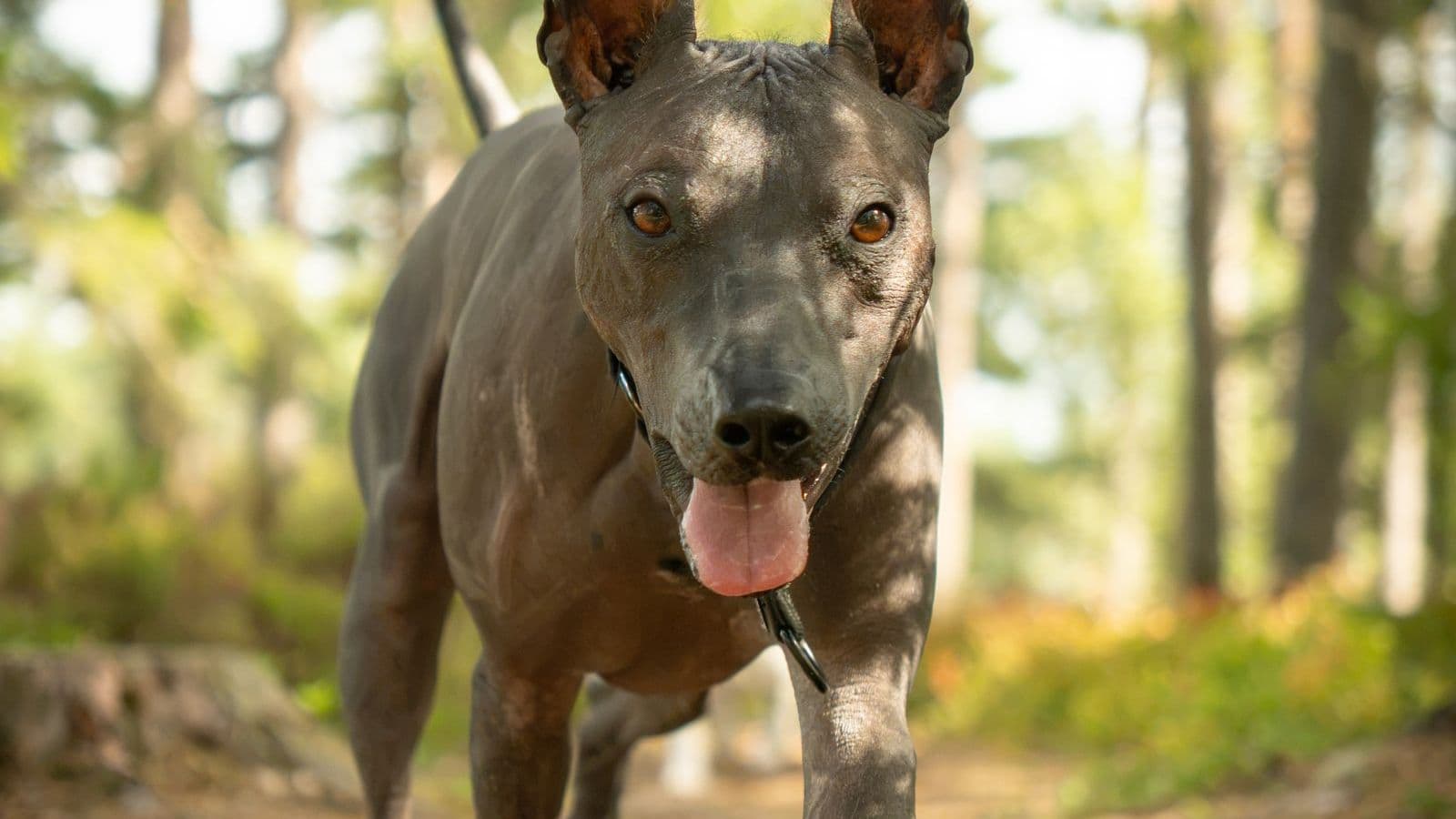
Only a handful of breeds in the world grow a ridge of hair running backward along their spine, and the Thai Ridgeback is one of them, alongside the Rhodesian Ridgeback and Vietnam's Phu Quoc dog. It developed in isolation in eastern Thailand for centuries, used for hunting, pulling carts, and guarding, and stayed almost unknown outside Thailand until the 1990s. That isolation kept it strikingly primitive: athletic, tough, close to the original landrace, 23-34kg.
Primitive is the word that matters here. Unlike breeds shaped over generations to please humans, the Thai Ridgeback was never selected for that. It's smart, independent, territorial, and a genuine athlete that can clear fences that stop almost any other dog. With an experienced owner, it's loyal, clean, and dignified. With an inexperienced one, it becomes escape-prone and genuinely hard to manage. Training rests on three things: relentless early socialization, secure containment, and a relationship built on real value, not assumed obedience.
There's a real difference between a primitive breed and a difficult one, and this dog is primitive, not difficult. A difficult dog fights its handler. A primitive dog runs on older instincts, closer to the village dogs that lived alongside people for thousands of years without much direction. This dog guarded itself, hunted for itself, solved its own problems.
None of that responds to the drill-and-repeat method that works on a Labrador. Force it and you get exactly the "stubbornness" owners complain about. Build trust and clear structure instead, make cooperating the obviously better deal, and the Thai Ridgeback turns out to be smart, clean, and deeply devoted.
At a glance:
- Trainability: 5/10, primitive independence, not bred to please
- Biggest risk factor: jumping ability, can clear a 1.8m fence from a standstill
- Territorial instinct: naturally suspicious of strangers without heavy socialization
- Example: a Thai Ridgeback that's never been tested against a tall fence will sometimes surprise its owner the first time it's truly motivated to leave
- Not for: first-time owners or homes without verified, tall fencing
What Makes Training a Thai Ridgeback Different
1. Primitive independence runs the show. This breed wasn't bred to please you, it weighs every request on its own terms. It will test whether a rule is actually enforced. That's not malice, it's an ancient, self-directed temperament that needs informed handling.
2. An extraordinary jumper. A motivated Thai Ridgeback can clear a 1.8m fence from a standstill. Plan your containment around that athleticism, a loose, prey-driven primitive dog is both a safety risk and nightmare to get back.
3. Territorial instinct that needs socialization. This breed is naturally wary of strangers and protective of its space. Without heavy early socialization, that turns into real reactivity toward unfamiliar people. The puppy window is your only real shot at shaping it.
4. Prey drive that beats recall. Bred to hunt, this dog has a real prey drive that training doesn't reliably override near moving animals. Off-leash freedom belongs only in secure fenced areas. Everywhere else, manage the dog instead of trusting it.
Week-by-Week Training Plan for Your Thai Ridgeback
Weeks 1 and 2 : Leadership, Containment, and Intensive Socialization
Establish calm structure, verify containment, and front-load socialization in the critical window. Our puppy basics guide covers the mechanics.
- Verify all fencing is secure and at least 1.8 m high before any yard time.
- Socialize intensively and positively with people, animals, and environments.
- Pair short sessions with high-value food to build a value-based relationship.
- Set clear household rules and enforce them calmly and consistently.
Weeks 3 and 4 : Core Commands, Asked Once
Sit, down, and stay are installed with patience and meaningful rewards.
- Lure sit and down, then fade to hand signals.
- Build stay from seconds, rewarding stillness first.
- Ask once and follow through; repetition teaches the cue is optional.
Weeks 5 and 6 : Loose Leash, a Priority
A 34 kg primitive dog that pulls is hard to manage. Install loose-leash walking early.
- Use a front-clip harness and the stop-and-stand method.
- Reward every step on a slack leash.
- Build the skill in calm settings before adding distraction.
Weeks 7 and 8 : Controlled Stranger Socialization
The territorial instinct means stranger interactions are structured, never spontaneous.
- Introduce new people calmly and at the dog's pace, rewarding neutral behavior.
- Never allow unsupervised interactions with unfamiliar people in the first year.
- Reinforce calm at the property boundary.
Weeks 9 and 10 : Recall Limits and Prey Management
Build the best recall you can while accepting its limits near prey.
- Train recall on a long line with extravagant rewards.
- Use fenced areas only for any off-leash activity.
- Manage prey drive around cats, small dogs, and wildlife rather than relying on recall.
Weeks 11 and 12 : Sport and Advanced Work
Channel the breed's athleticism and intelligence into productive outlets.
- Introduce agility, lure coursing, or treibball to satisfy the working drive.
- Proof commands in varied, mildly distracting environments.
- Maintain socialization and containment habits as the dog matures.
Common Thai Ridgeback Training Mistakes
Mistake 1 : Treating it like an ordinary dog. The primitive traits, independence, territoriality, prey drive, are real and require informed, experienced handling.
Mistake 2 : Insufficient socialization. The territorial instinct without socialization produces serious problems with strangers. The puppy window is critical.
Mistake 3 : Inadequate fencing. The jumping ability is extraordinary. Containment must account for a dog that can clear 1.8 m.
Mistake 4 : Repeating commands. The breed tests enforcement. Ask once, wait, reward. Full breakdown : Thai Ridgeback training mistakes.
Frequently Asked Questions
Are Thai Ridgebacks good for first-time owners ? No. The breed's primitive independence, territorial instinct, and athleticism require experienced, knowledgeable handlers who can provide structure and secure containment.
How much exercise does a Thai Ridgeback need ? Sixty to ninety minutes of vigorous activity daily, ideally including outlets like lure coursing or agility that engage both body and mind.
Are Thai Ridgebacks good family dogs ? With experienced ownership and thorough socialization, yes, they are loyal and devoted to their own family. Their wariness of strangers means careful management around visitors.
Do Thai Ridgebacks get along with other dogs ? With early socialization, they can, though same-sex aggression occurs. Introductions should be controlled, and many do best as the only dog.
Are Thai Ridgebacks healthy ? Generally robust, as primitive breeds tend to be. Dermoid sinus, a congenital condition related to the ridge, is the main breed-specific concern, so responsible breeding matters.
Are Thai Ridgebacks rare ? Yes, very, outside Southeast Asia. Finding a reputable breeder usually requires significant research and patience.
How long do Thai Ridgebacks live ? Typically twelve to thirteen years, with the hardiness common to primitive landrace breeds.
Why TailorPup Was Built for Thai Ridgebacks
A generic plan assumes a dog that wants to follow direction and contains itself in an ordinary yard, neither true of this breed. TailorPup's Thai Ridgeback plan front-loads socialization, builds a value-based relationship rather than demanding deference, and centers the containment and prey-drive management a primitive, athletic dog genuinely requires.
Daily 12-minute training sessions plus weekly adjustments. Plans from $9.99/month, no trial; annual starts at $2 for 7 days. Cancel anytime.
Related: Thai Ridgeback Training Mistakes · Recall Training · Leash Pulling · Puppy Training Basics