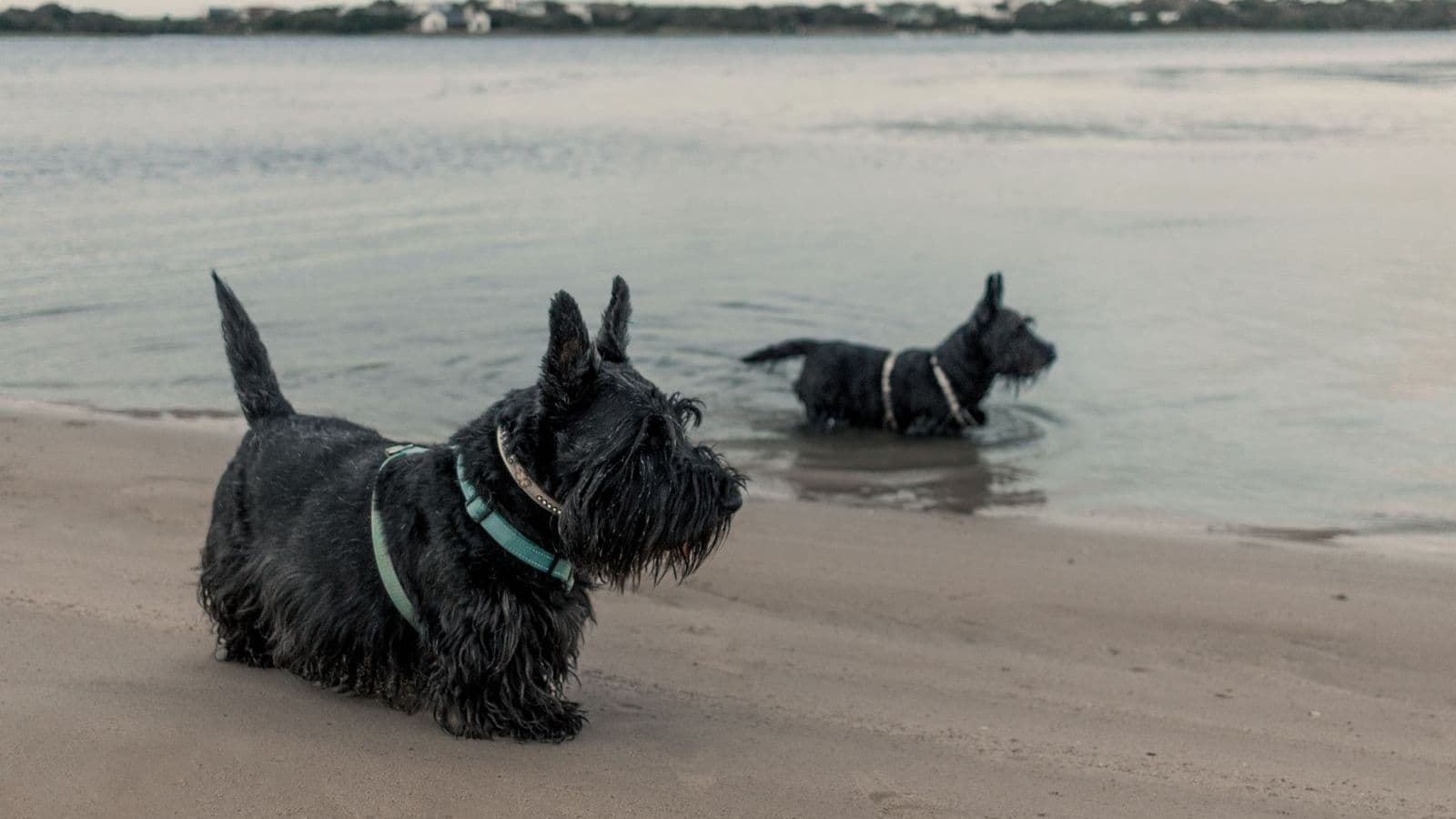
The Scottish Terrier is the dignified, bewhiskered ratter of the Highlands, a compact, sturdy, unmistakable little dog with a big, independent personality. Bred to hunt vermin and go to ground after fox and badger in rocky dens, the Scottie developed exactly the traits that job demanded: courage, tenacity, self-reliance, and a willingness to make its own decisions far from any handler. Nicknamed the "Diehard," it is famously bold, aloof, and strong-willed, devoted to its own people while reserved and unimpressed with everyone else.
That independence is the heart of training a Scottie, and it is why the breed has a reputation for stubbornness. The Scottish Terrier is intelligent, but it was never bred to take orders, so it genuinely weighs whether your request is worth its while. It also carries a real prey drive, a love of digging, a territorial streak, and a sensitivity that hides under the tough exterior, meaning harsh handling backfires badly. Work with the breed's dignity, keep training short and genuinely rewarding, and you earn the cooperation of a wonderful character dog. Try to force a Scottie, and it simply digs in.
This guide covers what works with a Scottie, week by week, built around how an independent, dignified working terrier actually learns.
At a glance:
- Trainability: 5/10, independent, bred to work alone and make its own decisions
- Biggest risk factor: force, a Scottie pushed with corrections simply digs in harder
- Terrier habits: real prey drive plus a genuine love of digging
- Example: a Scottie planted and refusing to move responds to motivation and patience, not to dragging on the leash
- Not for: owners expecting an eager-to-please companion or a maintenance-free garden
What Makes Training a Scottie Different
Four breed traits shape your approach.
1. Independent to the point of stubbornness. The Scottie was bred to work alone underground, so it is one of the more self-reliant terriers and will decide for itself whether to comply. This is not stupidity; it is a thinking, autonomous dog. It cooperates for training that is short, varied, and genuinely worth its while, and resists drilling and repetition.
2. Sensitive under the tough exterior. For all its bold "Diehard" reputation, the Scottie is sensitive and proud, and it shuts down or digs in under harsh corrections. Heavy-handed methods are both ineffective and damaging. Calm, respectful, reward-based training is the only approach that earns its cooperation.
3. A strong prey drive and a love of digging. The ratting and earth-working heritage means a hardwired urge to chase small animals and to dig. Recall around prey is challenging, off-leash near wildlife is risky, and the garden needs a sanctioned digging outlet.
4. Aloof, territorial, and alert. The Scottie is reserved with strangers, watchful of its territory, and ready to bark, all legacies of its working past. Socialization keeps the reserve stable rather than reactive, and early quiet-shaping keeps the alertness from becoming nuisance barking.
Week-by-Week Training Plan for Your Scottie
Below is the framework we use at TailorPup for a Scottie-specific 12-week plan. Run it at home; the order and emphasis are the point.
Weeks 1 and 2 : Foundation and Socialization
Build engagement with high-value rewards and socialize broadly, since the breed is naturally aloof. Run three to four five-minute sessions a day: name, mark eye contact, reward. Make training feel like a worthwhile game from the start, because a Scottie that finds training boring will simply opt out. Our puppy basics guide covers the foundations.
Weeks 3 and 4 : Core Commands
Lure sit and down, mark, reward, and add cues once reliable, expecting a deliberate, independent learner rather than an eager pleaser. Keep sessions short, varied, and genuinely rewarding, and never repeat a cue into the ground. End on a success so the dog stays willing.
Weeks 5 and 6 : Leash Work and Prey Drive
Use stop-and-stand for pulling and a comfortable harness. Practice redirecting your Scottie before it locks onto prey, rewarding a glance back at you. Patience matters here; a Scottie planted and refusing to move responds to motivation and waiting, not to dragging.
Weeks 7 and 8 : Recall and Barking
Build recall on a long line, starting in low-distraction areas and paying every success generously, and never call the dog for anything it dislikes. In parallel, shape quiet: reward calm at windows and the door, manage triggers, and teach an "enough" cue rather than reacting to the barking.
Weeks 9 and 10 : Channeling Drive and Digging
Give the terrier instincts legal outlets: a designated digging spot, flirt-pole play, fetch, earthdog-style games, and scent work all suit the breed. A Scottie that gets to dig where it is allowed and use its nose is calmer and less destructive. Add daily walks and short thinking games.
Weeks 11 and 12 : Generalization
Prove the skills in the real world: calm loose-leash walking past distractions, recall in a fenced area with mild temptation, and settled, confident responses to strangers. A Scottie that performs at home but not outside is only partly trained, and these last two weeks consolidate the patient progress.
Common Scottie Training Mistakes
Three mistakes show up repeatedly with this breed.
Mistake 1 : Trying to force a stubborn dog. This is the classic error. Dragging, repeating cues, or escalating to corrections makes a Scottie dig in harder and damages your relationship. The breed responds to motivation, patience, and short rewarding sessions, never to force.
Mistake 2 : Using harsh handling. The Scottie is sensitive under its tough exterior and shuts down or grows resentful under corrections. Keep everything calm and reward-based; it is the only approach that earns cooperation from this proud, independent breed.
Mistake 3 : Skipping socialization and digging outlets. The aloof Scottie needs early exposure to stay stable with strangers, and the digging instinct needs a sanctioned outlet or the garden suffers. Address both early. The full list is in our Scottish Terrier training mistakes guide.
Frequently Asked Questions
Are Scottish Terriers easy to train ? They are among the more challenging terriers, being independent and strong-willed. They are intelligent, but they need short, varied, genuinely rewarding training to win their cooperation. Recall and reliable obedience take patience, and force never works.
Why is my Scottie so stubborn ? Because it was bred to work alone underground and make its own decisions, so independence is in its nature, not defiance. It cooperates when training is worth its while and resists pressure. Adjust your approach to motivate rather than command.
How much exercise does a Scottish Terrier need ? Around 45 to 60 minutes of activity daily plus mental work. The breed is moderate-energy but needs real engagement and terrier outlets, and an under-stimulated Scottie becomes barky and prone to digging.
Can I let my Scottie off-leash ? In a securely fenced area, yes. In open spaces near wildlife it is risky, because the prey drive challenges recall and the breed is independent. Use a long line outdoors until recall is reliable.
Are Scottish Terriers good family dogs ? Yes, for families who appreciate an independent character dog. They are devoted to their own people, dignified, and sturdy, though aloof with strangers and not especially tolerant of rough handling, so they suit respectful, older children best.
Is positive reinforcement effective for Scotties ? It is the only approach that works well. The sensitive, independent breed shuts down or digs in under harshness, while patient, motivating, reward-based training earns its cooperation.
Do Scottish Terriers need a lot of grooming ? The hard, wiry coat needs regular brushing plus hand-stripping or clipping to keep its shape and texture. It is moderate, ongoing grooming, and building tolerance for it early is worthwhile.
Why TailorPup Was Built for Scottish Terriers
A generic plan ignores what defines this breed: the independence, the sensitivity, the prey drive, and the dignity. That mismatch is why standard, drill-based advice runs straight into the Scottie's famous stubbornness.
TailorPup builds a 12-week plan around your specific dog: its terrier nature, its age, and the behaviors you are seeing. For a Scottie that means short, motivating, reward-based sessions, patience instead of force, careful recall work around the prey drive, a digging outlet, and early socialization.
Daily 12-minute sessions plus weekly adjustments based on your dog's progress. Plans from $9.99/month, no trial; annual starts at $2 for 7 days. Cancel anytime.
Related: Scottish Terrier Training Mistakes · Recall Training · Leash Pulling · Puppy Training Basics