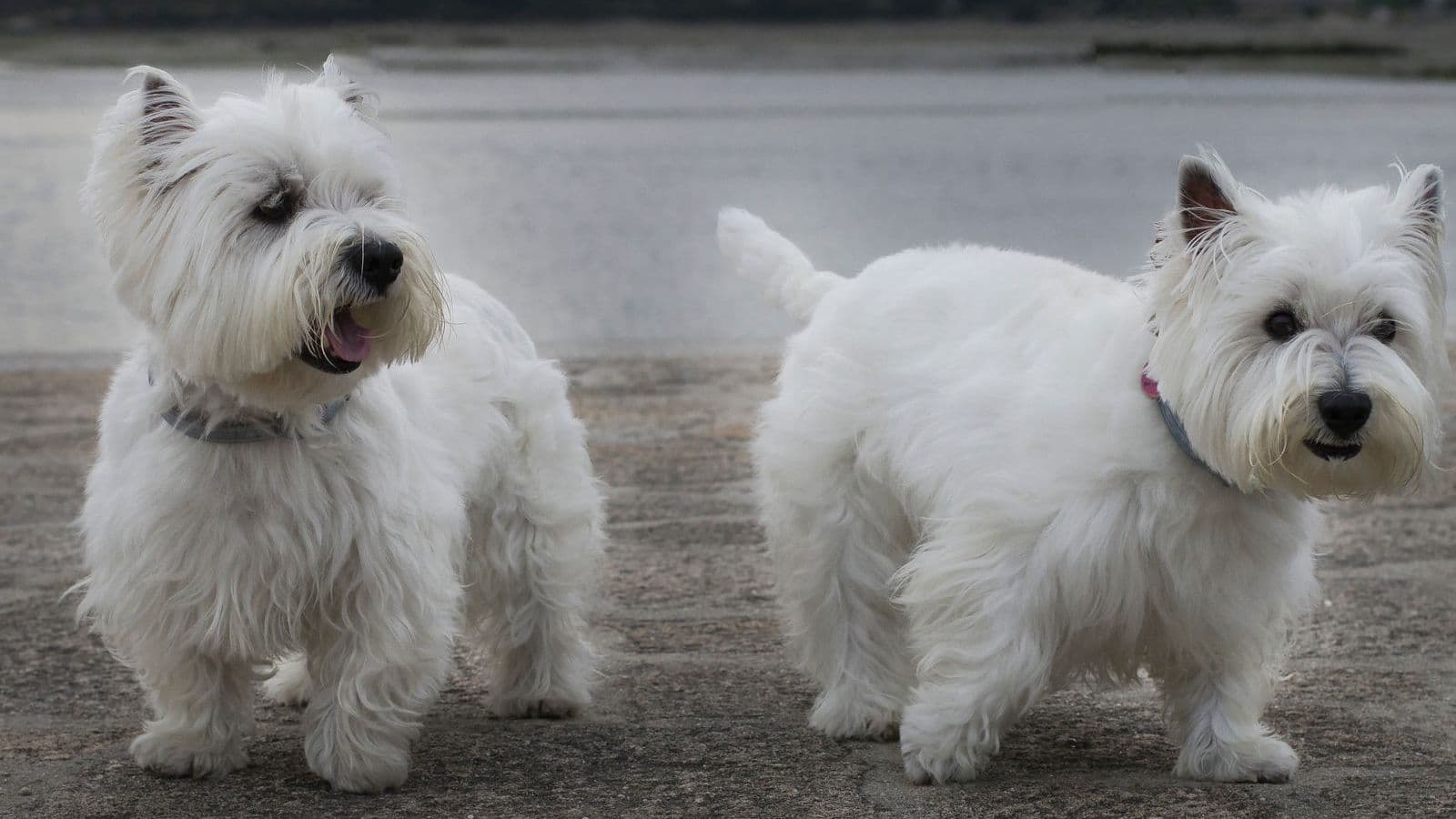
The West Highland White Terrier, the cheerful "Westie," is a bright white, bold little terrier from the Scottish Highlands, bred to hunt rats, foxes, and other vermin among the rocks and dens. Behind the perky ears and the friendly, photogenic face is a genuine working terrier: confident, hardy, lively, and self-assured, with all the drive and independence the job required. The Westie is friendlier and more outgoing than some of its dour Scottish cousins, which has made it a hugely popular companion, but it is every bit a terrier underneath, and training it means respecting that.
That bold, working-terrier nature is the key. The Westie is intelligent and can be trained well with the right approach, but it carries a real prey drive, a love of digging, a ready alert-bark, and a confident independent streak. It is also sensitive beneath the bravado, so harsh handling backfires. Channel the terrier drives, manage the barking early, keep training engaging and reward-based, and meet the energy need, and you get a delightful, spirited, charming companion. Treat it as a decorative lapdog or try to drill it, and you get a yappy, digging, willful one.
This guide covers what works with a Westie, week by week, built around how a bold, independent working terrier actually learns.
At a glance:
- Trainability: 6/10, intelligent but bold and independent, needing short engaging sessions
- Biggest risk factor: strong prey drive that overrides recall around small, fast animals
- Alert-bark and digging: watchful and vocal by nature, plus a hardwired urge to dig if unmanaged
- Example: an unmanaged Westie left in the yard will dig up the garden; a sanctioned digging box redirects the instinct.
- Not for: owners wanting a decorative lapdog rather than a real working terrier with real needs
What Makes Training a Westie Different
Four breed traits shape your approach.
1. Bold, confident, and independent. The Westie has a big personality and a self-assured, sometimes stubborn streak, bred to work alone among the rocks. It cooperates for short, engaging, genuinely rewarding sessions and tunes out repetitive drilling and pressure. Make training worth its while.
2. A strong prey drive. The ratting heritage means a hardwired urge to chase small, fast animals. Recall around movement is challenging, and off-leash freedom near wildlife or roads is risky. Manage the drive rather than expecting to remove it.
3. A ready alert-bark and love of digging. Watchful and vocal by nature, the Westie readily sounds off, and bred to go to ground it loves to dig. Both become hard habits if unmanaged, so shape quiet early and provide a sanctioned digging outlet.
4. Energetic and sensitive under the bravado. The Westie is a hardy, lively dog that needs real exercise and mental work despite its small size, and beneath the confidence it is sensitive and shuts down under harshness. Upbeat, reward-based training and daily activity bring out its best.
Week-by-Week Training Plan for Your Westie
Below is the framework we use at TailorPup for a Westie-specific 12-week plan. Run it at home; the order and emphasis are the point.
Weeks 1 and 2 : Foundation and Socialization
Build engagement with high-value rewards and socialize broadly. Run three to four five-minute sessions a day: name, mark eye contact, reward. Begin barking awareness immediately, rewarding quiet, and build a strong attention habit that later competes with a darting squirrel.
Weeks 3 and 4 : Core Commands
Westies learn well when engaged. Lure sit and down, mark, reward, and add cues once reliable. Keep sessions short, lively, and varied to hold the interest of a bold, independent terrier, and add tricks, which this clever breed enjoys.
Weeks 5 and 6 : Leash Work and Prey Drive
Use stop-and-stand for pulling and a harness suited to the small frame. Practice redirecting your Westie before it locks onto prey, rewarding a glance back at you, so you build an "ignore it and check in" habit rather than a chase.
Weeks 7 and 8 : Barking and Recall
Formalize the quiet work, a breed priority: reward calm at windows and the door, manage triggers, and teach an "enough" cue rather than reacting to the barking. Build recall on a long line, paying every success generously, and proof it around the prey drive. See our barking guide for the full protocol.
Weeks 9 and 10 : Channeling Drive and Digging
Give the terrier instincts legal outlets: a designated digging box, flirt-pole play, fetch, earthdog-style games, and scent work all suit the breed. A Westie that gets to dig where it is allowed and chase a toy on cue leaves the garden and the cat alone. Add daily walks and thinking games.
Weeks 11 and 12 : Generalization
Prove the skills in the real world: calm loose-leash walking past distractions, recall in a fenced area with mild temptation, quiet on cue, and settled behavior in busier places. A Westie that performs at home but unravels outside is only partly trained, and these last two weeks finish the job.
Common Westie Training Mistakes
Three mistakes show up repeatedly with this breed.
Mistake 1 : Treating it as a decorative lapdog. The Westie's cute looks fool people into under-exercising and under-training it, which leads straight to barking, digging, and willfulness. Treat it as the bold working terrier it is, with real exercise, training, and outlets.
Mistake 2 : Ignoring the barking early. The alert terrier bark becomes a hard habit if unmanaged. Shape and reward quiet from day one, manage triggers, and meet the dog's exercise needs, rather than reacting after the barking is entrenched.
Mistake 3 : Drilling or using harsh handling. The bold but sensitive Westie tunes out repetition and shuts down under harshness, becoming stubborn or stressed. Keep training short, engaging, and reward-based. The full list is in our West Highland White Terrier training mistakes guide.
Frequently Asked Questions
Are West Highland White Terriers easy to train ? Reasonably, with the right approach. They are intelligent, but bold, independent, and easily bored, so they need short, engaging, rewarding sessions rather than drilling. The prey drive and barking take the most management.
Why does my Westie bark so much ? Because it is an alert, watchful terrier by nature, and boredom makes it worse. Shape and reward quiet early, manage triggers, and meet the dog's exercise and mental needs, and the barking becomes manageable.
How much exercise does a Westie need ? Around an hour of activity daily plus mental work, more than people expect from a small dog. The breed is a hardy working terrier, and under-exercised Westies bark, dig, and get into mischief.
Can I let my Westie off-leash ? In a securely fenced area, yes. In open spaces near wildlife it is risky, because the prey drive challenges recall. Use a long line outdoors until recall is heavily proofed.
Why does my Westie dig ? Because it was bred to go to ground after vermin, so digging is instinct. Give a designated digging box or patch, reward digging there, and pair it with enough exercise, and the rest of the garden is far safer.
Is positive reinforcement effective for Westies ? Yes. The bold but sensitive breed responds well to engaging reward-based training and resists harsh handling and drilling, which bring out stubbornness or stress. Keep sessions short, fun, and rewarding.
Are West Highland White Terriers good family dogs ? Yes. They are cheerful, hardy, and friendlier than many terriers, good with families who meet their exercise and terrier-outlet needs. They suit smaller homes well when properly exercised and managed.
Why TailorPup Was Built for West Highland White Terriers
A generic plan treats your Westie like a small lapdog and ignores the prey drive, the digging, the energy, and the alert bark that make it a true working terrier. That mismatch is why standard advice produces yappy, digging little dogs.
TailorPup builds a 12-week plan around your specific dog: its terrier instincts, its age, and the behaviors you are seeing. For a Westie that means an early barking protocol, real exercise and mental work, careful recall around the prey drive, a digging outlet, and short engaging reward-based sessions.
Daily 12-minute sessions plus weekly adjustments based on your dog's progress. Plans from $9.99/month, no trial; annual starts at $2 for 7 days. Cancel anytime.
Related: West Highland White Terrier Training Mistakes · Barking Solutions · Recall Training · Leash Pulling