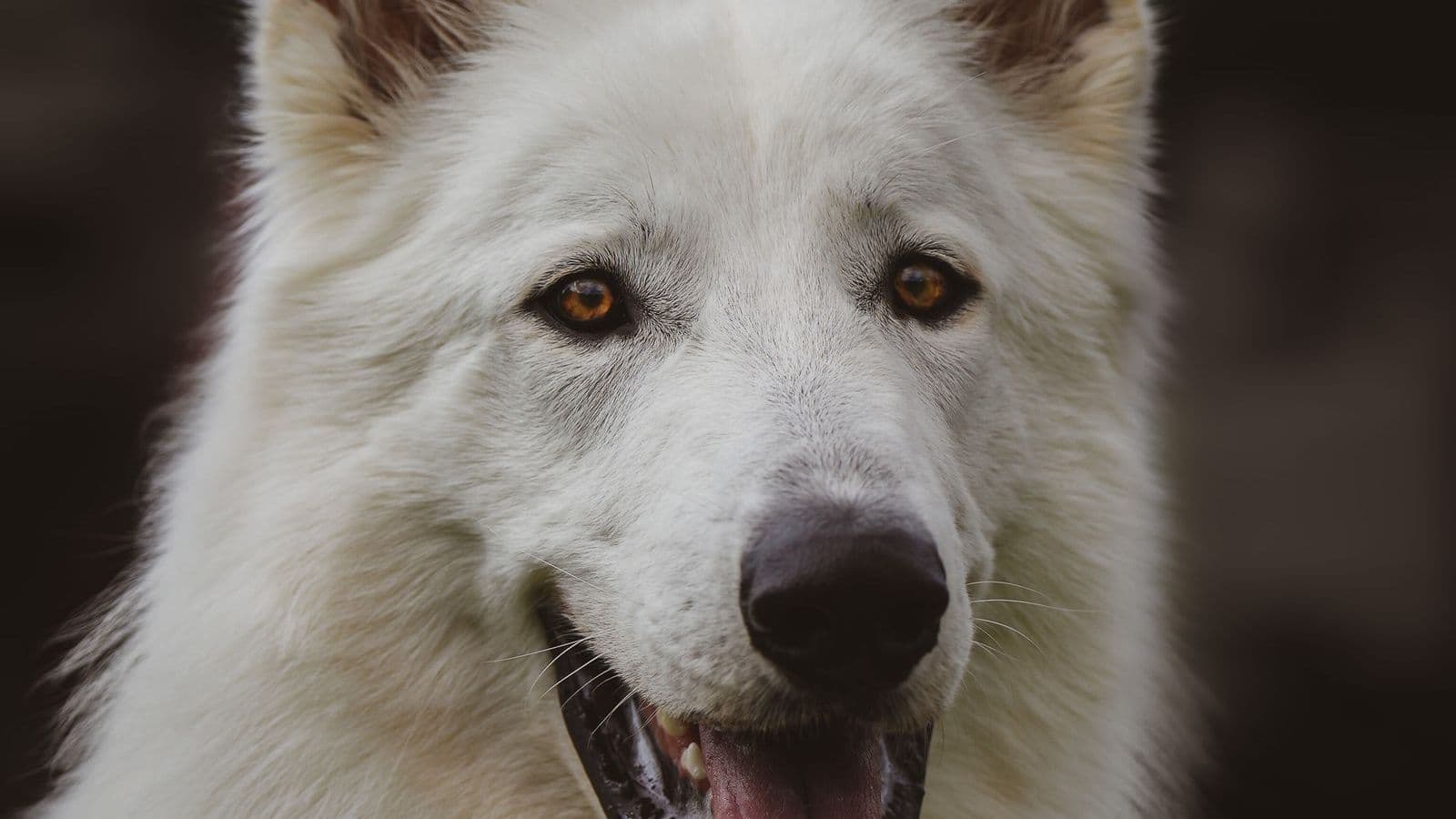
The White Swiss Shepherd (Berger Blanc Suisse) is the modern, internationally recognized version of the white German Shepherd, a dog with the same fundamental working heritage as the German Shepherd but a distinct history. White-coated German Shepherds were present from the breed's very beginnings, but the color was eventually deemed a fault and bred out of the German lines; the whites survived and flourished in North America and Switzerland, where Swiss breeders established them as a separate breed, recognized by the FCI in 2011.
The result is a dog that looks like an elegant white German Shepherd but has been bred, in recent decades, for a somewhat softer, more sensitive, more companion-oriented temperament.
Weighing 25-40 kg, the White Swiss Shepherd is a striking, athletic, intelligent herding dog with a flowing white coat and the alert, noble bearing of its German Shepherd roots. It shares the breed family's defining traits, high intelligence, a strong work ethic, deep loyalty, and a protective instinct, but tends to be more sensitive and less sharp than the working German Shepherd, often more reserved and more emotionally delicate. This is a dog of real capability and real feeling.
For an owner, the White Swiss Shepherd is a brilliant but demanding dog that needs an engaged home. Its sensitivity means it cannot absorb harsh handling, shutting down under pressure; its strong attachment makes separation anxiety a genuine risk without early independence work; its working intelligence demands daily mental and physical exercise; and its alert, sometimes reserved nature needs broad socialization to stay confident. Given gentle reward-based training, early independence conditioning, a real outlet, and thorough socialization, the White Swiss Shepherd is a devoted, capable, and beautifully responsive companion.
At a glance:
- Trainability: 9/10, highly intelligent and eager to work, learning fast with reward-based methods
- Biggest risk factor: separation anxiety from the strong attachment without early alone-time conditioning
- Pronounced sensitivity: reads its handler's mood closely and shuts down under harsh handling
- Example: a White Swiss Shepherd left without a job becomes anxious and destructive; herding or nose work channels the drive.
- Not for: owners who use pressure-based training or cannot provide daily mental and physical work
What Makes Training a White Swiss Shepherd Different
1. Pronounced sensitivity. The White Swiss Shepherd is notably more sensitive than the working German Shepherd, reading its handler's mood closely. Harsh handling or pressure produces fear and shutdown, so reward-based training is both the most effective approach and the only appropriate one.
2. Strong attachment and separation-anxiety risk. The breed bonds deeply to its family, and that attachment can become genuine separation anxiety without preparation. Early alone-time conditioning is essential.
3. A working intelligence that needs a job. This is an intelligent herding breed that needs daily mental and physical work, and a White Swiss Shepherd without an outlet becomes anxious and destructive. A real job, herding, agility, obedience, nose work, keeps it balanced.
4. An alert, sometimes reserved nature. The breed is alert and can be reserved with strangers, so broad early socialization is essential to produce a confident, well-adjusted adult rather than a fearful or reactive one.
Week-by-Week Training Plan for Your White Swiss Shepherd
Weeks 1 and 2 : Gentle Foundation and Alone-Time
Build engagement gently, socialize broadly, and start independence work. Our puppy basics guide covers the mechanics.
- Pair short, upbeat sessions with high-value food or toy rewards.
- Socialize broadly with people, dogs, surfaces, and sounds.
- Begin alone-time conditioning with very short absences from day one.
- Reward voluntary attention to build engagement.
Weeks 3 and 4 : Core Commands, Gentle and Positive
Sit, down, and stay come fast to this intelligent breed.
- Teach the core cues with reward-based methods, never pressure.
- Add complexity quickly to hold the sharp mind.
- End sessions while the dog is still keen.
Weeks 5 and 6 : Loose Leash and Recall
Install leash manners and build recall.
- Use a front-clip harness and the stop-and-stand method for loose-leash walking.
- Train recall on a long line with high-value rewards before off-leash freedom.
- Reward focus on you in stimulating environments.
Weeks 7 and 8 : Separation Work and Socialization
Deepen independence and continue socialization.
- Extend alone-time gradually toward real absences, always below distress.
- Continue structured, positive socialization with people and dogs.
- Keep departures and arrivals calm and low-key.
Weeks 9 and 10 : A Real Job
Give the working drive an outlet.
- Introduce herding, agility, obedience, or nose work.
- Build structured drive-channeling exercises.
- Reward controlled, focused work over frantic activity.
Weeks 11 and 12 : Advanced Work and Proofing
Consolidate the foundations with ongoing challenge.
- Advance the chosen sport and add skill chains.
- Proof all cues, including recall, in distracting environments.
- Establish a sustainable rhythm of exercise, work, and mental challenge.
Common White Swiss Shepherd Training Mistakes
Mistake 1 : Harsh handling. The breed is notably sensitive; corrections cause fear and shutdown. Use reward-based methods throughout.
Mistake 2 : Ignoring separation-anxiety risk. The strong bond makes alone-time conditioning essential from puppyhood.
Mistake 3 : Under-stimulation. A working dog without daily mental and physical work becomes anxious and destructive. Provide a real job.
Mistake 4 : Insufficient socialization. The sensitive, sometimes reserved temperament needs broad positive exposure to build confidence. Full breakdown : White Swiss Shepherd training mistakes.
Frequently Asked Questions
Are White Swiss Shepherds easy to train ? For an owner using reward-based methods, yes, they are highly intelligent and eager to work, learning fast and excelling at sport and obedience. The challenge is respecting the breed's sensitivity and meeting its drive and connection needs; harsh handling shuts it down, so kindness and engagement matter as much as the dog's natural ability.
How much exercise does a White Swiss Shepherd need ? Sixty to ninety minutes of vigorous activity daily, plus mental work and ideally a job. As an intelligent herding breed, it needs both physical and cognitive outlets, and an under-exercised one becomes anxious and destructive.
Are White Swiss Shepherds good family dogs ? Yes, with engaged owners, they are devoted, gentle, and protective with their families, and good with children when socialized. Their sensitivity, drive, and attachment mean they suit homes that will train kindly, exercise thoroughly, and not leave them alone for long.
Do White Swiss Shepherds get separation anxiety ? They can, if not prevented, the breed's strong attachment makes it one of the more separation-prone shepherds, which is why early alone-time conditioning is part of the core plan.
Are White Swiss Shepherds the same as white German Shepherds ? They share the same origin, white-coated German Shepherds, but the White Swiss Shepherd was established as a separate FCI breed in 2011 and has been bred in recent decades for a somewhat softer, more companion-oriented temperament than the working German Shepherd.
Are White Swiss Shepherds good with other dogs ? With early socialization, generally manageable, though the alert, sometimes reserved nature means introductions should be calm and controlled. Broad puppy socialization is key to a confident adult.
How long do White Swiss Shepherds live ? Typically twelve to fourteen years. Responsible breeders screen for hip and elbow dysplasia and the eye and digestive conditions seen in the breed, and a well-exercised, well-socialized White Swiss Shepherd stays sound and capable well into old age.
Why TailorPup Was Built for White Swiss Shepherds
A generic plan built for tougher working breeds applies pressure that a sensitive White Swiss Shepherd cannot absorb, and it treats alone-time and mental work as afterthoughts. TailorPup's White Swiss Shepherd plan is reward-based throughout, front-loads separation conditioning and socialization, and channels the working drive into a real outlet for this brilliant, sensitive breed.
Daily 12-minute training sessions plus weekly adjustments. Plans from $9.99/month, no trial; annual starts at $2 for 7 days. Cancel anytime.
Related: White Swiss Shepherd Training Mistakes · Recall Training · Puppy Training Basics