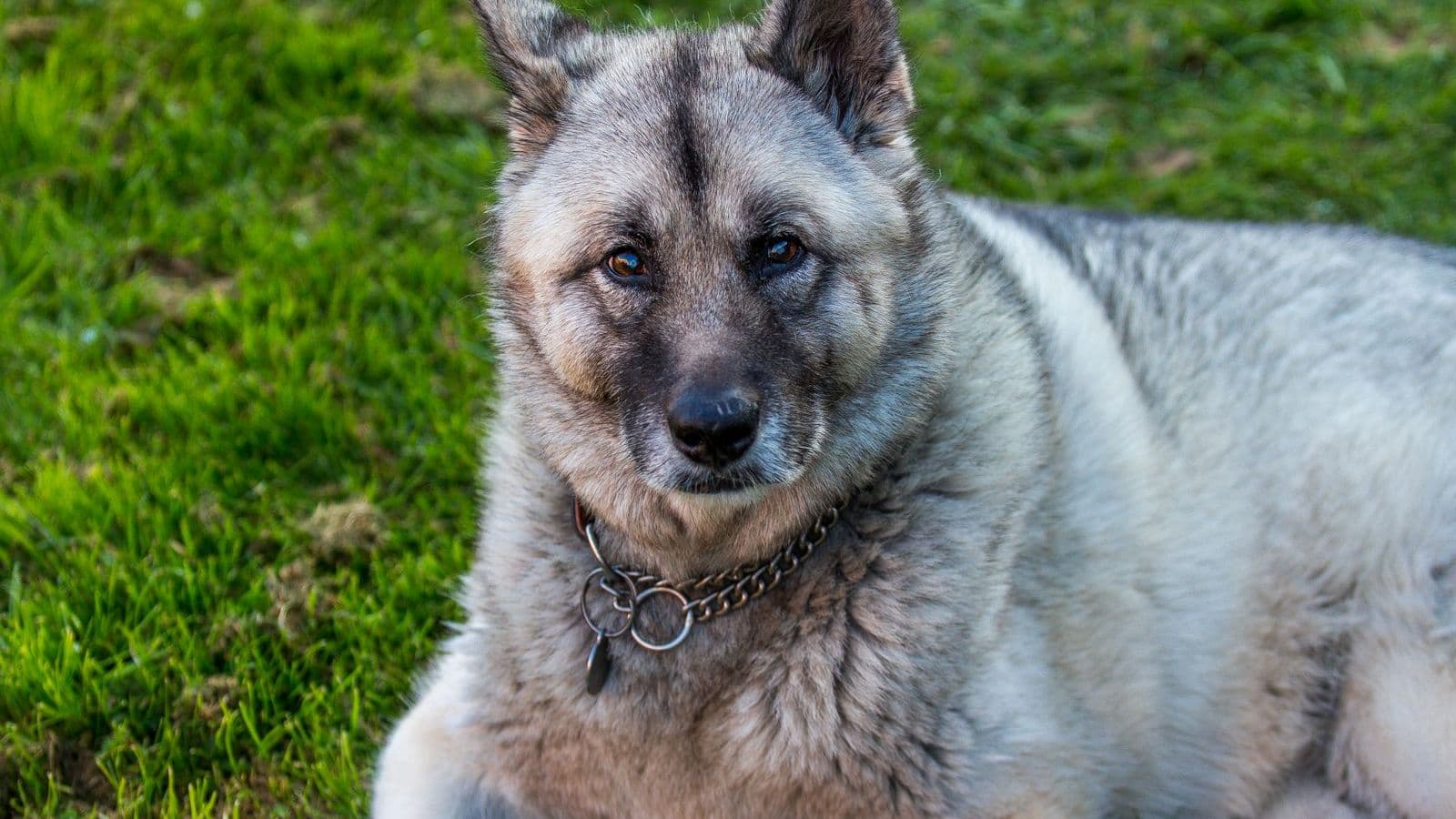
The Norwegian Elkhound is one of the most ancient breeds in Europe, a hardy gray spitz that hunted alongside the Vikings and has changed remarkably little in thousands of years. Its job was demanding and specific: track moose (called elk in Europe) and other big game across rough Scandinavian terrain, then hold the animal at bay, circling and barking continuously until the hunter arrived. Every defining trait of the breed flows from that work, and you cannot train one well without understanding it.
That heritage produced a bold, robust, independent dog with a powerful nose, a strong prey drive, and a famously loud, persistent voice. A Norwegian Elkhound is also affectionate, dignified, and devoted to its family, with a confidence that borders on stubbornness. Work with its nature, give it exercise and a job, and manage the barking from the start, and you get a loyal, characterful companion. Treat it like a soft, eager retriever and you get a vocal, willful, escape-prone dog that has decided your requests are optional.
This guide covers what works with an Elkhound, week by week, built around how an ancient, independent hunting spitz actually learns.
At a glance:
- Trainability: 6/10, food-motivated but independent, considering requests rather than obeying reflexively.
- Biggest risk factor: a loud, persistent bark, bred to bay at held game, and the breed's defining management issue.
- Prey drive: a strong nose and chase instinct that overrides recall when it engages, so off-leash freedom in open areas is risky.
- Example: an under-stimulated Elkhound left without a job will bark freely and use its voice as entertainment.
- Not for: owners who expect reflexive obedience or want a quiet dog in close quarters.
What Makes Training an Elkhound Different
Four breed traits shape your approach.
1. Independent and confident. Bred to make its own decisions in the field, the Elkhound considers requests rather than obeying reflexively. This is not stupidity; it is a thinking hunter's mind. It works best with patient, motivating, reward-based training and a handler it respects, and it will not tolerate being drilled or bullied.
2. A loud, persistent bark. This is the defining management issue. The Elkhound was bred to bay at held game for long stretches, so it is genuinely one of the more vocal breeds. You can teach a quiet cue and reduce nuisance barking substantially, but you cannot erase the instinct, and an under-stimulated Elkhound will use its voice freely.
3. A strong nose and prey drive. The breed tracks and chases on instinct, and when the nose or a fleeing animal engages, recall loses out. Off-leash freedom in open areas is risky, and secure fencing matters because the breed will roam and follow a scent.
4. Hardy, energetic, and food-motivated. This is a tough working dog that needs real daily exercise and does poorly as a couch ornament. The good news is that it is genuinely food-motivated, which gives you a reliable lever to work with against the independence.
Week-by-Week Training Plan for Your Elkhound
Below is the framework we use at TailorPup for an Elkhound-specific 12-week plan. Run it at home; the order and emphasis are the point.
Weeks 1 and 2 : Foundation and Socialization
Build engagement with high-value food and socialize broadly. Run three to four five-minute sessions a day: name, mark eye contact, reward. Begin barking awareness immediately, rewarding quiet from the start, because this is the trait you most need to get ahead of with an Elkhound.
Weeks 3 and 4 : Core Commands
Lure sit and down, mark, reward generously, and add cues once reliable. Expect a confident dog that may test whether a command is worth it, so keep rewards high and sessions short and upbeat. Train before meals when food value is highest.
Weeks 5 and 6 : Loose Leash Walking
Elkhounds pull, especially toward scents. Use stop-and-stand: stop the instant the leash tightens, advance only when it loosens, stay quiet. A front-clip harness helps. Allow scheduled sniff breaks as rewards so the nose works with you rather than against you.
Weeks 7 and 8 : Recall and Barking
Build recall on a long line in low-distraction areas, jackpot every success, and never call the dog for anything it dislikes; accept that recall will need long-line backup near game. In parallel, formalize quiet: reward calm, manage triggers, and teach a clear "quiet" cue. See our barking guide for the full protocol.
Weeks 9 and 10 : Channeling Energy and Nose Work
Give the breed a job: hiking, tracking, scent games, and structured play satisfy an Elkhound far more than a plain walk. Pair real daily exercise with nose work and mental challenges, and watch the barking and restlessness ease as the dog's needs are genuinely met.
Weeks 11 and 12 : Generalization
Prove the skills in the real world: loose-leash walking past distractions, recall in a fenced area with temptation present, quiet on cue around triggers, and calm settling. An Elkhound that listens at home but not outdoors is only partly trained, and these last two weeks close the gap as far as the breed's independence allows.
Common Elkhound Training Mistakes
Three mistakes show up repeatedly with this breed.
Mistake 1 : Ignoring the barking until it is a problem. The Elkhound's voice is genetic and persistent, and an unmanaged dog quickly becomes a serious nuisance barker. Shape and reward quiet from day one, and meet the dog's exercise needs, rather than reacting after the habit is entrenched.
Mistake 2 : Expecting reflexive obedience. Owners who treat this independent hunter like a biddable retriever grow frustrated and often resort to harshness, which backfires badly. Adjust your expectations, keep rewards high, and build a relationship the dog respects.
Mistake 3 : Trusting off-leash and weak containment. The nose and prey drive override recall, and the breed roams. Secure fencing and long lines are essential. The full list is in our Norwegian Elkhound training mistakes guide.
Frequently Asked Questions
Are Norwegian Elkhounds easy to train ? They are moderately trainable. The breed is intelligent and food-motivated, which helps, but it is also independent, confident, and vocal, so recall, quiet, and reliable obedience take patience. With motivating reward-based training and realistic expectations, they do well.
Why does my Elkhound bark so much ? Because it was bred to bay at held game for long periods, so persistent barking is genetic. You can reduce nuisance barking significantly by managing triggers, rewarding quiet, teaching a "quiet" cue, and meeting the dog's exercise needs, but expect a naturally vocal breed.
Can I let my Elkhound off-leash ? In a securely fenced area, yes. In open spaces it is risky, because the nose and prey drive override recall and the breed roams. Use a long line outdoors and rely on secure fencing.
How much exercise does a Norwegian Elkhound need ? Around 60 minutes or more of real daily activity plus mental work and nose work. This is a hardy working hound that does poorly without enough exercise and tends to bark and roam when under-stimulated.
Is the Norwegian Elkhound stubborn ? It is independent rather than truly stubborn: a hunting breed selected to think for itself. It cooperates well for motivating, reward-based training and a handler it respects, and resists pressure and repetition.
Is positive reinforcement effective for Elkhounds ? Yes, and it is the right approach. The food-motivated breed responds well to reward-based training, while harsh methods only deepen the independent streak and damage trust.
Do Norwegian Elkhounds shed a lot ? Yes, heavily. The thick double coat sheds year-round and blows out dramatically a couple of times a year. Regular brushing keeps it manageable, and the coat should not be shaved.
Why TailorPup Was Built for Norwegian Elkhounds
A generic plan ignores the things that define this breed: the independence, the powerful voice, the nose, and the prey drive. That mismatch is why standard advice frustrates Elkhound owners and leaves the barking unaddressed.
TailorPup builds a 12-week plan around your specific dog: its hunting-spitz instincts, its age, and the behaviors you are seeing. For an Elkhound that means motivating reward-based methods, a dedicated barking protocol from day one, a realistic recall timeline with long-line backup, and real exercise and nose work built into the routine.
Daily 12-minute sessions plus weekly adjustments based on your dog's progress. Plans from $9.99/month, no trial; annual starts at $2 for 7 days. Cancel anytime.
Related: Norwegian Elkhound Training Mistakes · Barking Solutions · Recall Training · Leash Pulling