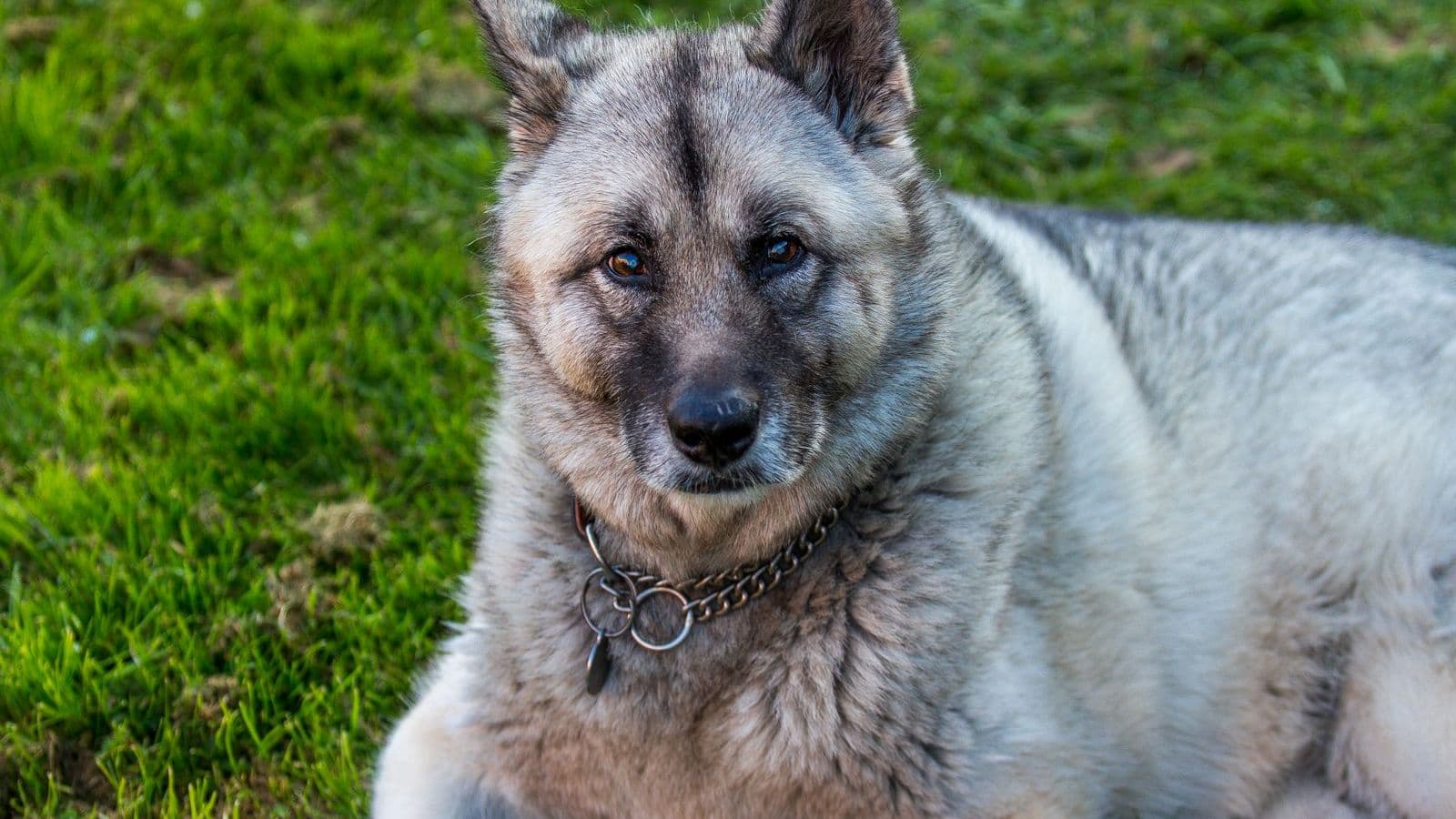
The Norwegian Elkhound is a bold, hardy, independent spitz hound bred to track and hold moose at bay, baying loudly until the hunter arrived. That ancient job left it with a strong voice, a real prey drive, a stubborn independent streak, and a powerful appetite. Most training problems come from underestimating those traits. Here are the five mistakes that cause the most trouble, and what to do instead.
1. Ignoring the barking early
The Elkhound was bred to bay at game for hours, so it is naturally and persistently vocal, and unmanaged early barking quickly becomes an entrenched habit. Owners who indulge or ignore it end up with a dog that sounds off constantly. Shape a "quiet" cue from the start, manage the triggers, and reward calm, while accepting that this is a vocal breed. Our barking guide covers realistic management.
2. Trusting it off-leash too soon
The Elkhound's hunting heritage gives it a real prey drive, and a dog that catches scent or sees game will override a half-built recall and range off. Owners who trust open ground lose the dog down a trail. Build recall patiently on a long line with high-value rewards, and treat reliable off-leash freedom as a securely fenced goal.
3. Overfeeding
The Elkhound is intensely food-motivated and gains weight very easily, and extra kilos strain its joints and shorten its life. Owners who free-feed or over-reward end up with an overweight, less healthy dog. Measure every meal, count training treats into the daily ration, and keep the Elkhound lean. The strong food drive is also your best training tool once it is managed.
4. Harsh handling
The bold, independent Elkhound resists and resents heavy-handed correction, which provokes its considerable stubbornness rather than its cooperation. Owners who try to force compliance get a more obstinate dog. Use food-based reward training and a patient, consistent approach, and the Elkhound works with you far more willingly.
5. Underestimating the exercise need
This is a hardy hunting breed that needs 60 to 90 minutes of real daily activity plus mental work, and an under-exercised Elkhound becomes destructive and even more vocal. Owners who provide only short walks fuel the very problems they want to avoid. Give it real exercise and a job for its nose, and the same dog is calmer and quieter at home.
What works with Elkhounds
Manage the barking realistically, treat off-leash as a fenced-only goal, keep the dog lean, train with food-based rewards, and meet the real exercise needs. The throughline is respecting a bold, vocal, food-driven hunting spitz: work with its nature rather than against it, and the Norwegian Elkhound is a bold, hardy, devoted companion.
TailorPup's Elkhound plan uses food-based motivation, includes a barking-management protocol, builds in weight management, and treats off-leash as a fenced-only goal.
Start your Norwegian Elkhound's plan at tailorpup.com →
Related: How to Train a Norwegian Elkhound · Barking Solutions · Recall Training