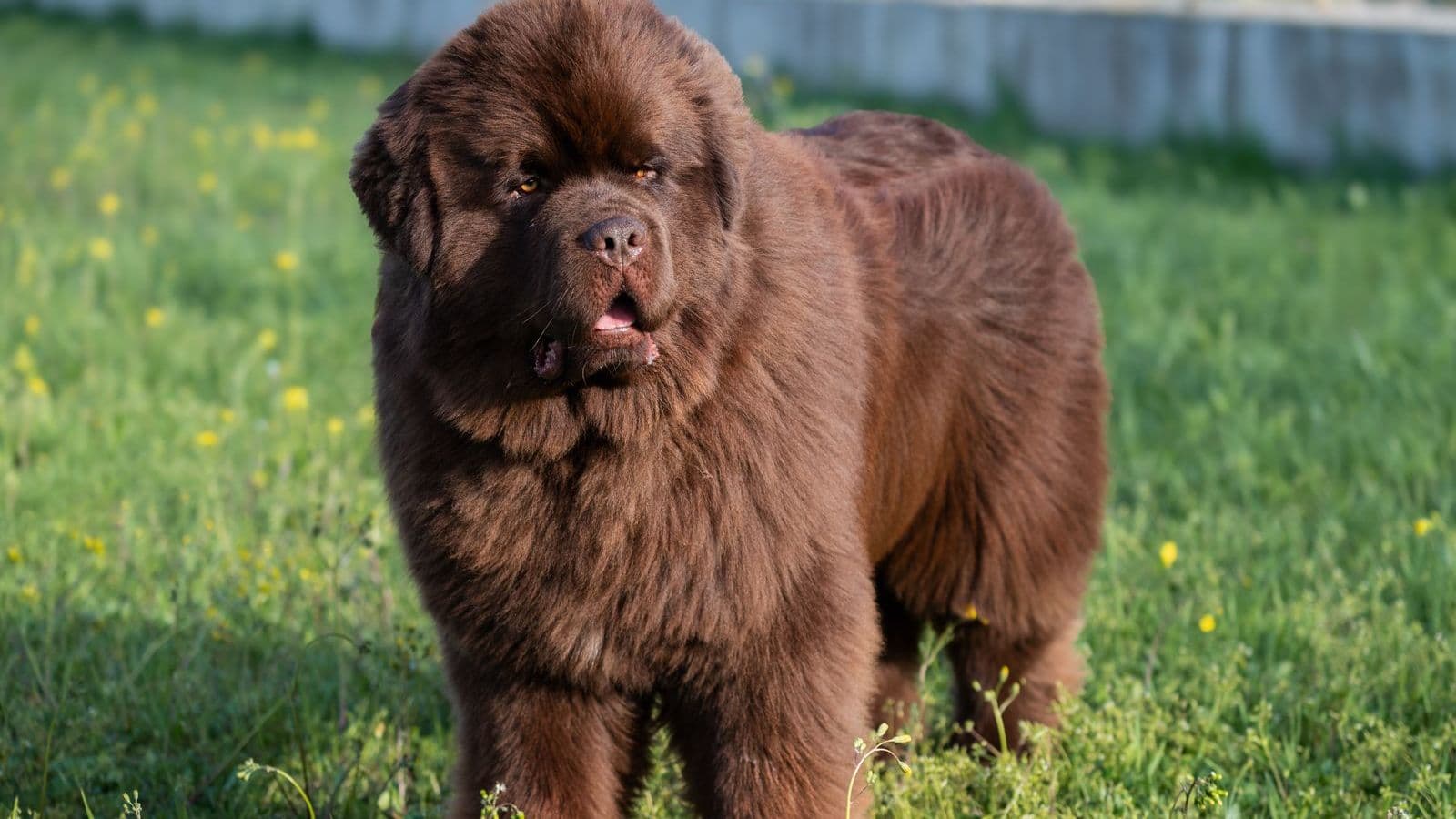
The Newfoundland is the quintessential gentle giant, a massive, sweet-natured working dog bred on the rugged coast of Canada to haul fishing nets, pull carts, and perform astonishing feats of water rescue. Famous for its calm temperament, its devotion to children, and its powerful swimming ability, the Newfie is one of the most beloved of the giant breeds. Behind the enormous, bear-like frame and the thick, water-resistant coat is one of the gentlest, most patient, and most trainable temperaments in the dog world, a dog that wants nothing more than to be near its family.
The defining factors in training a Newfoundland are its size and its sweet, sensitive nature. The breed is intelligent and genuinely eager to please, which makes obedience straightforward, but it grows enormous, so anything you allow in a fluffy puppy becomes a serious matter in a 130-pound adult. Newfies also grow slowly and are deeply sensitive, so harsh methods are both unnecessary and damaging. Install manners early while the dog is liftable, protect those slow-growing joints, lead with calm gentleness, and you get one of the most wonderful family dogs there is. Wait too long, and you get an unmanageable, if lovable, giant.
This guide covers what works with a Newfoundland, week by week, built around how a gentle, sensitive, trainable giant actually learns.
At a glance:
- Trainability: 8/10, intelligent and genuinely eager to please, among the more trainable giant breeds.
- Biggest risk factor: delaying manners while small, since jumping is overwhelming from a 130-pound adult.
- Sensitivity: the breed shuts down and grows anxious under harsh corrections.
- Example: an untrained Newfie puppy that leans on guests becomes literally overwhelming once full-grown.
- Not for: owners who can't start leash and greeting training early or manage drool and heavy grooming.
What Makes Training a Newfoundland Different
Four breed traits shape your approach.
1. Size makes manners urgent. A behavior that is cute in a 30-pound puppy, like jumping up or leaning, is overwhelming in a 130-pound adult. You have a short window to install polite greetings, loose-leash walking, and calm behavior while the dog is still manageable. This urgency, not difficulty, is the breed's central training challenge.
2. Intelligent, gentle, and eager to please. Newfies are among the more trainable giant breeds, sweet-natured and cooperative, so reward-based training is efficient and pleasant. They take well to obedience and water work, and they thrive on gentle structure and being part of the family.
3. Sensitive and soft. Behind the imposing size is a tender temperament that shuts down under harsh handling. Corrections and harshness create a worried dog, while calm, patient, reward-based training brings out the breed's willing, devoted best.
4. Slow-growing joints and a love of water. Giant breeds grow for a long time, so high-impact exercise and jumping should be limited until the dog matures, to protect the joints. Swimming, which the breed adores and excels at, is ideal low-impact exercise. The heavy coat also needs regular grooming, and the breed drools.
Week-by-Week Training Plan for Your Newfoundland
Below is the framework we use at TailorPup for a Newfie-specific 12-week plan. Run it at home; the order and emphasis are the point.
Weeks 1 and 2 : Foundation and Socialization
Build engagement with high-value rewards and socialize broadly while the puppy is small and impressionable. Run three to four five-minute sessions a day: name, mark eye contact, reward. Introduce calm handling and grooming early, because a giant dog must accept being touched, brushed, and examined. Our puppy basics guide covers the foundations.
Weeks 3 and 4 : Core Commands
Newfies learn well. Lure sit and down, mark, reward, and add cues once reliable. Prioritize a solid settle and a reliable, calm greeting, since these are the manners that matter most in a future giant. Keep sessions gentle and upbeat.
Weeks 5 and 6 : Loose Leash Walking (While It Is Easy)
This is critical. Teach loose-leash walking now, while you can still physically manage the dog, because a pulling adult Newfoundland is genuinely hard to hold. Use stop-and-stand: stop the instant the leash tightens, advance only when it loosens. A front-clip harness helps, and keep walks low-impact to protect joints.
Weeks 7 and 8 : Recall and Greetings
Build recall on a long line, paying every success generously, and never call the dog for anything it dislikes. Work hard on greetings: reward four-on-the-floor and calm approaches, and never let anyone encourage jumping, because the behavior that is sweet now will overwhelm people later.
Weeks 9 and 10 : Water Work and Joint Care
Channel the breed's heritage into swimming, which it loves and which is ideal low-impact exercise for a growing giant, along with gentle draft work and trick training for the mind. Keep land exercise low-impact, favoring flat walks over jumping and hard running until the dog matures.
Weeks 11 and 12 : Generalization
Prove the skills in the real world: loose-leash walking past distractions, recall in a fenced area, calm greetings with visitors, and settling in busier places. A Newfie that is polite at home but not in public is only partly trained, and these last two weeks lock in the manners that keep a giant welcome everywhere.
Common Newfoundland Training Mistakes
Three mistakes show up repeatedly with this breed.
Mistake 1 : Delaying manners because the puppy is sweet. The honeymoon ends fast in a giant breed. Owners who postpone leash and greeting training because the puppy is gentle find themselves with a 130-pound dog that never learned the rules. Start while the dog is small.
Mistake 2 : Over-exercising a growing giant. Hard running, jumping, and stairs stress immature joints and can cause lasting damage. Keep land exercise low-impact and moderate until the dog matures, and lean on swimming, which is gentle on the joints.
Mistake 3 : Using harsh handling. The Newfoundland is soft and sensitive, and corrections create anxiety rather than obedience. Keep everything gentle and reward-based. The full list is in our Newfoundland training mistakes guide.
Frequently Asked Questions
Are Newfoundlands easy to train ? Yes, for a giant breed. They are intelligent, gentle, and eager to please, so reward-based training is efficient and pleasant. The real challenge is the urgency created by their size: install manners early, while the dog is still manageable.
How much exercise does a Newfoundland need ? Moderate: around 45 to 60 minutes of daily activity, kept low-impact while the dog is growing. Swimming is ideal and beloved. Avoid hard running, jumping, and stairs until the joints mature, usually around 18 to 24 months.
When should I start training my Newfoundland ? The day you bring the puppy home. Manners like loose-leash walking and polite greetings are far easier to teach at 30 pounds than at 130, so early training is essential rather than optional with a giant breed.
Are Newfoundlands good family dogs ? Exceptionally. They are gentle, patient, and famously devoted to children, which is much of their appeal. They do need their size managed through early training, regular grooming, and tolerance for some drool, and they should be included in family life.
Do Newfoundlands drool a lot ? Yes, the breed is a notable drooler, along with shedding heavily and needing regular grooming of its thick double coat. These are real parts of owning a Newfie, and building handling tolerance early helps with grooming.
Is positive reinforcement effective for Newfoundlands ? It is ideal. The sensitive, willing breed thrives on gentle, reward-based training and shuts down under harshness, which is both unnecessary and counterproductive with such a cooperative dog.
Do Newfoundlands really do water rescue ? Yes, it is a genuine part of the breed's heritage and ability. They are powerful swimmers with webbed feet, and many enjoy and excel at water work, which also makes wonderful low-impact exercise and enrichment.
Why TailorPup Was Built for Newfoundlands
A generic plan ignores what really matters with a giant breed: the urgency of early manners, the need for joint protection, the slow maturity, and the breed's sensitivity. That mismatch is why standard advice leaves owners with an unmanageable adult or an anxious dog.
TailorPup builds a 12-week plan around your specific dog: its gentle-giant working nature, its age, and the behaviors you are seeing. For a Newfoundland that means front-loaded manners and leash work while the dog is small, gentle reward-based methods, low-impact and water-based exercise to protect joints, and early socialization.
Daily 12-minute sessions plus weekly adjustments based on your dog's progress. Plans from $9.99/month, no trial; annual starts at $2 for 7 days. Cancel anytime.
Related: Newfoundland Training Mistakes · Recall Training · Leash Pulling · Puppy Training Basics