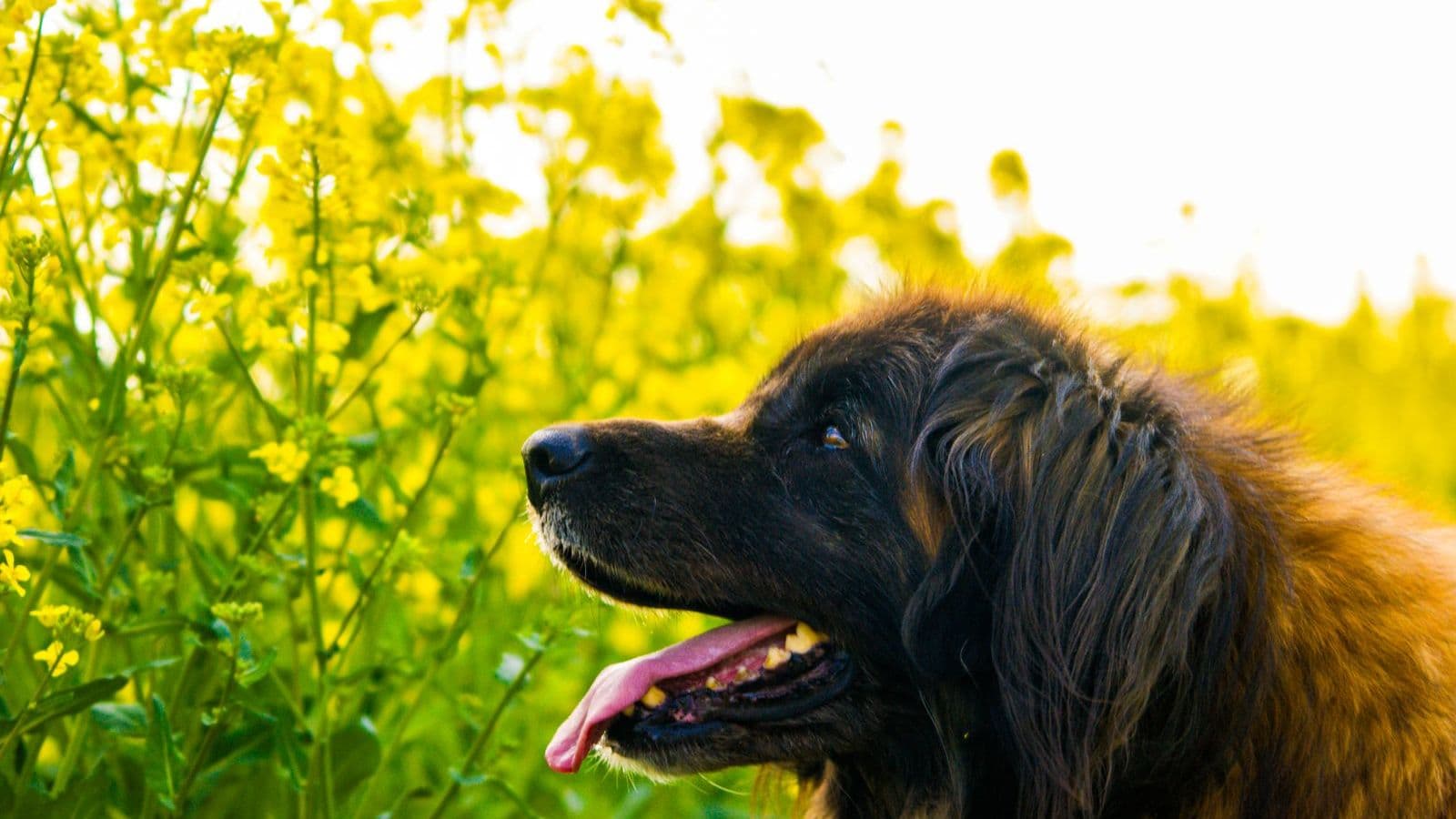
The Leonberger is a magnificent gentle giant, a German working breed created in the town of Leonberg to resemble a lion, with the Newfoundland, the Saint Bernard, and the Great Pyrenees in its background. The result is a calm, dignified, deeply devoted dog that can weigh well over 100 pounds, with a lush double coat and a famously sweet temperament. Leonbergers have worked as draft dogs, water rescuers, and farm companions, and that versatile, cooperative history shows in how trainable and people-oriented they are.
The defining factor in training one is simple: size combined with sensitivity. A Leonberger is intelligent and willing, which makes obedience straightforward, but it grows into an enormous dog, and anything you allow in a fluffy puppy becomes a serious problem in a giant adult. At the same time, the breed is soft and bonds closely, so harsh methods are both unnecessary and damaging. Train the manners early while the dog is still liftable, protect those growing joints, and lead with gentle consistency, and you get one of the most wonderful family dogs there is. Wait too long or rely on force, and you get an unmanageable giant.
This guide covers what works with a Leonberger, week by week, built around how a sensitive, intelligent giant breed actually learns.
At a glance:
- Trainability: 8/10, intelligent and genuinely willing to work with its people.
- Biggest risk factor: delaying manners while the puppy is small, since a 130-pound adult can't unlearn jumping easily.
- Sensitivity: soft temperament means harsh corrections produce a worried, shut-down dog.
- Example: an untrained Leonberger puppy that's allowed to lean and jump becomes a dangerous adult without early manners work.
- Not for: owners who can't protect growing joints or start leash and greeting training early.
What Makes Training a Leonberger Different
Four breed traits shape your approach.
1. Size makes manners urgent. A behavior that is cute in a 20-pound puppy, like jumping up or leaning, is dangerous in a 130-pound adult. You have a short window to install polite greetings, loose-leash walking, and calm behavior while the dog is still small enough to manage. This urgency, not difficulty, is the breed's central training challenge.
2. Intelligent and genuinely willing. Leonbergers are smart, cooperative, and eager to work with their people, so reward-based training is efficient and pleasant. They take well to obedience and to having a job, and they appreciate gentle structure.
3. Sensitive and soft. Behind the imposing size is a tender temperament. Harsh corrections, yelling, or heavy-handed methods produce a worried, shut-down dog. The breed responds best to calm, patient, reward-based handling, and it does poorly when isolated from its family.
4. Slow-growing joints that need protecting. Giant breeds grow for a long time, and their joints and growth plates are vulnerable. High-impact exercise, jumping, and stairs should be limited until the dog matures, usually around 18 to 24 months, to protect long-term soundness.
Week-by-Week Training Plan for Your Leonberger
Below is the framework we use at TailorPup for a Leonberger-specific 12-week plan. Run it at home; the order and emphasis are the point.
Weeks 1 and 2 : Foundation and Socialization
Build engagement with high-value rewards and socialize broadly while the puppy is small and impressionable. Run three to four five-minute sessions a day: name, mark eye contact, reward. Introduce calm handling and grooming early, because a giant dog must accept being touched, brushed, and examined. Our puppy basics guide covers the foundations.
Weeks 3 and 4 : Core Commands
Leonbergers learn well. Lure sit and down, mark, reward, and add cues once reliable. Prioritize a solid settle and a reliable greeting position, since these are the manners that matter most in a future giant. Keep sessions gentle and upbeat.
Weeks 5 and 6 : Loose Leash Walking (While It Is Easy)
This is critical. Teach loose-leash walking now, while you can still physically manage the dog, because a pulling adult Leonberger is genuinely hard to hold. Use stop-and-stand: stop the instant the leash tightens, advance only when it loosens. A front-clip harness helps. Practice daily so it is rock-solid before the growth spurts.
Weeks 7 and 8 : Recall and Greetings
Build recall on a long line, paying every success generously, and never call the dog for anything it dislikes. Work hard on greetings: reward four-on-the-floor and calm approaches, and never let anyone encourage jumping, because the behavior that is charming now will knock people over later.
Weeks 9 and 10 : Calm, Job, and Joint Care
Channel the breed's cooperative nature into a gentle job: cart or draft work suited to its build, scent games, and trick training all fit. Keep exercise moderate and low-impact to protect growing joints, favoring swimming and flat walks over jumping and hard running until the dog matures.
Weeks 11 and 12 : Generalization
Prove the skills in the real world: loose-leash walking past distractions, recall in a fenced area, calm greetings with visitors, and settling in busier places. A Leonberger that is polite at home but not in public is only partly trained, and these last two weeks lock in the manners that keep a giant dog welcome everywhere.
Common Leonberger Training Mistakes
Three mistakes show up repeatedly with this breed.
Mistake 1 : Delaying manners because the puppy is sweet. The honeymoon ends fast in a giant breed. Owners who postpone leash and greeting training because the puppy is gentle find themselves with a hundred-pound dog that never learned the rules. Start while the dog is small.
Mistake 2 : Over-exercising a growing giant. Hard running, jumping, and stairs stress immature joints and can cause lasting damage. Keep exercise low-impact and moderate until the dog is mature, and let the body grow before you ask it to work hard.
Mistake 3 : Using harsh handling. The Leonberger is soft and sensitive, and corrections create anxiety rather than obedience. Keep everything gentle and reward-based. The full list is in our Leonberger training mistakes guide.
Frequently Asked Questions
Are Leonbergers easy to train ? Yes, for a giant breed. They are intelligent, cooperative, and eager to please, so reward-based training is efficient. The real challenge is the urgency created by their size: you must install manners early, while the dog is still manageable.
How much exercise does a Leonberger need ? Moderate: around 45 to 60 minutes of daily activity, kept low-impact while the dog is growing. Swimming and flat walks are ideal. Avoid hard running, jumping, and stairs until the joints mature, usually around 18 to 24 months.
When should I start training my Leonberger ? The day you bring the puppy home. Manners like loose-leash walking and polite greetings are far easier to teach at 20 pounds than at 120, so early training is essential rather than optional with a giant breed.
Are Leonbergers good family dogs ? Excellent ones. They are calm, gentle, devoted, and famously good with children, which is much of their appeal. They do need their size managed through early training and should not be left isolated from their family.
Do Leonbergers need a lot of grooming ? Yes. The lush double coat sheds heavily and needs regular, thorough brushing to prevent matting. Building grooming tolerance early, through positive handling, is an important part of training the breed.
Is positive reinforcement effective for Leonbergers ? It is ideal. The sensitive, willing breed thrives on gentle, reward-based training and shuts down under harshness, which is both unnecessary and counterproductive with such a cooperative dog.
How big do Leonbergers get, and does that affect training ? Males often exceed 110 to 130 pounds. That size is the reason early manners are so important: there is little room for error with a dog this powerful, so polite leash behavior and greetings must be solid before the dog reaches full size.
Why TailorPup Was Built for Leonbergers
A generic plan ignores what really matters with a giant breed: the urgency of early manners, the need for joint protection, and the breed's softness. That mismatch is why standard advice leaves owners with an unmanageable adult or an anxious dog.
TailorPup builds a 12-week plan around your specific dog: its giant-breed needs, its age, and the behaviors you are seeing. For a Leonberger that means front-loaded manners and leash work while the dog is small, gentle reward-based methods, low-impact exercise planning to protect joints, and early socialization.
Daily 12-minute sessions plus weekly adjustments based on your dog's progress. Plans from $9.99/month, no trial; annual starts at $2 for 7 days. Cancel anytime.
Related: Leonberger Training Mistakes · Recall Training · Leash Pulling · Puppy Training Basics