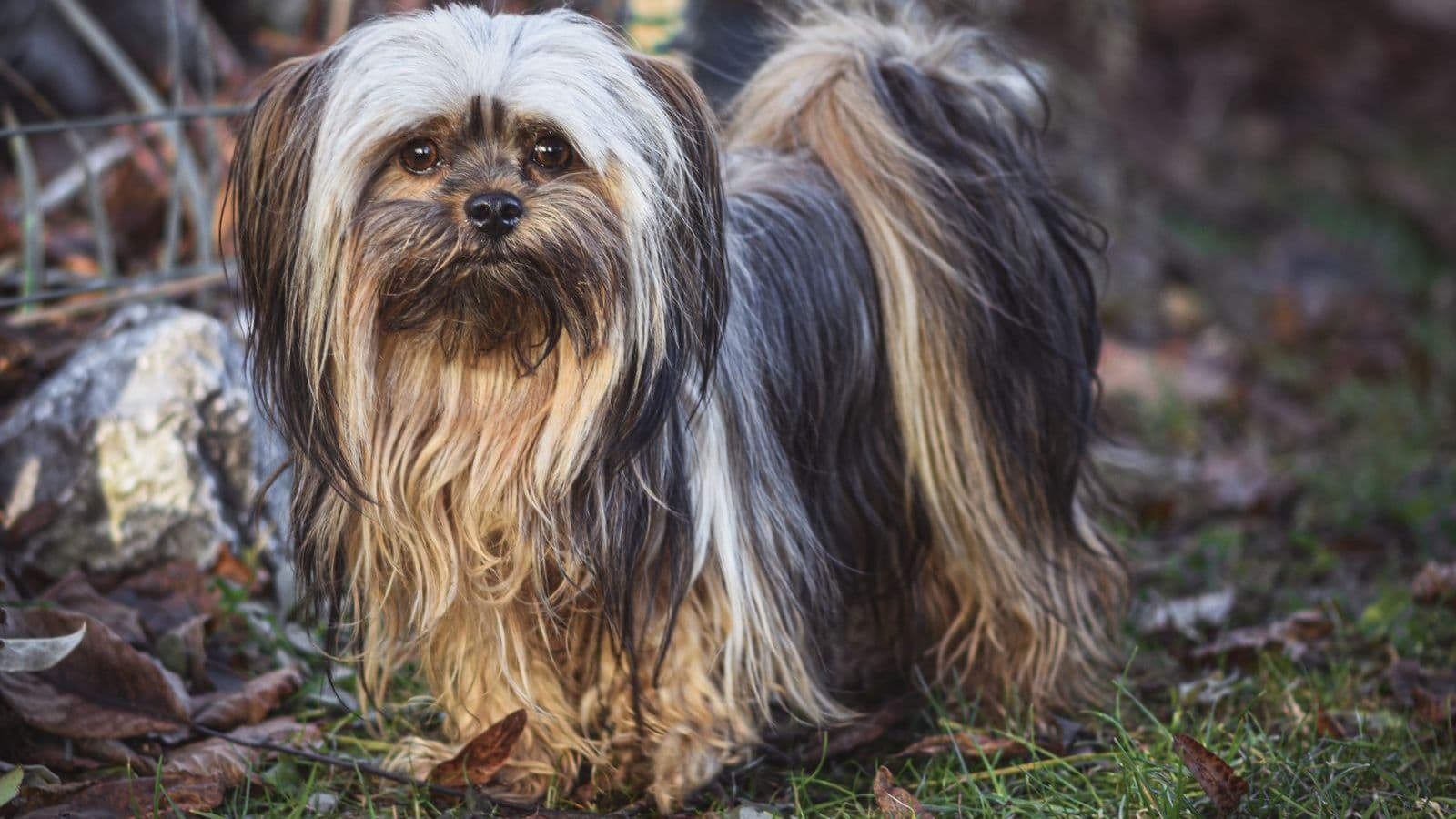
The Lhasa Apso is an ancient Tibetan breed that served for over a thousand years as a sentinel inside the monasteries and palaces of the Himalayas, alerting the monks to anything amiss while the larger Tibetan Mastiffs guarded the gates. That job as an indoor watchdog shaped the breed completely: small in body but big in attitude, the Lhasa is confident, dignified, independent, and naturally watchful, with a surprisingly deep and serious bark for its size. It is devoted and affectionate with its own people while remaining aloof and discerning with strangers, every bit the self-assured little sentinel its history made it.
That independent, watchdog temperament is the key to training one. The Lhasa is intelligent but very much its own dog, bred to make its own judgments, so it is not an eager-to-please breed and has a famously stubborn streak. It alerts readily, can be slow to house-train, and is reserved with strangers, yet it is sensitive enough that harsh handling backfires. The recipe that works is gentle, patient, genuinely rewarding training, consistent house-training, early socialization, and early barking management. Respect the Lhasa's dignity and you earn its cooperation; try to force it, and it simply digs in.
This guide covers what works with a Lhasa Apso, week by week, built around how a confident, independent watchdog breed actually learns.
At a glance:
- Trainability: 5/10, independent and confident, not an eager-to-please breed
- Biggest quirk: a serious watchdog bark, alerting was the breed's entire original job
- House-training note: small bladder plus independence often means a slower timeline
- Example: a Lhasa asked to repeat a known command often just sits and stares back, that's dignity, not defiance
- Not for: owners expecting an eager-to-please companion or quick house-training
What Makes Training a Lhasa Apso Different
Four breed traits shape your approach.
1. Independent and confident. The Lhasa was bred to assess situations and sound the alarm on its own, so it has real self-assurance and a stubborn streak. It cooperates for training that is short, varied, and genuinely worth its while, and it ignores repetitive drilling. Make sessions a rewarding game, not a list of commands.
2. A serious watchdog bark. Alerting was the Lhasa's entire job, so it is naturally vocal and quick to announce anything new. Without early, consistent quiet-shaping, this becomes entrenched nuisance barking. Managing it from the start is one of the most important parts of training the breed.
3. Reserved with strangers. The sentinel heritage makes the Lhasa naturally aloof with outsiders while devoted to family. Thorough, positive socialization keeps that reserve stable and confident rather than fearful or reactive. Never force the dog into stranger interactions.
4. Sensitive and slow to house-train. Beneath the bold attitude is a sensitive dog that shuts down under harshness, and like many small breeds it can be slow to house-train. Patient, consistent, reward-based methods are what work for both temperament and toilet training.
Week-by-Week Training Plan for Your Lhasa Apso
Below is the framework we use at TailorPup for a Lhasa-specific 12-week plan. Run it at home; the order and emphasis are the point.
Weeks 1 and 2 : Foundation, Socialization, and House-Training
Build engagement with high-value rewards and socialize broadly so the Lhasa's reserve stays confident. Run three to four short sessions a day: name, mark eye contact, reward. Start house-training on a strict, patient schedule, and begin barking awareness immediately, rewarding quiet. Our puppy basics guide covers the foundations.
Weeks 3 and 4 : Core Commands
Lure sit and down, mark, reward, and add cues once reliable, expecting an independent learner who needs a real reason to comply. Keep sessions short, varied, and game-like, never repetitive, and end on a success so this proud little dog stays willing.
Weeks 5 and 6 : Leash Work and Handling
Use a light harness and stop-and-stand for any pulling. Build tolerance for grooming and handling, pairing touch with treats, since the long coat needs regular care. Patience matters; a planted Lhasa responds to motivation and waiting, not to dragging.
Weeks 7 and 8 : Barking and Recall
Formalize the quiet work, a breed priority: reward calm at windows and the door, manage triggers, and teach a clear "quiet" cue rather than reacting to the barking. Build recall indoors and in fenced areas, paying every success well. See our barking guide for the full protocol.
Weeks 9 and 10 : Confidence and Light Mental Work
Keep socializing to keep the Lhasa's reserve confident, rewarding calm responses to strangers rather than forcing greetings. Channel the breed's intelligence with gentle trick training and food puzzles, which suit a thoughtful, independent dog far better than drilling.
Weeks 11 and 12 : Generalization
Prove the skills in the real world: calm leash walking past distractions, reliable house-training habits, quiet on cue, and settled, confident responses to visitors. These last two weeks are about consistency and proofing the house-training, quiet, and confidence rather than new skills.
Common Lhasa Apso Training Mistakes
Three mistakes show up repeatedly with this breed.
Mistake 1 : Trying to force a stubborn, independent dog. Drilling, dragging, or escalating to corrections makes a Lhasa dig in and damages trust. The breed responds to patience, motivation, and short rewarding sessions, never to force.
Mistake 2 : Ignoring the barking early. The watchdog voice becomes a serious, entrenched habit if unmanaged. Shape and reward quiet from day one, manage triggers, and meet the dog's needs, rather than reacting after the barking is established.
Mistake 3 : Using harsh handling or rushing house-training. The Lhasa is sensitive under its bold attitude and can be slow to house-train, and harshness backfires on both fronts. Keep everything calm, patient, and reward-based. The full list is in our Lhasa Apso training mistakes guide.
Frequently Asked Questions
Are Lhasa Apsos easy to train ? They are among the more challenging small breeds, being independent and stubborn. They are intelligent, but they need short, varied, genuinely rewarding training to win their cooperation, and force never works. House-training and barking take the most patience.
Why does my Lhasa Apso bark so much ? Because it was bred as an indoor watchdog, so alerting is instinct. You can substantially reduce nuisance barking by managing triggers, rewarding quiet, teaching a "quiet" cue, and starting early, but expect a naturally alert, vocal breed.
Why is house-training my Lhasa so hard ? The breed has a small bladder and an independent streak, so progress can be slow. A strict schedule, frequent opportunities, and patient reward-based methods, without scolding, are what get you there. Many Lhasas take longer than larger breeds.
How much exercise does a Lhasa Apso need ? Relatively little: short daily walks and indoor play are usually enough. The breed is low-energy and adaptable, well suited to apartments, though it still benefits from gentle engagement and mental work.
Is positive reinforcement effective for Lhasa Apsos ? It is the only approach that works well. The sensitive, independent breed shuts down or digs in under harshness, while patient, motivating, reward-based training earns its cooperation.
Do Lhasa Apsos need a lot of grooming ? Yes, if kept in the long coat, which needs frequent brushing to prevent matting; many owners opt for a shorter "puppy cut" for easier care. Building grooming tolerance early is worthwhile either way.
Are Lhasa Apsos good family dogs ? Yes, for families who appreciate an independent character dog. They are devoted to their own people, dignified, and sturdy for their size, though aloof with strangers and not especially tolerant of rough handling, so they suit respectful, older children best.
Why TailorPup Was Built for Lhasa Apsos
A generic plan ignores what defines this breed: the independence, the watchdog bark, the slow house-training, and the sensitivity under the bold attitude. That mismatch is why standard, drill-based advice runs straight into the Lhasa's famous stubbornness.
TailorPup builds a 12-week plan around your specific dog: its watchdog nature, its age, and the behaviors you are seeing. For a Lhasa that means short, motivating, reward-based sessions, patience instead of force, a patient house-training schedule, an early barking protocol, and socialization to keep its reserve confident.
Daily 12-minute sessions plus weekly adjustments based on your dog's progress. Plans from $9.99/month, no trial; annual starts at $2 for 7 days. Cancel anytime.
Related: Lhasa Apso Training Mistakes · Barking Solutions · Recall Training · Puppy Training Basics