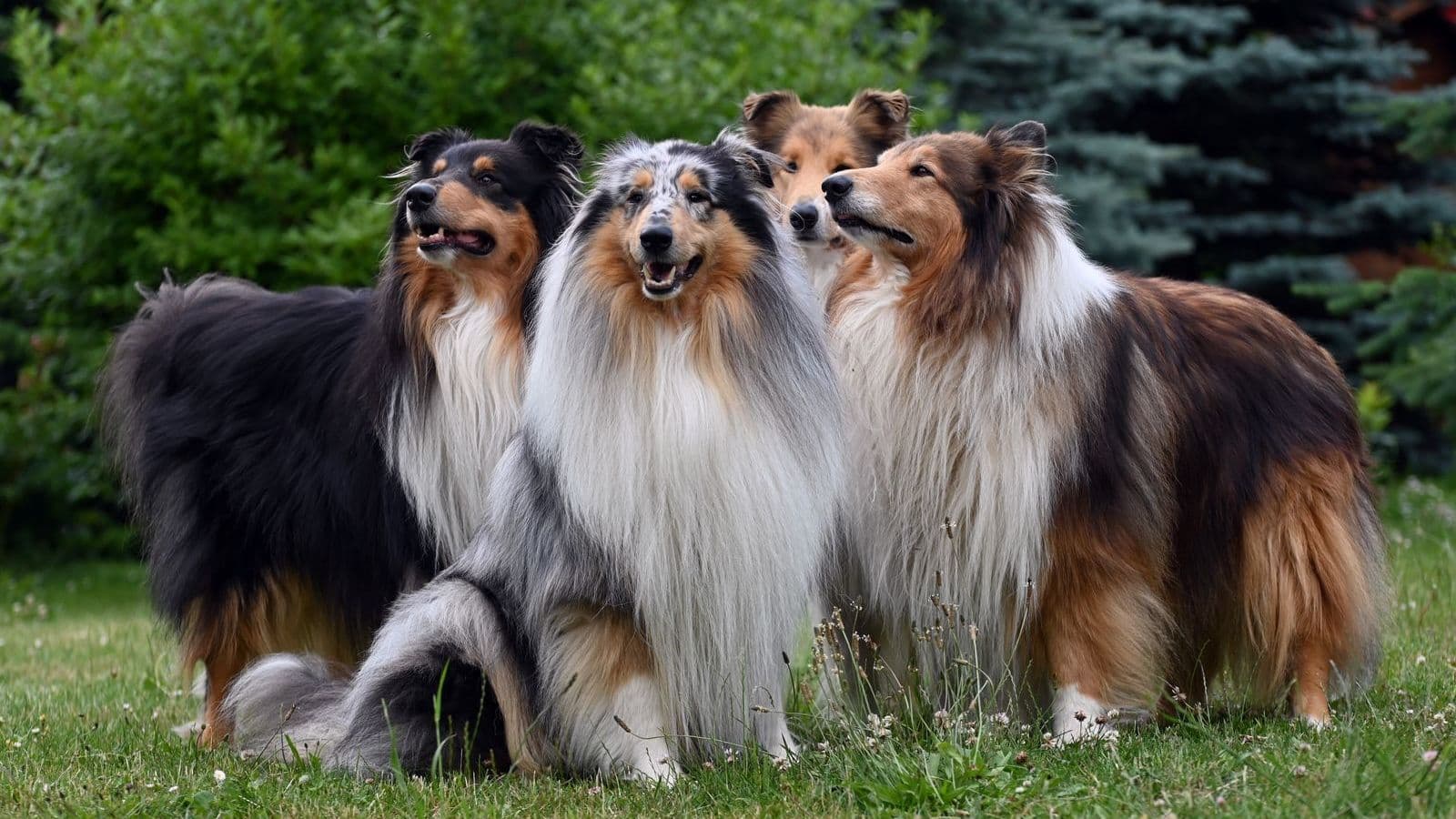
The Collie is the gentle, graceful herding breed immortalized by Lassie, a Scottish sheepdog famous for its beauty, its intelligence, and above all its sweet, devoted temperament. Whether in the long-coated Rough variety or the short-coated Smooth, the Collie was bred to herd and guard flocks in the Scottish hills, and that heritage produced a sensitive, watchful, brilliant dog that bonds deeply with its family and is exceptionally good with children. It is one of the most biddable and gentle of all the herding breeds, and a wonderful family companion for an owner who meets its real needs.
That gentle, brilliant, sensitive nature is the key to training one. The Collie is highly intelligent and eager to please, so it learns quickly and reward-based training is a genuine pleasure, one of the easiest of the herding breeds to train well. The things to plan around are its sensitivity, which means harshness backfires, a strong tendency to bark, and a herding drive that can show up around movement, along with real exercise and mental needs. Keep training gentle, manage the barking early, channel the herding drive, and meet the energy need, and you get a devoted, well-mannered, delightful companion.
This guide covers what works with a Collie, week by week, built around how a gentle, brilliant herding breed actually learns.
At a glance:
- Trainability: 9/10, one of the most biddable herding breeds, learns very fast
- Biggest risk factor: harsh handling, this sensitive breed shuts down under corrections
- Vocal habit: watchful and readily barks at movement, sounds, and excitement
- Example: a Collie scolded for barking often barks more from anxiety, gentle redirection works far better than corrections
- Not for: owners who won't commit to early, consistent quiet-shaping
What Makes Training a Collie Different
Four breed traits shape your approach.
1. Brilliant and eager to please. The Collie is highly intelligent and genuinely wants to work with its person, which makes reward-based training fast and easy, among the most trainable of the herding breeds. This clever mind also needs real mental work, or it gets bored.
2. Sensitive and gentle. This is a soft, emotionally attuned breed that reads your mood closely and wilts under harshness. Corrections and harsh tones create a worried, shut-down dog, while gentle, upbeat, reward-based training brings out its willing, devoted best.
3. A strong tendency to bark. Collies are watchful and vocal, and they readily bark at movement, sounds, and excitement, sometimes a lot. Early, consistent quiet-shaping is one of the most important parts of training the breed.
4. A herding drive and real energy. The breed may chase or try to gather movement, including running children and cyclists, and it needs daily exercise plus mental work. Channel the herding instinct with an outlet and an interrupter, and keep the clever, energetic dog engaged.
Week-by-Week Training Plan for Your Collie
Below is the framework we use at TailorPup for a Collie-specific 12-week plan. Run it at home; the order and emphasis are the point.
Weeks 1 and 2 : Foundation, Socialization, and Quiet
Engagement is easy with this brilliant, eager breed. Run three to four five-minute sessions a day with high-value rewards, socialize broadly, and begin barking awareness immediately, rewarding quiet and calm, because getting ahead of the vocal tendency is key. Keep the tone gentle throughout.
Weeks 3 and 4 : Core Commands and Tricks
Collies learn very fast. Lure sit, down, and stay, mark, and reward, adding cues once reliable, then add tricks and name games to give this clever breed the mental work it craves. The more it learns, the happier and calmer it is.
Weeks 5 and 6 : Leash Work and Herding Redirection
Use stop-and-stand for pulling and a harness. Work on redirecting the herding response: reward your Collie for noticing movement and looking back at you, building a calm default around running children and bikes, and begin gentle counter-conditioning if it reacts. Our reactivity guide lays out the method.
Weeks 7 and 8 : Barking and Recall
Formalize the quiet work, a breed priority: reward calm at windows and the door, manage triggers, and teach a clear "quiet" cue rather than reacting to the barking. Build recall on a long line, paying every success well, since the herding drive can pull the dog toward movement. See our barking guide for the full protocol.
Weeks 9 and 10 : Channeling Energy
Give the herding brain a job: herding, agility, obedience, fetch, scent work, and trick chains all suit this brilliant breed, alongside daily exercise. A Collie with real physical and mental work is a calm, settled, quiet dog. This is where meeting the breed's needs reduces the barking and restlessness.
Weeks 11 and 12 : Generalization
Prove the skills in the real world: loose-leash walking past distractions, recall in a fenced area with temptation present, quiet on cue around triggers, and calm responses to movement. The biddable Collie usually generalizes well, so these two weeks are about consistency and proofing the quiet, recall, and herding redirection.
Common Collie Training Mistakes
Three mistakes show up repeatedly with this breed.
Mistake 1 : Using harsh handling. This is the cardinal error with such a sensitive breed. The Collie shuts down and grows anxious under corrections, raised voices, or pressure. Keep every session gentle and reward-based; it is the only approach that brings out this breed's willing, devoted nature.
Mistake 2 : Ignoring the barking early. The watchful, vocal Collie becomes a serious nuisance barker if the habit is allowed to form. Shape and reward quiet from day one, manage triggers, and meet the dog's exercise needs, rather than reacting later.
Mistake 3 : Underestimating the exercise and mental needs. A bored, under-exercised Collie barks more, herds the family, and becomes restless. Provide daily exercise plus real mental work for this brilliant breed. The full list is in our Collie training mistakes guide.
Frequently Asked Questions
Are Collies easy to train ? Yes, very. The breed is highly intelligent and eager to please, so reward-based training is fast and enjoyable, and Collies are among the most trainable herding dogs. The main challenges are managing the barking and the herding drive and respecting the sensitivity, not the learning itself.
Why does my Collie bark so much ? Because the breed is watchful and naturally vocal, and boredom makes it worse. You can substantially reduce nuisance barking by managing triggers, rewarding quiet, teaching a "quiet" cue, and meeting the dog's exercise and mental needs, but expect a communicative breed.
How much exercise does a Collie need ? Around an hour of activity daily plus mental work. The breed is a herding dog with real energy, and under-exercised Collies bark more, herd the family, and become restless. Walks, herding games, agility, and play all help.
Are Collies good with children ? Famously so. The breed is gentle, patient, and devoted, and exceptionally good with children, which is much of its enduring appeal, embodied by Lassie. The herding drive means you should manage any chasing or nipping at running kids.
Is positive reinforcement effective for Collies ? It is essential. The sensitive, eager, brilliant breed thrives on gentle reward-based training and shuts down under harshness, which is both unnecessary and counterproductive with such a willing dog.
Do Collies need a lot of grooming ? The Rough Collie's long coat needs regular, thorough brushing to prevent matting, while the Smooth Collie's short coat is much easier. Both shed, and the Rough variety is a real, ongoing grooming commitment.
Are Collies good family dogs ? Yes, excellent ones. They are gentle, devoted, brilliant, and wonderful with children, with a sweet, biddable temperament. They simply need their exercise, mental work, barking, and herding drive managed, and the Rough coat groomed.
Why TailorPup Was Built for Collies
A generic plan does not prioritize what actually matters with this breed: the sensitivity, the barking, and the herding drive, alongside the brilliance. That mismatch is why standard advice can leave Collie owners with a barky or anxious dog.
TailorPup builds a 12-week plan around your specific dog: its herding nature, its age, and the behaviors you are seeing. For a Collie that means gentle reward-based methods, an early barking protocol, herding redirection, plenty of exercise and mental work, and training worthy of one of the most biddable herding breeds.
Daily 12-minute sessions plus weekly adjustments based on your dog's progress. Plans from $9.99/month, no trial; annual starts at $2 for 7 days. Cancel anytime.
Related: Collie Training Mistakes · Barking Solutions · Recall Training · Reactivity Training