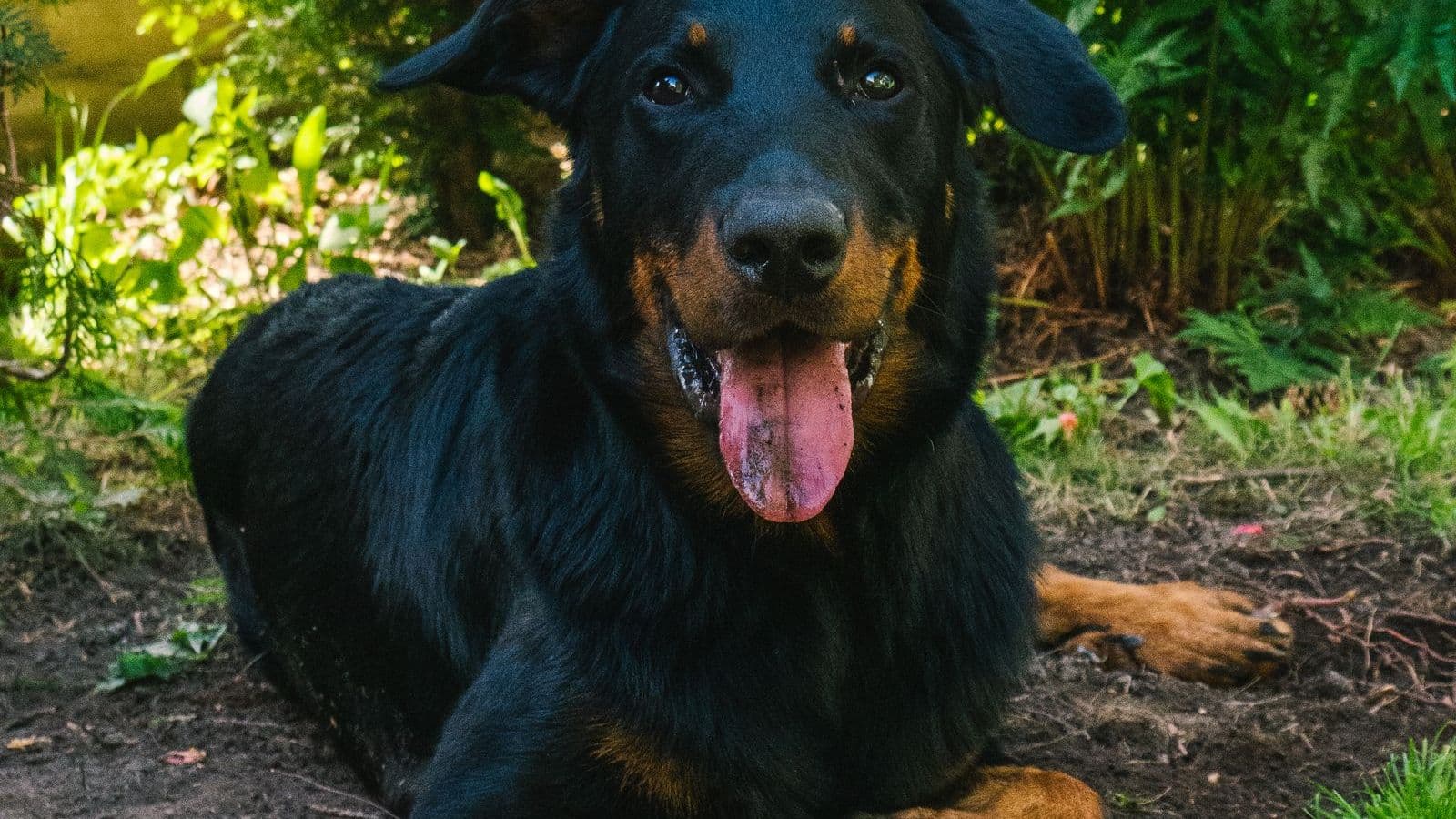
The Beauceron, or Berger de Beauce, is France's largest sheepdog, an ancient herding and guarding breed from the plains around Paris, documented as far back as the sixteenth century. Unlike the gathering breeds that circle and fetch stock, the Beauceron was bred to drive large flocks over long distances and to guard them against wolves, work that demanded a powerful, intelligent, courageous dog with both herding finesse and genuine guardian substance. The breed served with distinction as a military and police dog through both World Wars, and it remains a versatile working dog today, capable of herding, protection, tracking, and dog sport.
Weighing 32-45 kg, the Beauceron is a striking, powerful dog, usually black-and-tan, distinguished by the double dewclaws on each hind leg required by its breed standard. It combines high intelligence and trainability with a calm, confident, self-assured temperament and a deep loyalty to its family. Beneath that imposing, capable exterior, though, is a surprisingly sensitive dog, one that reads its handler closely and does not respond well to harshness despite its size and strength.
For an owner, the Beauceron is a magnificent but demanding dog that needs experienced, patient handling. Its slow maturity means it stays mentally adolescent until two or three years of age, testing rules through a long, challenging youth; its size and strength make early leash and foundation work essential; its working intelligence demands real mental engagement; and its sensitivity means reward-based training is the only effective approach. Given patient consistency through the long adolescence, early foundations, mental work, and reward-based handling, the Beauceron is a steady, capable, and deeply loyal partner.
At a glance:
- Trainability: 8/10, highly intelligent and capable but requires an experienced, patient handler
- Biggest risk factor: harsh handling, which produces distrust and shutdown rather than compliance
- Slow maturity: stays mentally adolescent and tests rules until two or three years old
- Example: A 45 kg adolescent Beauceron testing boundaries needs calm, consistent limits, not force.
- Not for: first-time owners looking for a quick, easy dog or anyone unwilling to commit years of consistent work
What Makes Training a Beauceron Different
1. Slow maturity and a long adolescence. The Beauceron does not reach full mental maturity until two or three years of age, and the adolescent phase involves real testing of rules and boundaries. Owners who expect adult steadiness from a teenage Beauceron grow frustrated; those who stay patient and consistent through it get a magnificent adult.
2. Sensitivity beneath the strength. For all its size and power, the Beauceron is sensitive and reads its handler closely, so harshness produces distrust and shutdown rather than compliance. Reward-based methods build the working relationship the breed thrives on.
3. Size and strength that demand early foundations. A 45 kg dog with poor leash manners is a serious problem, so loose-leash walking and basic control must be installed before the dog reaches full size and strength.
4. Working intelligence that needs a job. The Beauceron is intelligent and capable, and a bored one becomes destructive. Daily mental challenge alongside physical exercise is essential to a balanced dog.
Week-by-Week Training Plan for Your Beauceron
Weeks 1 and 2 : Foundation and Socialization
Build engagement and socialize broadly while the dog is still small. Our puppy basics guide covers the mechanics.
- Pair short, upbeat sessions with high-value food.
- Socialize intensively with people, dogs, surfaces, and sounds.
- Establish calm, consistent household rules from day one.
- Reward voluntary attention to build engagement.
Weeks 3 and 4 : Core Commands
Sit, down, and stay come readily to this intelligent breed.
- Teach the core cues with luring, fading to hand signals.
- Keep sessions varied and rewarding for a capable mind.
- Stay patient and consistent through the long adolescence.
Weeks 5 and 6 : Loose Leash Before Growth
Install leash manners while the dog is still physically manageable.
- Use a front-clip harness and the stop-and-stand method for loose-leash walking.
- Reward every step on a slack leash.
- Practice in gradually busier environments.
Weeks 7 and 8 : Recall and Advanced Commands
Build recall and add complexity.
- Train recall on a long line with high-value rewards.
- Add leave it, a distance down, and a settle.
- Reward focus on you in stimulating environments.
Weeks 9 and 10 : Herding Redirect and Mental Work
Channel any herding instinct and engage the mind.
- Redirect any herding of people or pets to a toy or task.
- Provide daily mental challenge through training, nose work, or puzzles.
- Reward controlled, focused work.
Weeks 11 and 12 : Sport and Proofing
Give the working drive an outlet and proof the foundations.
- Introduce herding, protection sport, tracking, or agility as appropriate.
- Proof all cues in distracting environments.
- Stay consistent through adolescence, and establish a sustainable rhythm of exercise and work.
Common Beauceron Training Mistakes
Mistake 1 : Rushing the slow maturation. The Beauceron matures slowly; expecting adult focus from an adolescent leads to frustration. Stay patient and consistent.
Mistake 2 : Harsh handling. The breed is sensitive despite its size and power; harshness produces distrust. Reward-based methods work.
Mistake 3 : Delaying leash and size-management work. Install loose-leash walking before the dog reaches full size.
Mistake 4 : Insufficient mental work. A bored Beauceron is destructive. Provide daily mental challenge alongside physical exercise. Full breakdown : Beauceron training mistakes.
Frequently Asked Questions
Are Beaucerons easy to train ? They are highly intelligent and capable, which makes them very trainable for an experienced, patient owner, but the slow maturity and sensitivity mean training is a multi-year commitment of consistent, reward-based work. They are not a quick or easy first dog, but they reward patience with exceptional reliability and versatility.
How much exercise does a Beauceron need ? Sixty to ninety minutes of vigorous activity daily, plus mental work. As a large working herder, it needs both physical and cognitive outlets, and an under-exercised Beauceron becomes restless and destructive.
Are Beaucerons good family dogs ? With experienced owners, excellent, they are deeply loyal, calm, and protective with their families, and patient with the children they are raised with. Their size, strength, and slow maturity mean they need committed, consistent handling and early socialization.
Are Beaucerons good with children ? With socialization and herding-redirection management, yes, they are patient and protective with their own family's children. Their size means supervision with very young children is wise, and the herding instinct should be redirected.
Are Beaucerons good with other dogs ? With early socialization, generally yes, though the breed's confidence and size mean introductions should be managed, and some can be assertive with unfamiliar dogs of the same sex.
Are Beaucerons rare ? Outside France, yes, relatively uncommon, though their reputation as capable working and family dogs is spreading. Finding a reputable breeder usually requires research and patience.
How long do Beaucerons live ? Typically ten to twelve years, which is good longevity for a large breed. Responsible breeders screen for hip dysplasia, bloat risk, and heart conditions, and a lean, well-exercised Beauceron from health-tested lines stays sound and capable well into old age, retaining its working ability and steady character to the end.
Why TailorPup Was Built for Beaucerons
A generic plan designed for biddable, fast-maturing breeds cannot account for the Beauceron's slow maturity, its size-management needs, or the sensitivity beneath its strength. TailorPup's Beauceron plan stays patient and consistent through the long adolescence, front-loads size management and socialization, and keeps every session reward-based for this powerful, sensitive French herder.
Daily 12-minute training sessions plus weekly adjustments as your dog grows. Plans from $9.99/month, no trial; annual starts at $2 for 7 days. Cancel anytime.
Related: Beauceron Training Mistakes · Leash Pulling · Recall Training · Puppy Training Basics